

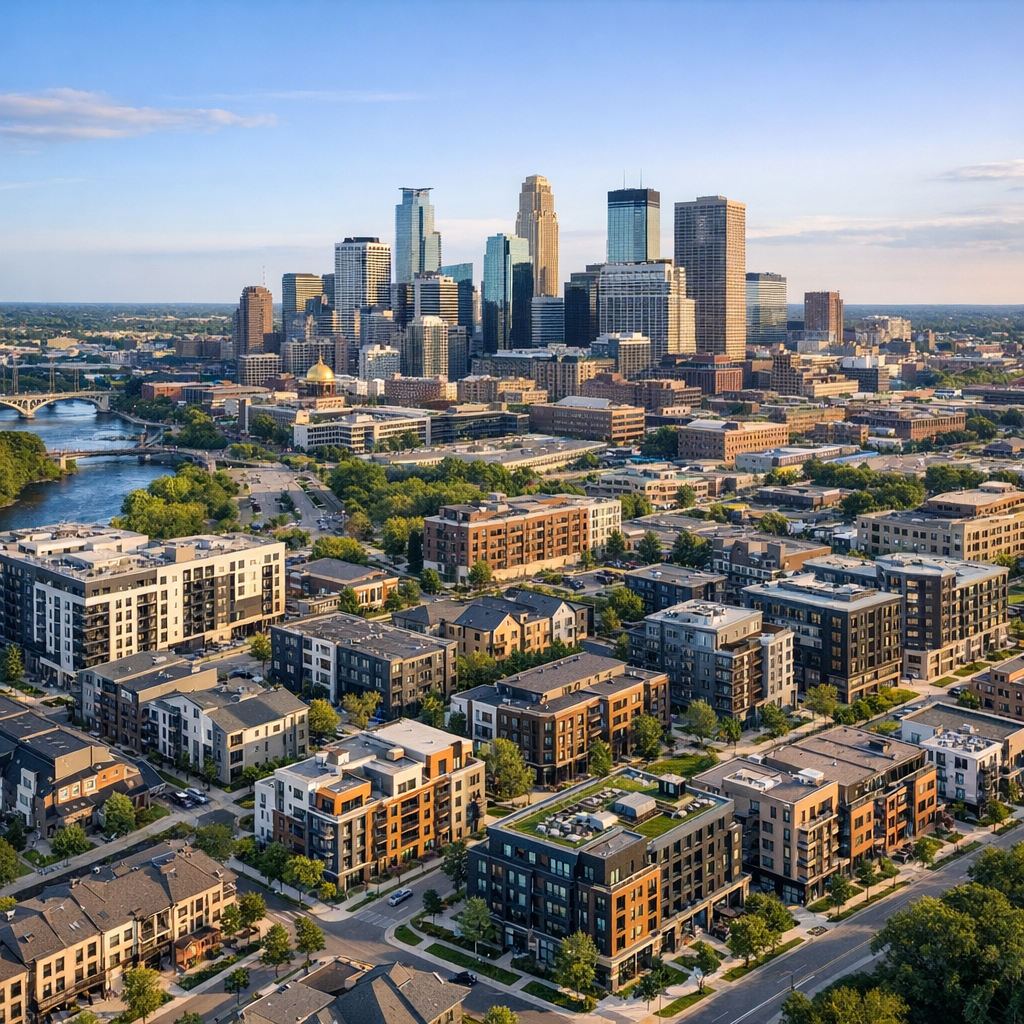
Minneapolis’ real estate market is experiencing notable shifts, with trends in home prices, rental rates, and development projects shaping the city’s housing landscape.
Home Prices and Market Activity
As of March 2026, the median sale price for homes in Minneapolis reached $355,000, marking a 6% increase from the previous year. Homes are selling faster, averaging 30 days on the market compared to 32 days last year. However, the number of homes sold in March decreased to 315 from 362 the previous year, indicating a tightening market. Source
Rental Market Trends
The average rent in Minneapolis stands at $1,650, which is below the national average of $1,910. This represents a 4.7% increase over the past year, suggesting a steady demand for rental properties in the city. Source
Development Projects Shaping the City
Several significant development projects are contributing to the city’s evolving housing landscape:
Spring Manor Redevelopment
Spring Manor is undergoing a major redevelopment, including a four-story addition to its campus. This project represents the largest redevelopment of public housing in Minneapolis’ history, aiming to provide more affordable housing options. Source
Wadaag Commons
Located in the Seward neighborhood, Wadaag Commons offers 39 spacious three- and four-bedroom units designed with sustainability in mind. The development features a brick exterior and is rooftop solar-ready, reflecting a commitment to long-term community investment. Source
Allura Mixed-Use Development
Allura is a modern mixed-use development in North Minneapolis, blending 14 affordable and 24 luxury units to create an inclusive community. The project includes smart amenities such as a tech-enabled laundromat, a chef-led ghost kitchen, and a rooftop garden, aiming to meet daily needs and fuel local ownership. Source
Conclusion
Minneapolis’ real estate market is characterized by rising home prices, increasing rental rates, and significant development projects that aim to address housing demand and promote sustainable living. Staying informed about these trends is essential for residents and potential buyers navigating the city’s evolving housing landscape.