

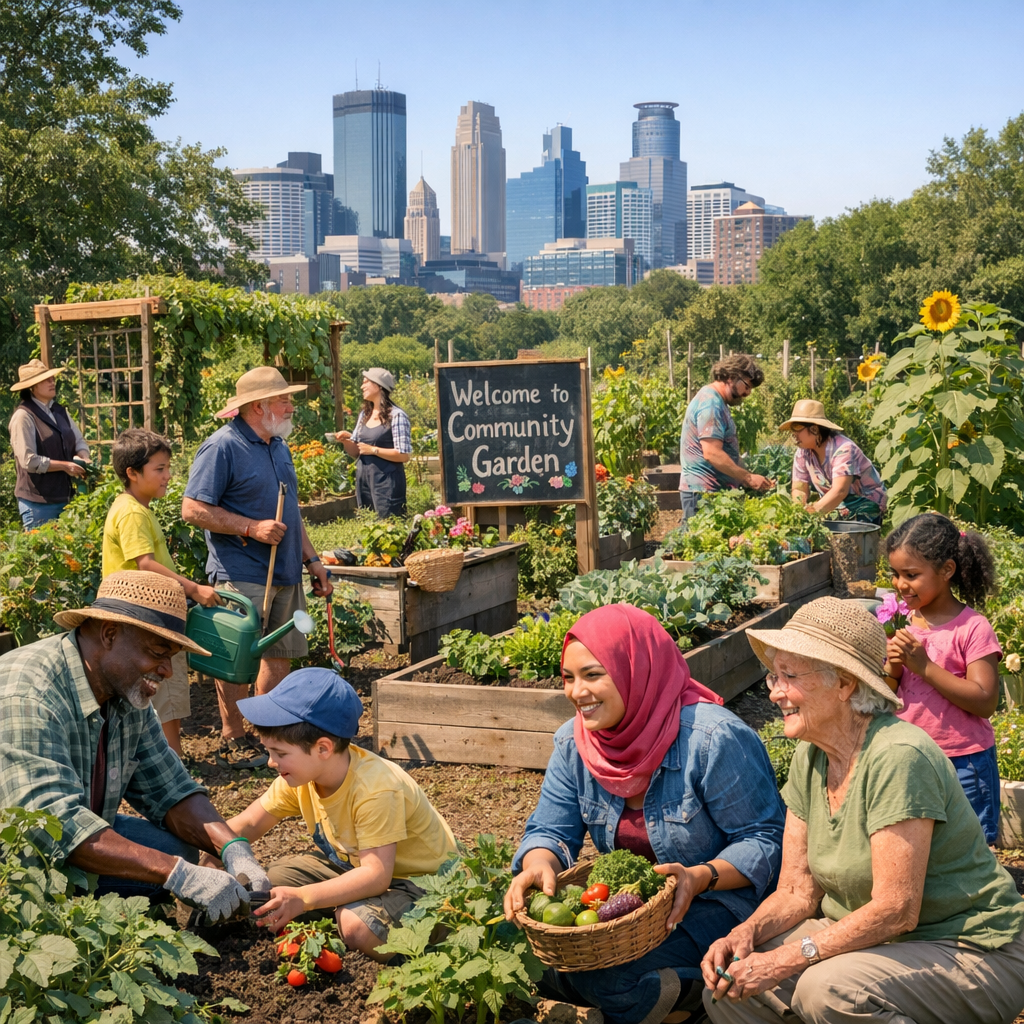
In the heart of Minneapolis, amidst bustling streets and towering buildings, lie verdant spaces where neighbors come together to cultivate not just plants, but also community spirit. Community gardens have become integral to our city’s landscape, offering residents a chance to connect, learn, and grow.
The Roots of Community Gardening in Minneapolis
Community gardening in Minneapolis has deep roots. The Dowling Community Garden, established in 1943, is one of the last remaining Victory Gardens from World War II. Today, it boasts over 190 plots tended by approximately 250 gardeners, reflecting the city’s enduring commitment to communal green spaces. [Dowling Community Garden]
Diverse Gardens, Unified Goals
Across the city, various community gardens cater to diverse populations and needs. The Gethsemane Community Garden in downtown Minneapolis offers 22 private plots and a communal “Giving Garden,” fostering both individual and collective gardening experiences. [Gethsemane Community Garden]
In the Whittier neighborhood, the Soo Line Community Garden serves as a hub for multiracial and multigenerational neighbors. With 100 plots, including spaces dedicated to children and food shelf donations, it emphasizes education and community engagement. [Soo Line Community Garden]
City Support and Expansion
The Minneapolis Park & Recreation Board (MPRB) actively supports community gardening by establishing gardens in parks throughout the city. Locations like Bridal Veil Gardens and Peavey Field Park offer residents opportunities to engage in urban agriculture. The MPRB’s Community Garden Policy underscores the city’s dedication to these green spaces. [MPRB Community Gardens]
Beyond Gardening: Building Community
These gardens are more than just plots of land; they are vibrant community centers. Hope Community’s urban gardens, for instance, are places where people gather to learn, grow, and build connections. As one garden leader noted, “Being in the garden breaks through race issues—it’s a common thing we all have in our spirits and our souls.” [Hope Community Gardens]
Looking Ahead
As Minneapolis continues to grow and evolve, community gardens remain vital. They provide fresh produce, promote sustainability, and, most importantly, cultivate a sense of belonging among residents. Whether you’re a seasoned gardener or a curious newcomer, these green spaces welcome all to dig in and be part of the community.