

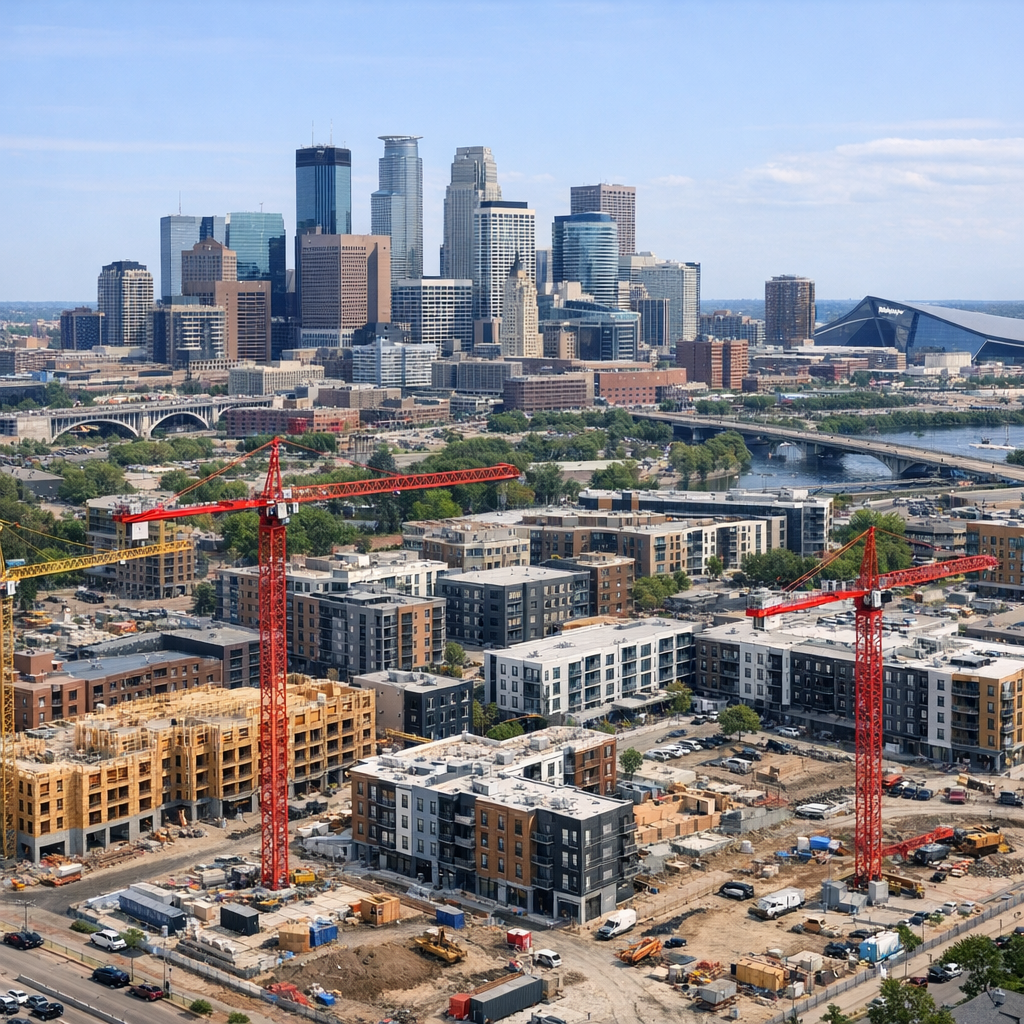
Minneapolis’ real estate market is experiencing notable shifts, presenting both challenges and opportunities for buyers and sellers alike. Understanding these trends is essential for making informed decisions.
Housing Market Trends
Recent data indicates a dynamic housing market in Minneapolis. According to Zillow, the average home value in the city is $334,719, reflecting a 1.4% increase over the past year. Homes typically go pending in around 19 days, suggesting a brisk market pace. Additionally, the median sale price stands at $315,500, with a median list price of $309,932. Notably, 37.8% of sales have been closing above the list price, highlighting competitive buyer interest. Source
Inventory and Sales Dynamics
The housing inventory has seen a significant uptick. As of April 30, 2026, there were 1,164 homes for sale, with 467 new listings added that month. This increase in inventory provides buyers with more options, though the market remains competitive. The median sale to list ratio is 0.999, indicating that homes are selling very close to their asking prices. Source
Notable Development Projects
Several significant development projects are underway, contributing to the city’s evolving landscape:
Minneapolis Grain Exchange Redevelopment
The historic Minneapolis Grain Exchange is slated for a substantial overhaul. Developer Sherman Associates plans a $123 million project to transform the complex into a mixed-use development featuring 232 new apartments. This initiative aligns with city efforts to revitalize downtown areas. Source
Graco Riverfront Site
Graco’s decision to relocate its Northeast Minneapolis campus opens up 40 acres of prime Mississippi Riverfront land for potential redevelopment. This site presents a significant opportunity for new housing and commercial projects, enhancing the city’s riverfront appeal. Source
Allura Mixed-Use Development
In North Minneapolis, the Allura project is underway, blending 14 affordable and 24 luxury units to create an inclusive community. The development includes smart amenities such as a tech-enabled laundromat, a chef-led ghost kitchen, and a rooftop garden, aiming to meet daily needs and fuel local ownership. Source
Conclusion
Minneapolis’ real estate market is characterized by rising home values, increased inventory, and significant development projects that promise to reshape the city’s landscape. Staying informed about these trends is crucial for anyone looking to navigate the local housing market effectively.