

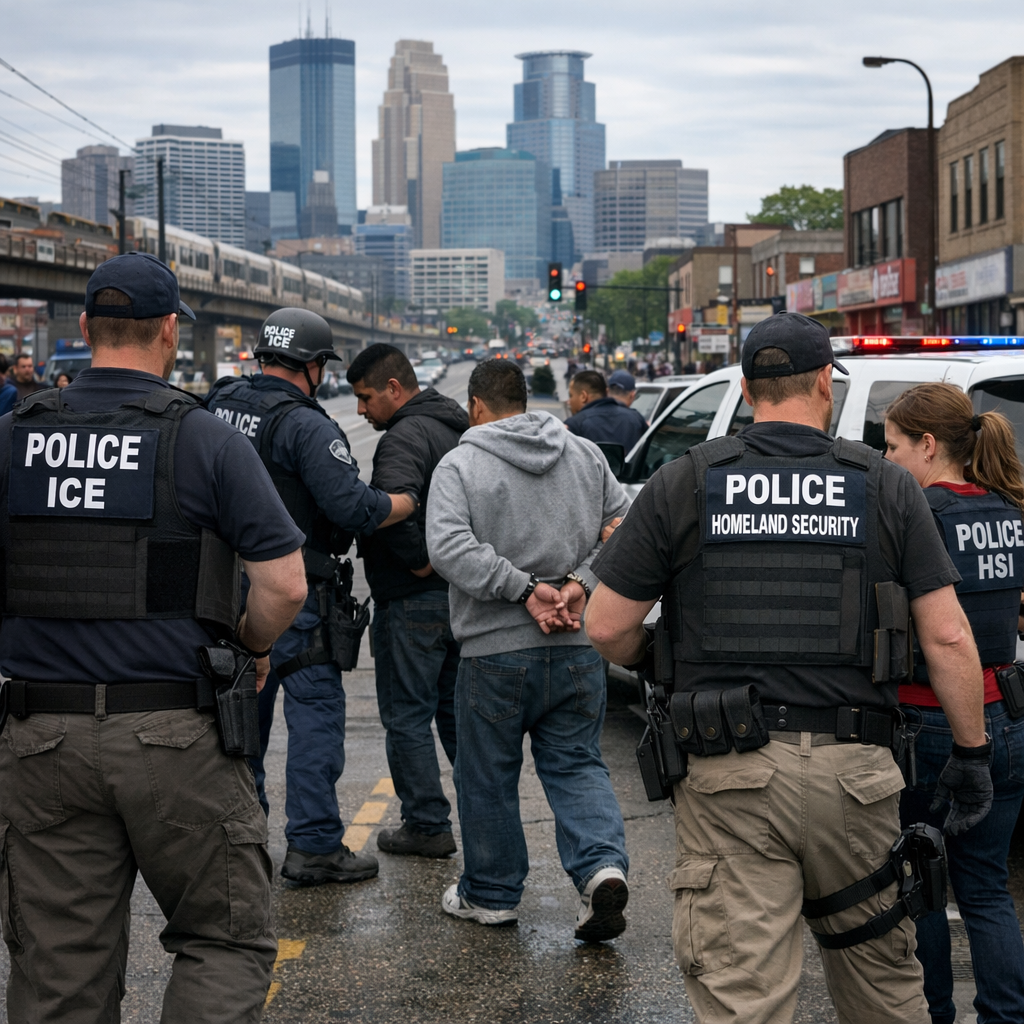
In recent months, Minneapolis has found itself at the center of a significant federal immigration enforcement initiative known as Operation Metro Surge. This operation, which began in December 2025, involved the deployment of thousands of federal agents to the Twin Cities area, aiming to intensify immigration enforcement efforts.
Understanding Operation Metro Surge
Operation Metro Surge was launched by the Department of Homeland Security (DHS) as a large-scale immigration enforcement action targeting Minneapolis, St. Paul, and other parts of Minnesota. The operation led to over 4,000 arrests and sparked widespread protests and community unrest. Notably, two U.S. citizens, Renee Good and Alex Pretti, were fatally shot by federal officers during the operation, further intensifying public outcry.
Local Economic and Social Impact
The presence of federal agents and the enforcement activities had a profound impact on the local economy and social fabric. A preliminary city study estimated that the operation resulted in over $200 million in economic damage to Minneapolis. Businesses reported cancellations, reduced bookings, and a decline in customer traffic. Additionally, the heightened enforcement led to increased fear and anxiety among immigrant communities, affecting daily life and community cohesion.
Community Response and Resilience
In response to the operation, local communities mobilized to support affected individuals and families. Churches and community organizations held services and events to provide solace and solidarity. For instance, St. Paul’s-San Pablo Lutheran Church organized a ‘Service of Lament and Hope’ to address the fears and concerns arising from the crackdown.
Broader Implications
Operation Metro Surge in Minneapolis highlights the complex interplay between federal immigration policies and local communities. It underscores the need for thoughtful consideration of the local impacts of global policies and the importance of community resilience in the face of such challenges.