

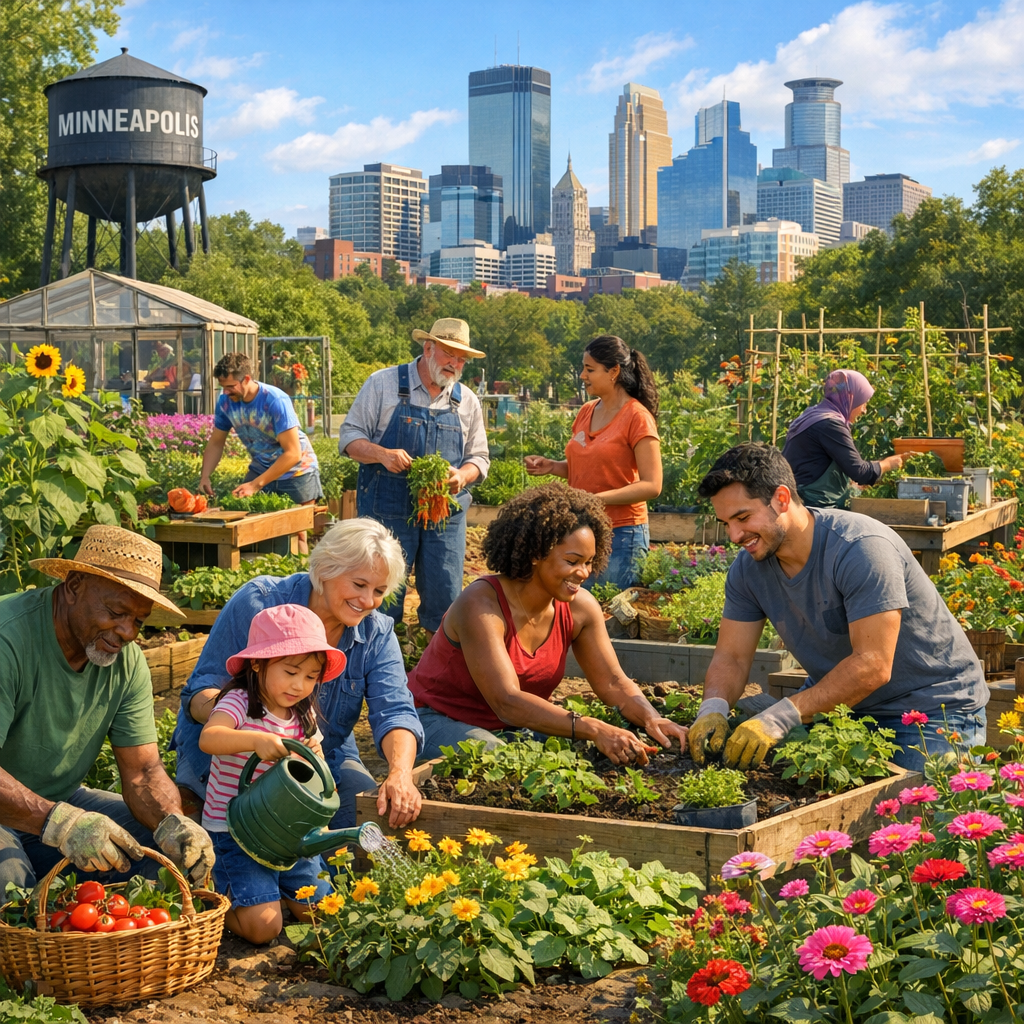
In the heart of Minneapolis, community gardens have blossomed into vital spaces that bring residents together, promote sustainable practices, and enhance the urban landscape. These gardens offer more than just plots of land for cultivation; they serve as hubs for education, environmental stewardship, and community building.
Historical Roots and Modern Growth
One of the city’s most storied gardens is the Dowling Community Garden, established in 1943 as a Victory Garden during World War II. Today, it stands as one of the last remaining Victory Gardens in the nation, encompassing over 190 plots tended by a diverse group of gardeners. The garden’s mission includes providing community space, promoting sustainable gardening practices, and offering environmental education. Learn more about Dowling Community Garden
Diverse Spaces for All
Minneapolis boasts a variety of community gardens, each with its unique character and focus. The Soo Line Community Garden, for instance, started in 1991 when neighbors transformed a vacant lot into a thriving green space. Today, it features 100 plots and collaborates with local schools to provide educational opportunities for children. Discover Soo Line Community Garden
Similarly, Hope Community’s network of gardens, including the Hope Block garden and the Oakland Avenue garden, emphasizes collective management and community engagement. These spaces are designed to be inclusive, reflecting the neighborhood’s cultural diversity and fostering connections among residents. Explore Hope Community Gardens
City Support and Future Prospects
The Minneapolis Park and Recreation Board (MPRB) actively supports community gardening through its Community Garden Program. This initiative provides residents with access to garden plots in various parks across the city, promoting local food production and community interaction. Current locations managed by MPRB include Bridal Veil Gardens, Parque Monarca, and Powderhorn Park, among others. Find a community garden near you
As urban development continues, the role of community gardens in Minneapolis becomes increasingly significant. They not only offer residents the opportunity to grow their own food but also serve as green sanctuaries that enhance the city’s environmental health and social fabric. By participating in or supporting these gardens, individuals contribute to a more connected and sustainable Minneapolis.