

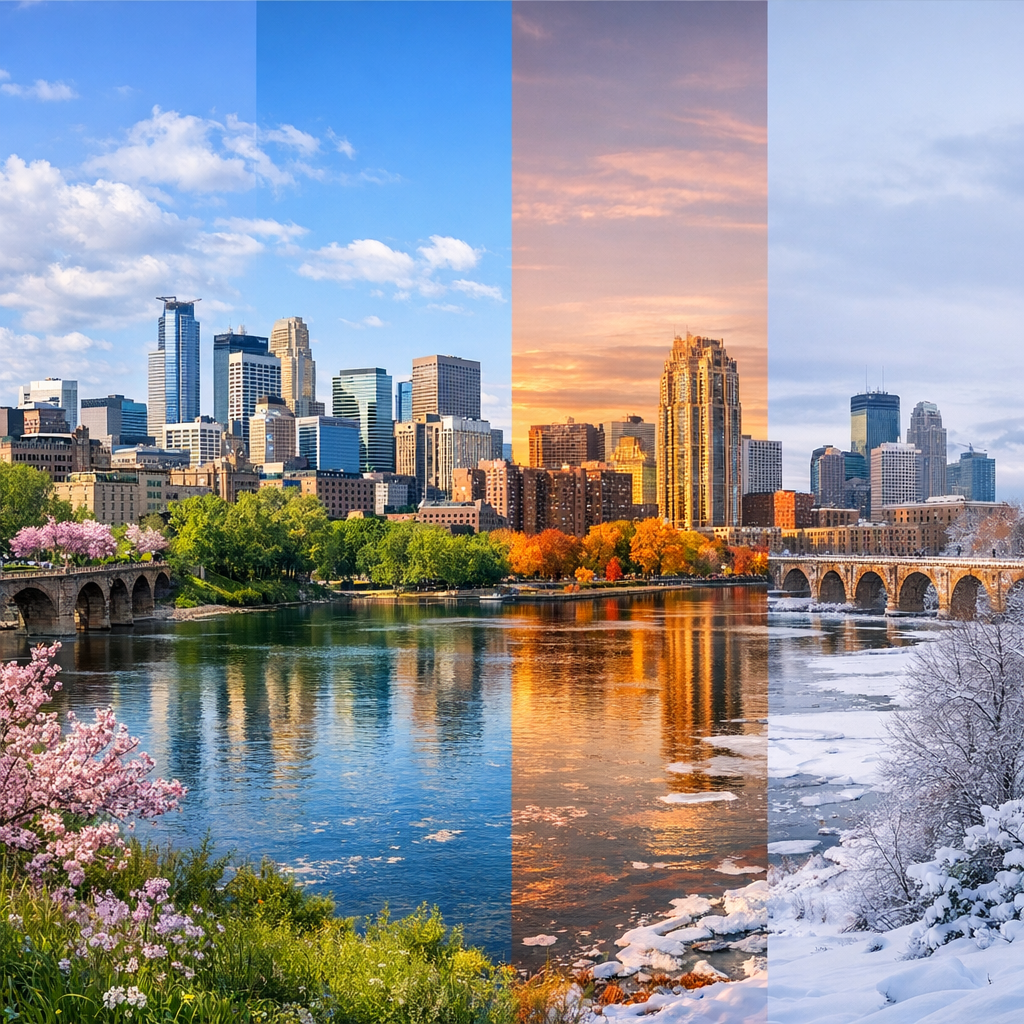
Minneapolis experiences a humid continental climate, characterized by four distinct seasons with significant temperature variations throughout the year. This unique climate offers residents and visitors a diverse range of weather experiences, from snowy winters to warm, humid summers.
Winter: A Frosty Embrace
Winter in Minneapolis typically spans from late November to mid-March. January stands as the coldest month, with average highs around 23°F (-5°C) and lows dipping to 7°F (-14°C). Arctic air masses can push temperatures well below 0°F (-18°C), accompanied by biting winds that create dangerous wind chill factors. Snow is common, with an average annual accumulation of 48 to 55 inches.
Spring: A Gradual Thaw
Spring brings a gradual warming trend. March sees average highs of 40°F (4°C), which rise to 55°F (13°C) by April and 68°F (20°C) in May. This season is marked by melting snow and budding flora, signaling the city’s reawakening.
Summer: Warm and Lively
Summer extends from June to August, with July being the warmest month. Average highs reach 83°F (28°C), and lows hover around 63°F (17°C). The city experiences increased humidity and occasional thunderstorms, providing a vibrant backdrop for numerous outdoor activities and festivals.
Autumn: A Colorful Transition
Autumn, from September to November, features a gradual cooling. September averages highs of 72°F (22°C), which drop to 41°F (5°C) by November. The season is renowned for its stunning fall foliage, offering picturesque landscapes throughout the city.
Climate Change: A Growing Concern
Recent data indicates that Minneapolis is warming faster than many other U.S. cities. Since 1970, winter temperatures have increased by 5.3°F, more than twice the national average. This warming trend has led to intensified rainfall, earlier snowmelt floods, and disrupted ecosystems.
In response, the City of Minneapolis has implemented the Climate Equity Plan, aiming to significantly reduce climate pollution by 2030 and achieve carbon neutrality by 2050. This plan emphasizes environmental justice, waste reduction, and investment in clean, renewable energy.
Understanding Minneapolis’ climate is essential for residents and visitors alike. By recognizing the patterns and challenges, we can better prepare for seasonal changes and contribute to efforts combating climate change in our community.