

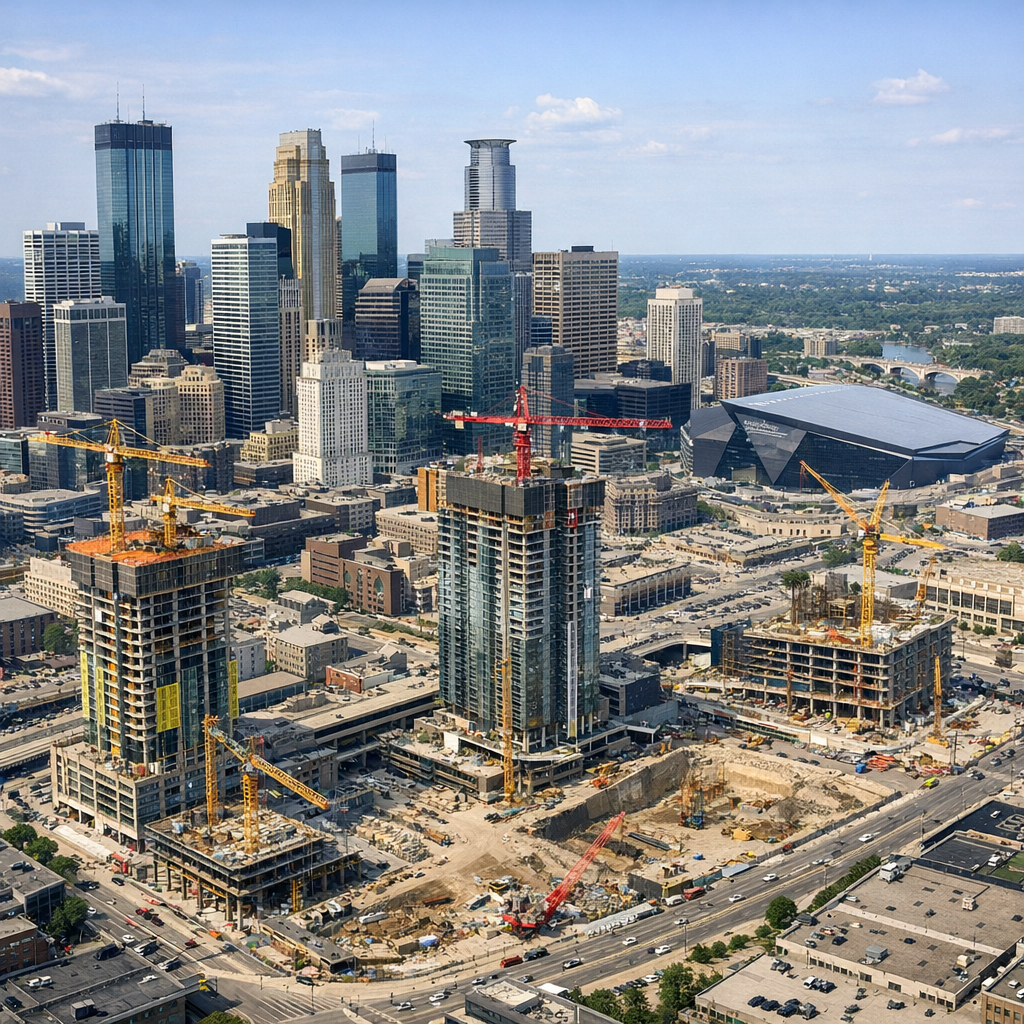
Minneapolis’ real estate market is experiencing notable shifts, presenting both challenges and opportunities for buyers and sellers alike.
Market Trends
Recent data indicates a dynamic market. In March 2026, the median sale price for homes in Minneapolis was $355,000, marking a 6% increase from the previous year. Homes are selling faster, with an average of 30 days on the market, down from 32 days last year. However, the number of homes sold decreased to 315 in March, down from 362 the previous year. Source
Development Projects
Several significant development projects are underway, contributing to the city’s evolving landscape:
Allura
Located in North Minneapolis, Allura is a mixed-use development featuring 38 housing units, including 14 affordable and 24 luxury units. The project also includes a tech-enabled laundromat, a chef-led ghost kitchen, and a rooftop garden, aiming to foster an inclusive community. Source
Solstice Apartments
In Northeast Minneapolis, the Solstice Apartments offer 23 one- and two-bedroom units designed with low carbon footprints and high energy efficiency. This development emphasizes sustainable living in a transit-rich neighborhood. Source
Minneapolis Grain Exchange Redevelopment
The historic Minneapolis Grain Exchange is set for a substantial redevelopment, transforming the site into a mixed-use development that includes 232 new apartments. This project aligns with city leaders’ goals of revitalizing the downtown area. Source
Office Space Dynamics
The commercial real estate sector is facing challenges, with office tower values in downtown Minneapolis declining by 13.7% in 2025. This trend is shifting the tax burden more toward residential property owners. Source
Conclusion
Minneapolis’ real estate market is in a state of flux, with rising home prices and significant development projects reshaping the city’s landscape. Prospective buyers and sellers should stay informed and consider these trends when making decisions.