

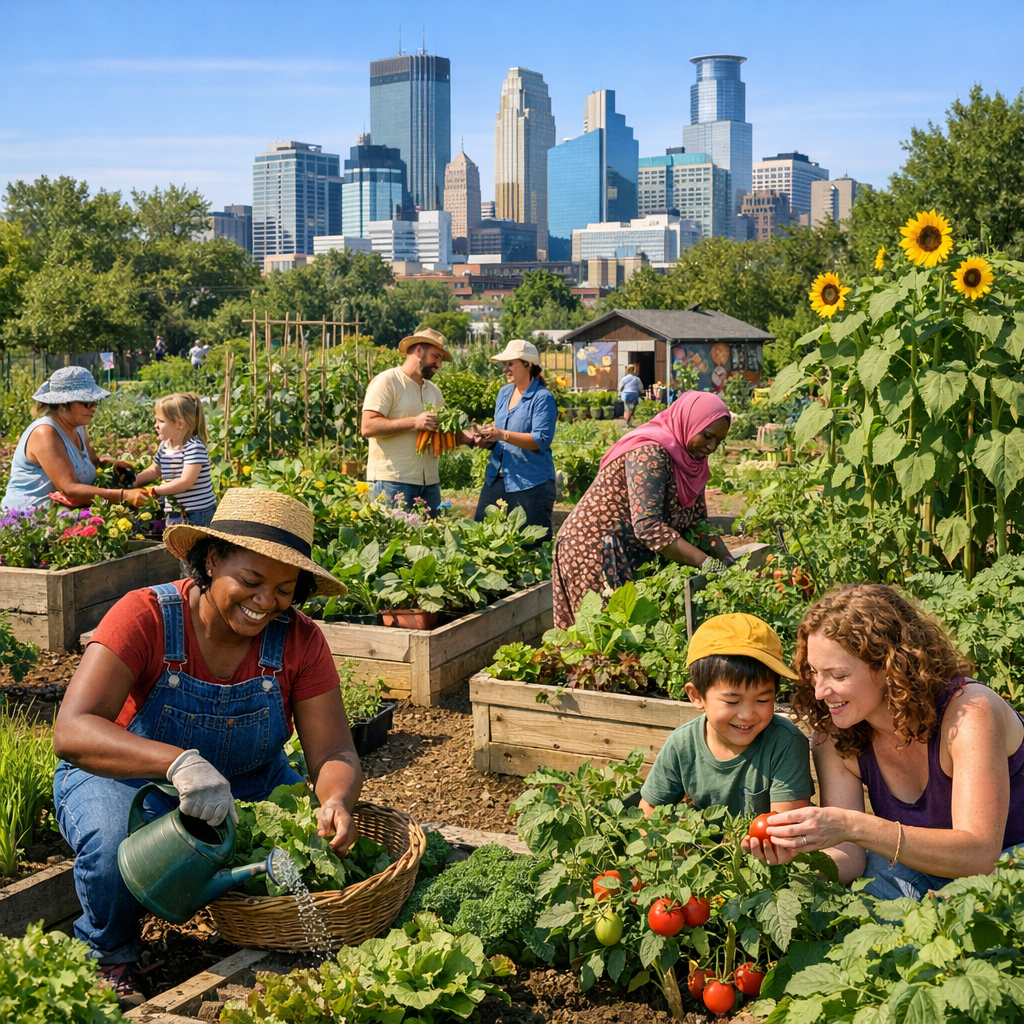
In the heart of Minneapolis, community gardens have become vital spaces where residents come together to cultivate not only plants but also relationships and a shared sense of purpose. These green spaces offer more than just fresh produce; they serve as hubs for education, sustainability, and community engagement.
The Roots of Community Gardening in Minneapolis
Community gardening in Minneapolis has a rich history, with some gardens tracing their origins back to the Victory Gardens of the 1940s. For instance, the Dowling Community Garden, established in 1943, is believed to be one of the last remaining Victory Gardens in use today. Over the decades, it has grown to encompass over 190 plots tended by approximately 250 gardeners, reflecting the enduring appeal of communal cultivation.
Fostering Connections and Education
Beyond providing space for growing food, these gardens serve as educational platforms and gathering spots. Hope Community, for example, has developed a network of gardens that function as places where people can learn, grow, and build community connections. Their gardens include small plots for individuals and families, collectively managed farm-style gardens, and community teaching gardens, all within close proximity to their offices and housing.
Promoting Sustainability and Environmental Stewardship
Community gardens also play a crucial role in promoting sustainable practices. The Minneapolis Park & Recreation Board (MPRB) has been instrumental in establishing community gardens throughout the city, offering residents the opportunity to apply for plots within designated gardens managed in coordination with MPRB staff. These gardens not only provide fresh produce but also encourage organic gardening, composting, and the creation of pollinator-friendly habitats.
Overcoming Challenges and Looking Ahead
Despite their many benefits, community gardens face challenges such as securing land tenure and resources. In 2002, when the Minneapolis Community Development Agency announced plans to sell nine garden lots for development, passionate appeals from gardeners led to the permanent protection of these spaces. This effort underscores the community’s commitment to preserving these vital green spaces.
As Minneapolis continues to grow and evolve, community gardens remain essential in fostering a sense of belonging, promoting environmental stewardship, and enhancing the quality of urban life. They stand as testaments to the power of collective effort and the enduring human connection to the land.