

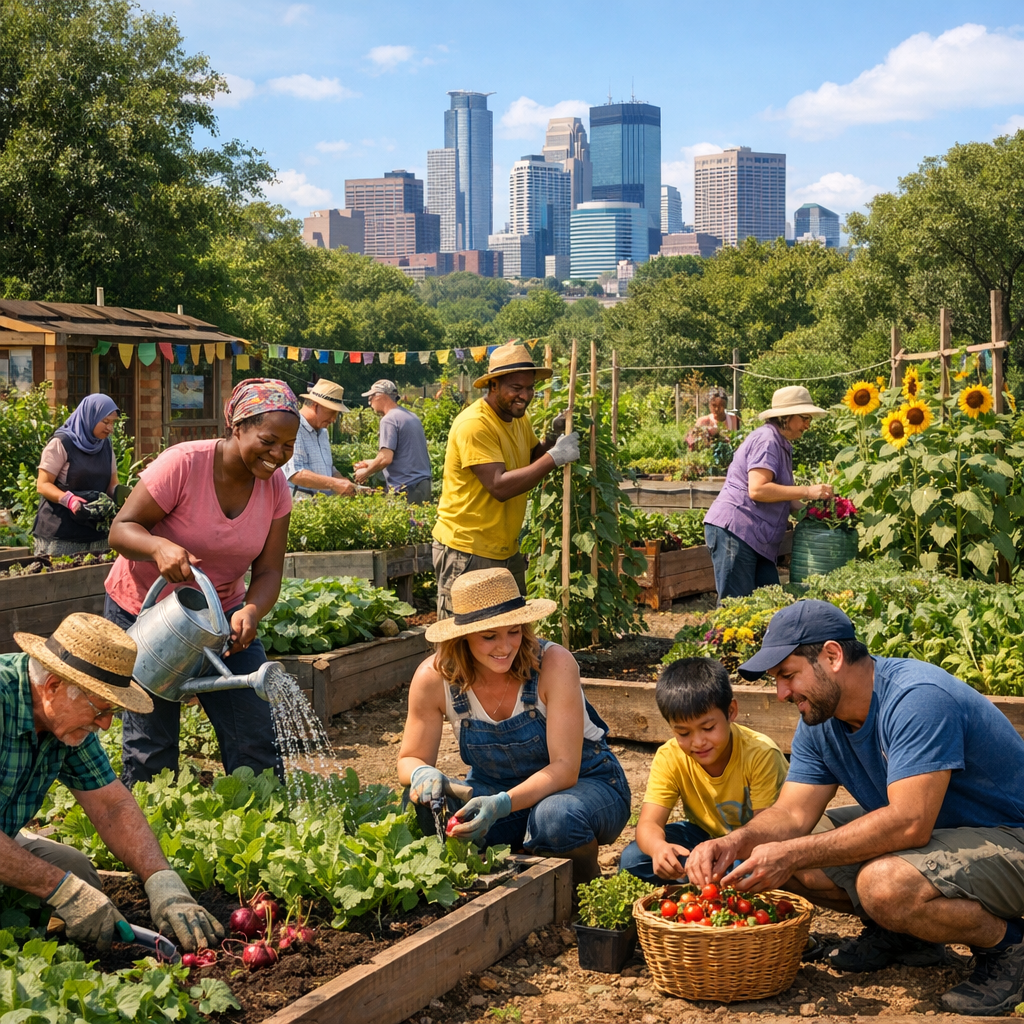
In the heart of Minneapolis, community gardens have blossomed into vital spaces that not only provide fresh produce but also strengthen neighborhood bonds and promote environmental stewardship. These green spaces offer residents a chance to connect with nature, learn about sustainable practices, and build a sense of community.
Historical Roots and Modern Growth
One of the city’s most storied gardens is the Dowling Community Garden, established in 1943 as a Victory Garden during World War II. Today, it stands as one of the last remaining Victory Gardens in the nation, encompassing over 190 plots tended by approximately 250 gardeners. This garden serves as a living testament to the enduring importance of communal green spaces in urban settings.
Diverse Spaces for Diverse Communities
Minneapolis boasts a variety of community gardens, each reflecting the unique character of its neighborhood. The Gethsemane Community Garden, located downtown, offers 22 private plots alongside a communal “Giving Garden” and a landscaped area with a pergola and picnic tables. This oasis provides a serene retreat amidst the urban landscape.
In the Stevens Square-Loring Heights neighborhood, the LaSalle Community Garden offers residents a place to cultivate their own food and plants, fostering a sense of ownership and pride. Similarly, the Hope Community gardens, including the Hope Block garden and the Oakland Avenue garden, serve as gathering places where people can learn, grow, and build connections.
Support and Sustainability
The City of Minneapolis actively supports these initiatives. Through programs like the Community Garden Compost initiative, the city offers no-cost and low-cost compost to community gardens, enhancing soil quality and promoting sustainable gardening practices. Additionally, the Minneapolis Park & Recreation Board has established community gardens in parks throughout the city, managed by community members in coordination with park staff.
Beyond Gardening: Building Community
These gardens are more than just plots of land; they are vibrant hubs of activity. They host educational workshops, cultural events, and provide opportunities for residents to engage in environmental education. For instance, the HPDL Triangle Community Garden not only offers gardening space but also features a Little Free Seed Library, encouraging the sharing of resources and knowledge among neighbors.
Community gardens in Minneapolis exemplify the power of collective effort in transforming urban spaces into thriving, green sanctuaries. They offer residents a chance to engage with their environment, learn sustainable practices, and, most importantly, connect with one another. As these gardens continue to flourish, they remind us of the profound impact that shared green spaces can have on the health and vitality of our communities.