

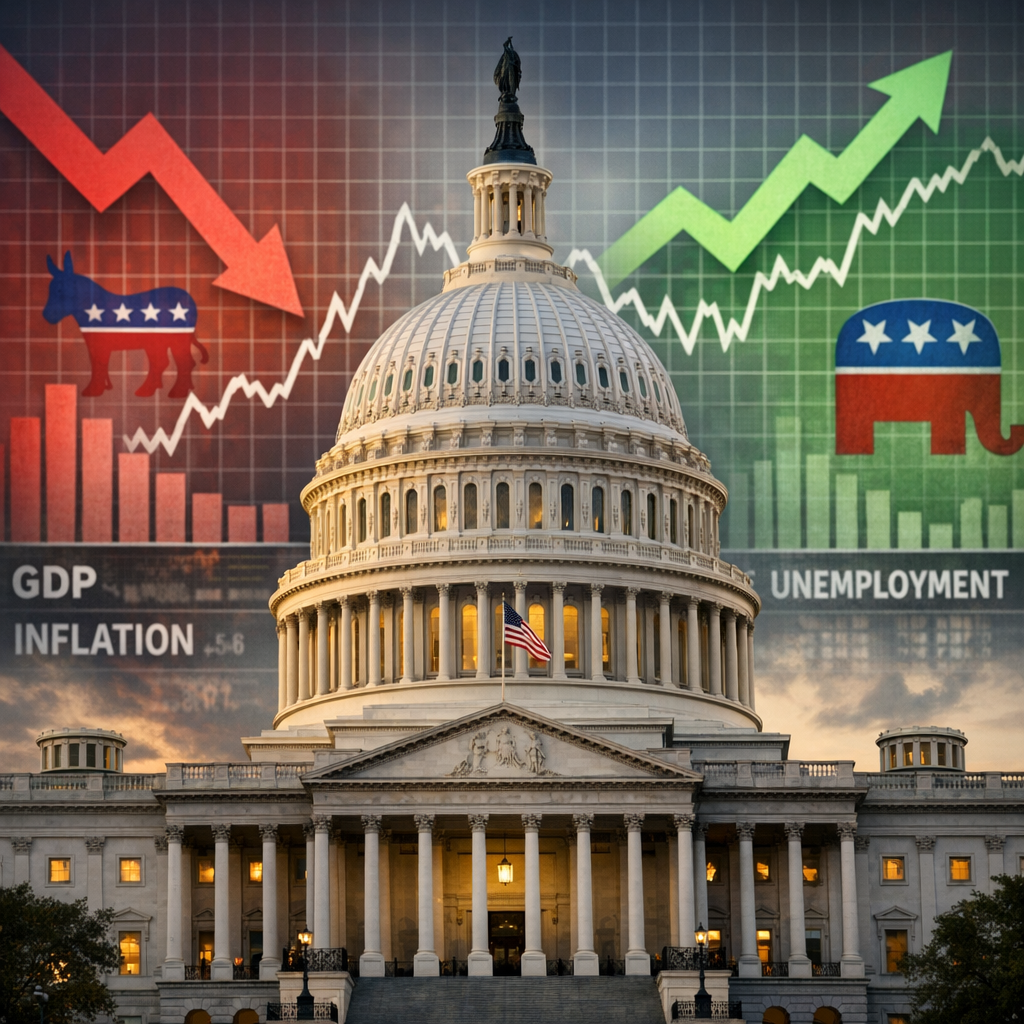
The United States, with its diverse and dynamic economy, continues to be a global leader in various sectors. As of the first quarter of 2026, the U.S. economy experienced a growth rate of 2%, rebounding from a 0.5% increase in the previous quarter. This growth was influenced by factors such as the recovery from a federal government shutdown and significant investments in artificial intelligence. However, challenges like rising inflation, partly due to geopolitical tensions, have also emerged.
Economic Overview
In the first quarter of 2026, the U.S. economy expanded at an annualized rate of 2%, marking a recovery from the previous quarter’s sluggish growth. This rebound was largely attributed to the resolution of a prolonged federal government shutdown and continued robust investments in the artificial intelligence sector. Despite these positive indicators, the economy faces challenges, including rising inflation driven by geopolitical events affecting energy prices.
Political Landscape
The U.S. political system is characterized by its two major parties: the Democratic Party and the Republican Party. While these parties dominate the political scene, the landscape is continually evolving, influenced by demographic shifts, technological advancements, and changing public sentiments. Recent years have seen increased political polarization, with social media platforms playing a significant role in shaping public discourse and opinion.
Looking Ahead
As the U.S. navigates its economic and political challenges, understanding the interplay between these spheres is crucial. Economic policies, technological innovations, and political decisions will continue to shape the nation’s trajectory. Staying informed and engaged is essential for citizens to participate effectively in the democratic process and contribute to the country’s future direction.