

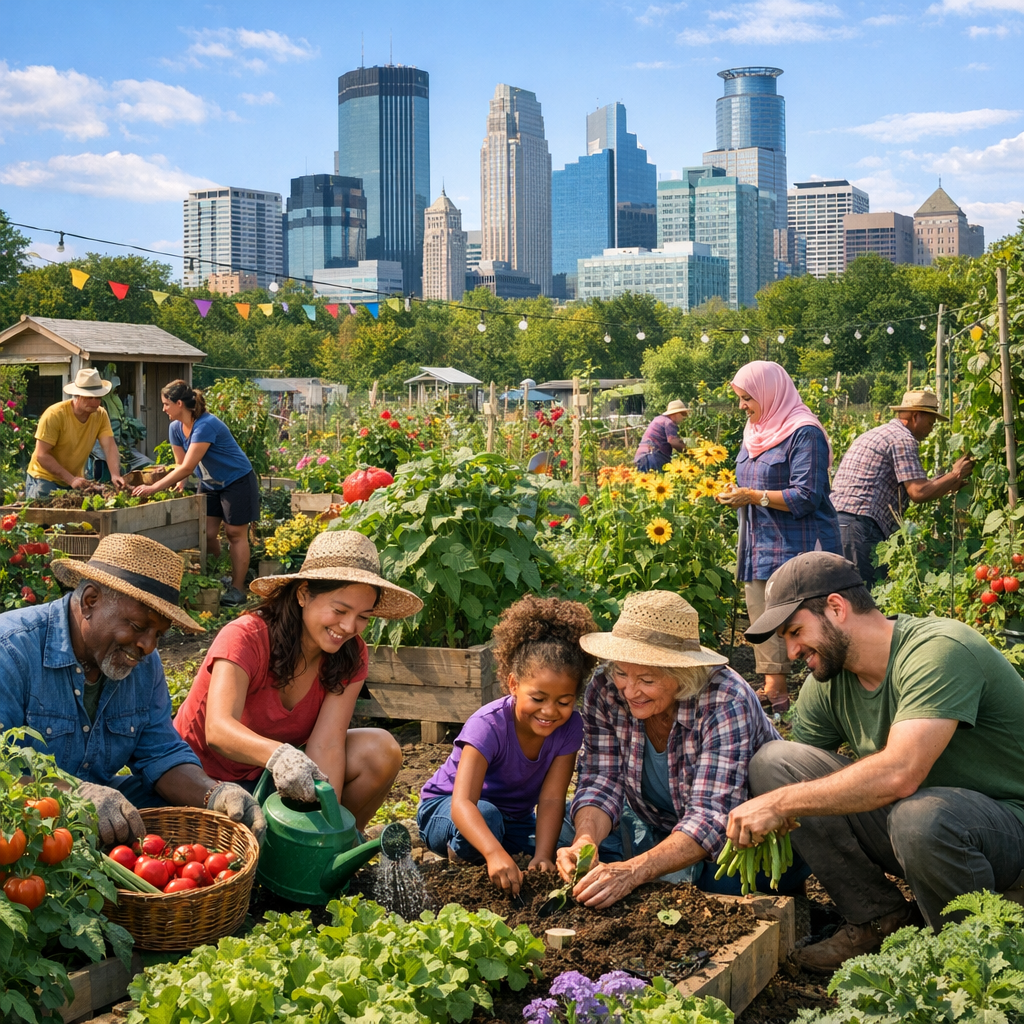
In the heart of Minneapolis, community gardens have blossomed into vital spaces that bring residents together, promote sustainable practices, and enhance the urban landscape. These gardens serve as more than just plots of land for cultivation; they are hubs of community engagement and environmental stewardship.
Historical Roots and Modern Growth
One of the city’s most storied gardens is the Dowling Community Garden, established in 1943. Believed to be one of the last remaining Victory Gardens from World War II, Dowling has grown to encompass over 190 plots tended by approximately 250 gardeners. This garden not only provides space for individuals to grow their own produce but also fosters a sense of community among its diverse members.
Diverse Spaces for Diverse Communities
Minneapolis boasts a variety of community gardens, each with its unique character and mission. The Soo Line Community Garden, for instance, offers 100 plots and emphasizes education by coordinating with local schools to provide nature access to children. Similarly, Hope Community’s urban gardens serve as gathering places where people can learn, grow, and build connections, reflecting a collective vision for a strong, healthy community.
City Support and Accessibility
The Minneapolis Park and Recreation Board (MPRB) has been instrumental in establishing community gardens across the city. Parks like Bridal Veil Gardens and Peavey Field Park host community gardens managed by local residents in coordination with MPRB staff. These initiatives ensure that green spaces are accessible to all, promoting inclusivity and environmental awareness.
Environmental Impact and Sustainability
Community gardens contribute significantly to urban sustainability. They transform vacant lots into productive green spaces, support pollinators, and provide fresh produce to local residents. Gardens like the Gethsemane Community Garden in downtown Minneapolis have become green oases, offering not only food but also beautifully landscaped areas for community enjoyment.
Getting Involved
For those interested in joining a community garden, the MPRB offers resources and information on available plots and application processes. Engaging in these gardens provides an opportunity to connect with neighbors, learn about sustainable gardening practices, and contribute to the city’s green initiatives.
Community gardens in Minneapolis are more than just places to grow food; they are spaces where relationships are nurtured, cultures are shared, and the community thrives. As these gardens continue to flourish, they remind us of the power of collective effort in creating a more connected and sustainable urban environment.