

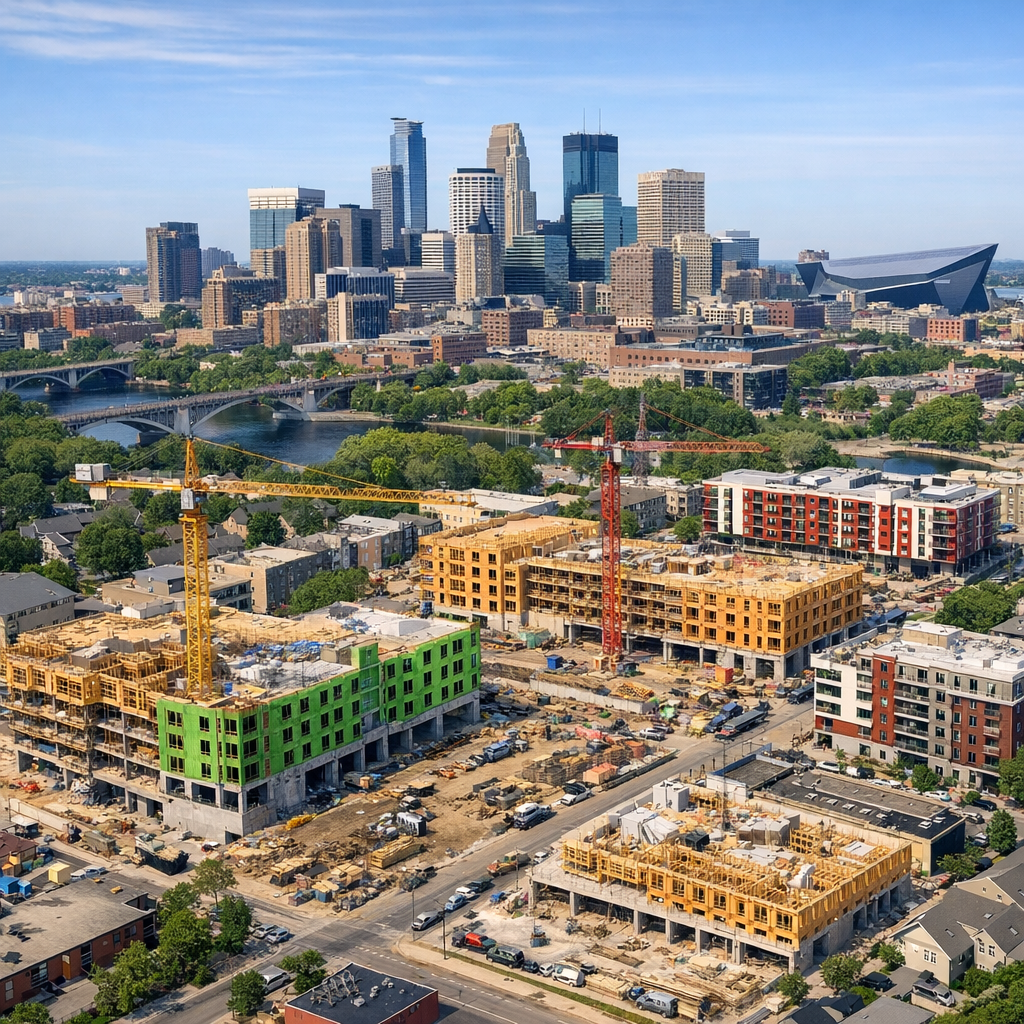
Minneapolis is confronting a significant housing shortage, with recent data indicating a sharp decline in new housing construction. In 2025, only 12,161 housing units were built, a substantial drop from the over 18,000 units constructed annually between 2019 and 2022. This downturn is contributing to escalating rents and home prices, threatening the city’s reputation for housing affordability.
Developers attribute the slowdown to high construction costs, rising interest rates, and limited rent growth, particularly affecting apartment developments. In contrast, single-family home production has remained relatively stable.
City officials are exploring various strategies to address the housing crisis, including streamlining permitting processes and expanding the use of tax increment financing (TIF) for development projects. Mayor Jacob Frey has emphasized a ‘back to basics’ approach, focusing on fundamental priorities to stimulate housing development and ensure affordability for residents.
As Minneapolis navigates these challenges, the collaboration between city leaders, developers, and community organizations will be crucial in formulating effective solutions to meet the housing needs of its growing population.