

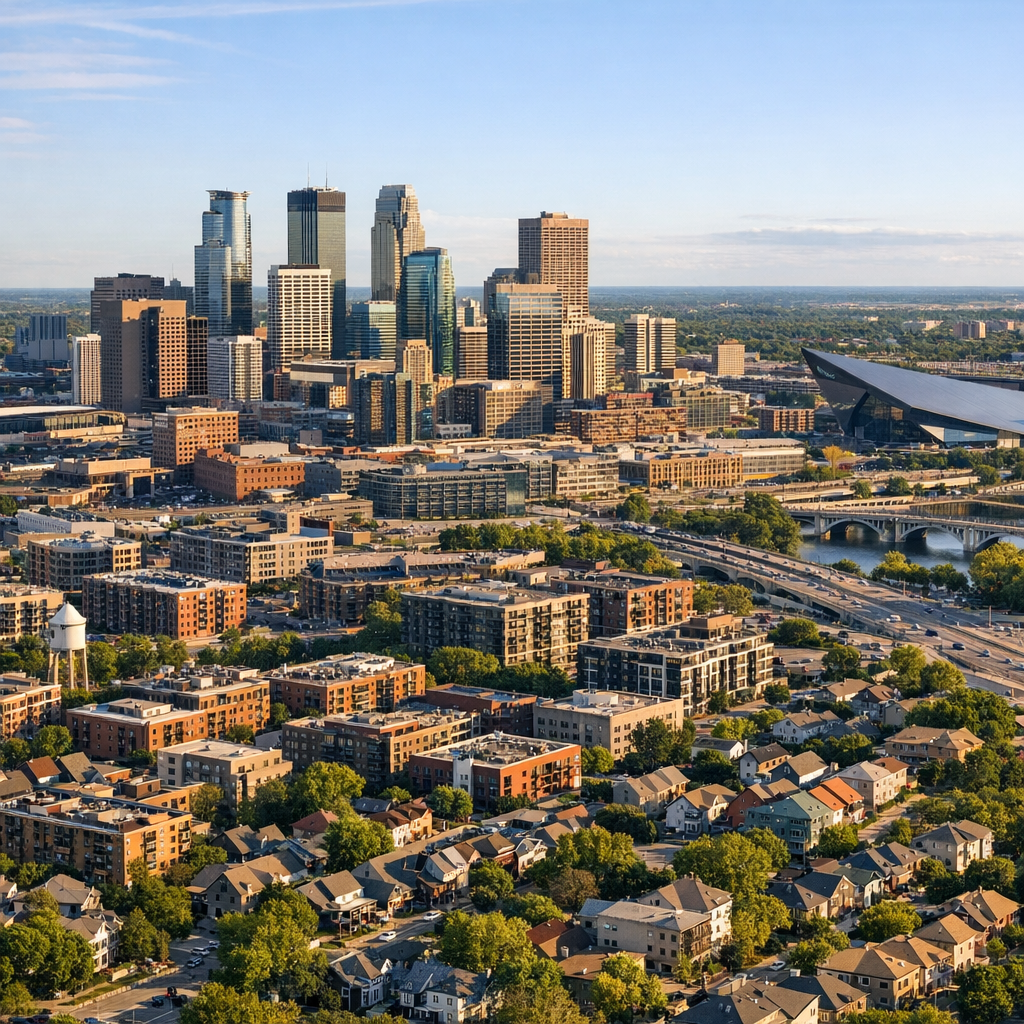
Minneapolis’ real estate market is experiencing notable shifts, with changes in home prices, rental rates, and development projects shaping the city’s housing landscape.
Home Prices and Sales Trends
As of March 2026, the median sale price for homes in Minneapolis reached $355,000, marking a 6% increase from the previous year. Homes are selling faster, averaging 30 days on the market compared to 32 days last year. However, the number of homes sold decreased to 315 in March, down from 362 the previous year. This suggests a competitive market with limited inventory.
Rental Market Dynamics
The rental market has also seen changes. The average rent for an apartment in Minneapolis is $1,683, a 1.47% increase compared to the previous year. Studio apartments average $1,204, one-bedroom units $1,500, and two-bedroom units $2,070. Despite these increases, Minneapolis rents remain below the national average, offering relative affordability.
Development and Housing Supply
New housing construction has slowed, with only 12,161 units built in 2025, a significant drop from the 18,000+ units constructed annually between 2019 and 2022. This decline contributes to rising rents and home prices, posing challenges for affordability. Developers cite high construction costs, rising interest rates, and limited rent growth as factors affecting new developments.
Commercial Real Estate and Tax Implications
Commercial property values in downtown Minneapolis have declined, with a 13.7% decrease in 2025. This shift affects the city’s tax base, potentially leading to higher property taxes for homeowners. City leaders are exploring new taxation methods to address budget shortfalls resulting from these declining commercial values.
Understanding these trends is crucial for residents and potential buyers navigating Minneapolis’ evolving real estate market.