

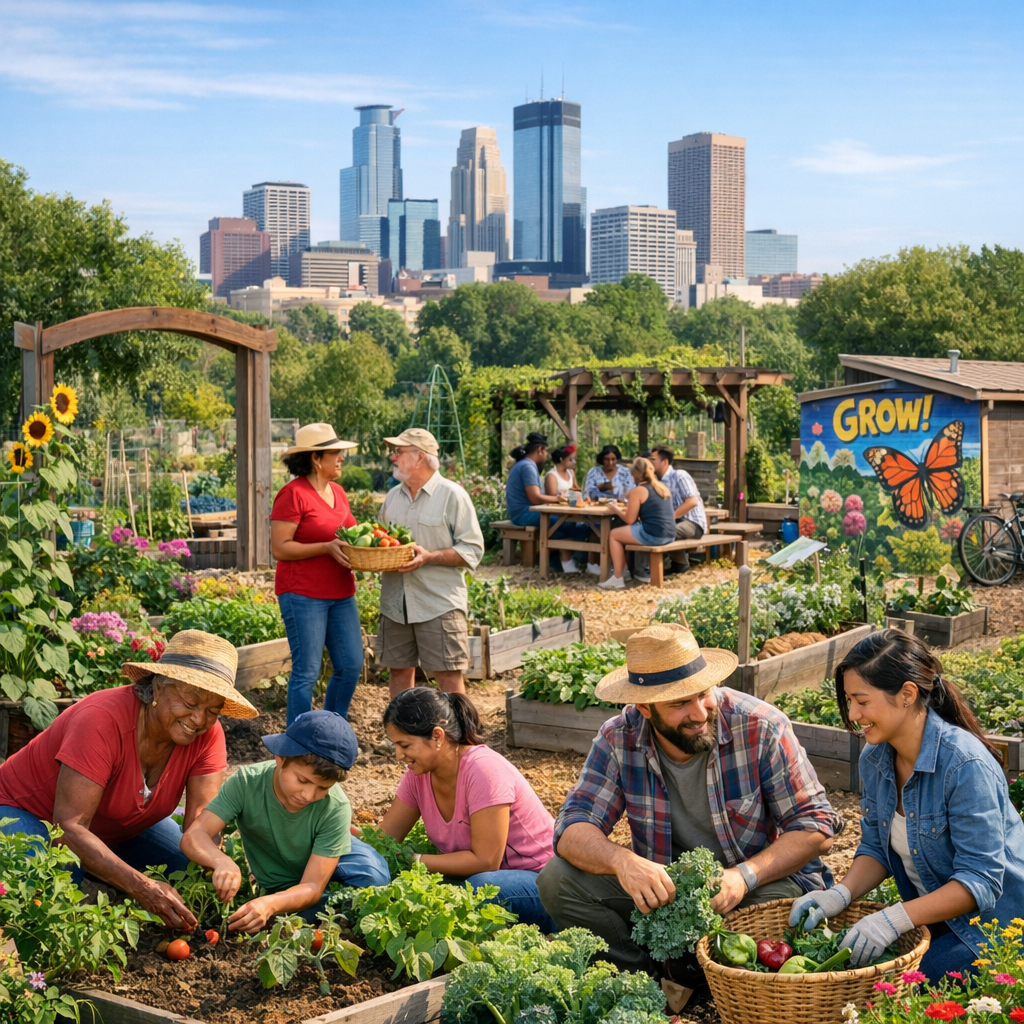
In the heart of Minneapolis, community gardens have become vital spaces where residents come together to cultivate not only plants but also relationships and a sense of belonging. These green spaces offer more than just fresh produce; they serve as hubs for education, environmental stewardship, and community engagement.
The Roots of Community Gardening in Minneapolis
Minneapolis boasts a rich history of community gardening. The Dowling Community Garden, established in 1943, is one of the last remaining Victory Gardens from World War II. Today, it encompasses over 190 plots tended by approximately 250 gardeners, reflecting the city’s enduring commitment to communal green spaces.
Diverse Gardens, Unified Goals
Across the city, various community gardens cater to the unique needs of their neighborhoods. The Soo Line Community Garden in the Whittier neighborhood, for instance, offers 100 plots and collaborates with local schools to provide educational opportunities for children. Similarly, the Gethsemane Community Garden in downtown Minneapolis features private plots, a communal “Giving Garden,” and a landscaped area for public enjoyment.
City Support and Expansion
The Minneapolis Park & Recreation Board (MPRB) actively supports the development of community gardens. Parks like Bridal Veil Gardens and Loring Park Garden of the Seasons offer residents spaces to grow food and flowers. The MPRB’s Community Garden Policy facilitates the establishment of new gardens, ensuring that more neighborhoods have access to these valuable resources.
Benefits Beyond Gardening
Community gardens in Minneapolis provide numerous benefits. They promote sustainable gardening practices, enhance food security, and offer educational programs. Gardens like the LaSalle Community Garden in the Stevens Square neighborhood and the HPDL Triangle Community Garden in the Hale Page Diamond Lake area exemplify how these spaces can transform vacant lots into vibrant community assets.
Getting Involved
For those interested in joining a community garden, the MPRB offers information on available plots and the application process. Additionally, organizations like the Stevens Square Community Organization and the Hale Page Diamond Lake Community Association provide opportunities for residents to engage with local green spaces.
Community gardens are more than just plots of land; they are the seeds of community spirit, environmental responsibility, and urban resilience. As these gardens continue to flourish, they remind us of the power of collective effort in nurturing both the land and our communities.