

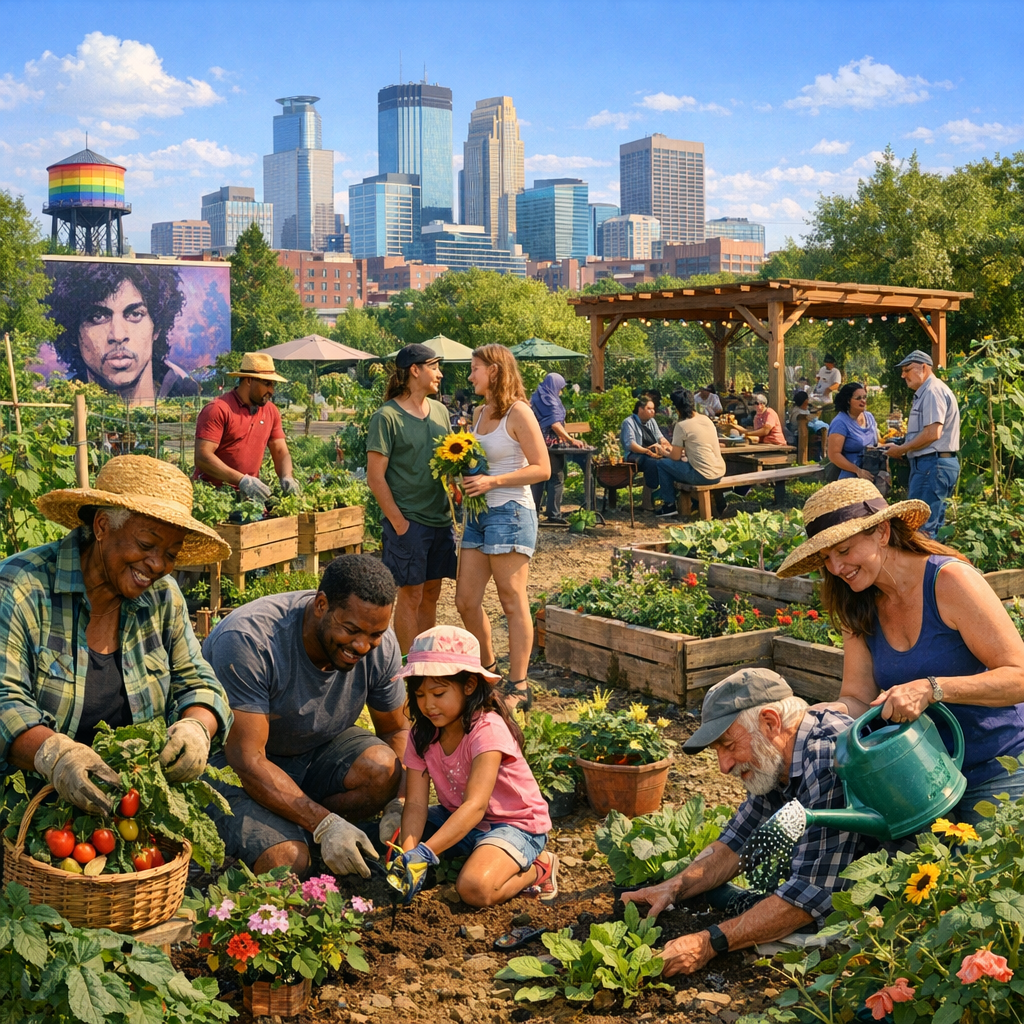
In the heart of Minneapolis, community gardens have blossomed into vital spaces that bring residents together, promote sustainable practices, and enhance the urban landscape. These gardens serve as more than just plots of land for cultivation; they are hubs of community engagement and environmental stewardship.
Historical Roots and Modern Growth
One of the city’s most storied gardens is the Dowling Community Garden, established in 1943. It stands as one of the last remaining Victory Gardens from World War II, symbolizing resilience and community spirit. Today, it encompasses over 190 plots tended by approximately 250 gardeners, reflecting the enduring appeal of communal gardening.
Diverse Spaces for Diverse Communities
Minneapolis boasts a variety of community gardens, each with its unique character. The Soo Line Community Garden, for instance, offers 100 plots and collaborates with local schools to provide educational opportunities for children. Similarly, the Gethsemane Community Garden in downtown Minneapolis features private plots, a communal “Giving Garden,” and a landscaped area with a pergola and picnic tables, creating a welcoming environment for all.
City Support and Accessibility
The Minneapolis Park & Recreation Board (MPRB) actively supports community gardening by establishing gardens in parks throughout the city. Residents can apply for plots in designated community gardens managed in coordination with MPRB staff. Current locations include Bridal Veil Gardens, Parque Monarca, and Franklin Steele Square, among others. This initiative underscores the city’s commitment to providing accessible green spaces for its residents.
Environmental and Social Benefits
Community gardens contribute significantly to urban sustainability. They transform vacant lots into productive green spaces, support pollinators, and offer fresh produce to local communities. For example, the Soo Line Community Garden donated 400 pounds of produce from its Pillsbury Community Garden in a single season, highlighting the potential for community gardens to address food insecurity.
Beyond environmental benefits, these gardens foster social connections. They bring together individuals from diverse backgrounds, creating a sense of belonging and shared purpose. As noted by the Stevens Square Community Organization, green spaces like the LaSalle Community Garden offer residents a place to gather, celebrate, and appreciate nature together.
Getting Involved
For those interested in joining a community garden, the MPRB provides information on available plots and the application process. Additionally, organizations like the Stevens Square Community Organization and the Hale Page Diamond Lake Community Association offer opportunities to get involved in local green spaces.
Community gardens in Minneapolis are more than just places to grow food; they are vibrant spaces that cultivate community, promote sustainability, and enrich urban life. Whether you’re an experienced gardener or a novice with a green thumb, these gardens offer a place to connect, learn, and grow together.