

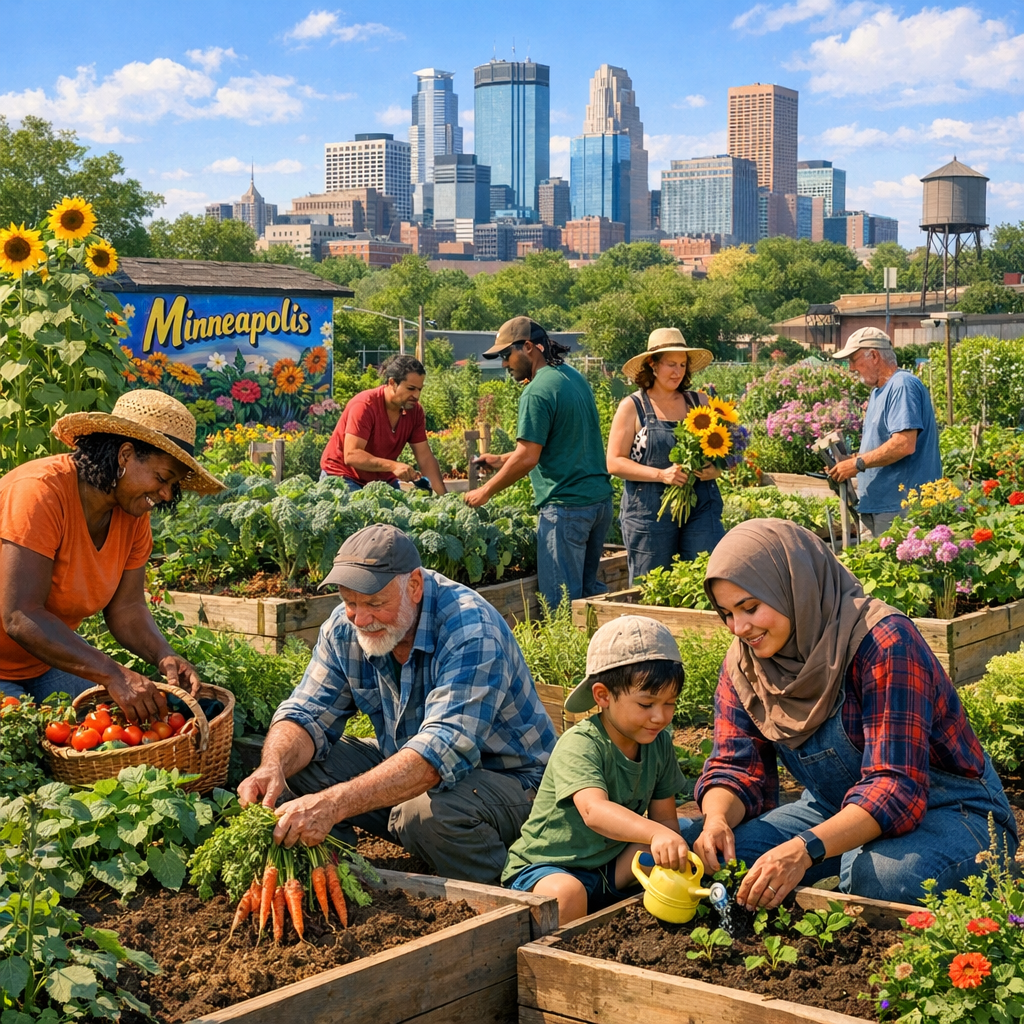
In the heart of Minneapolis, community gardens have blossomed into vital spaces that bring neighbors together, promote sustainable practices, and enhance the urban landscape. These green oases offer residents a chance to cultivate not only plants but also relationships and a sense of belonging.
The Roots of Community Gardening in Minneapolis
Community gardening in Minneapolis has a rich history, with some gardens tracing their origins back to the Victory Gardens of the 1940s. The Dowling Community Garden, for instance, is believed to be one of the last remaining Victory Gardens in use today. Established in 1943, it has grown to encompass over 190 plots tended by approximately 250 gardeners. This garden not only provides space for individuals to grow their own produce but also fosters a strong sense of community among its diverse members.
Modern-Day Green Spaces
Today, numerous community gardens thrive across the city, each with its unique character and mission. The Soo Line Community Garden, located in the Whittier neighborhood, serves as a hub for community engagement, education, and environmental stewardship. With 100 garden plots, including spaces dedicated to children and food shelf donations, the garden emphasizes inclusivity and giving back to the community.
Similarly, the Gethsemane Community Garden in downtown Minneapolis offers 22 private plots alongside a communal “Giving Garden.” This space not only provides residents with the opportunity to grow their own food but also contributes to local food shelves, embodying the spirit of community support.
City Support and Expansion
Recognizing the value of these green spaces, the Minneapolis Park & Recreation Board (MPRB) has been instrumental in establishing and supporting community gardens throughout the city. Parks such as Bridal Veil Gardens, Loring Park, and Powderhorn Park host community gardens managed in coordination with MPRB staff. These gardens are accessible to all residents, promoting urban agriculture and community engagement.
For those interested in joining a community garden, the MPRB provides resources and applications for available plots. Additionally, Hennepin County offers tax-forfeited properties for conversion into community garden spaces, further expanding opportunities for residents to engage in urban gardening.
Benefits Beyond Gardening
The impact of community gardens extends beyond the cultivation of fruits and vegetables. They serve as platforms for education, teaching sustainable gardening practices and environmental stewardship. Gardens like the Soo Line Community Garden collaborate with local schools to provide educational programs for children, fostering an early appreciation for nature and healthy eating.
Moreover, these gardens contribute to the beautification of neighborhoods, create habitats for pollinators, and offer peaceful retreats from the urban hustle. They also play a role in food security by providing fresh produce to local food shelves and residents who may lack access to healthy foods.
Getting Involved
For Minneapolis residents interested in joining or supporting a community garden, numerous options are available. The MPRB’s Community Garden program offers information on existing gardens and how to apply for a plot. Additionally, local organizations and neighborhood associations often manage gardens and welcome new members.
Community gardens in Minneapolis are more than just plots of land; they are vibrant spaces where individuals come together to grow food, share knowledge, and build lasting connections. As these gardens continue to flourish, they enrich the city’s social fabric and promote a sustainable, inclusive urban environment.