
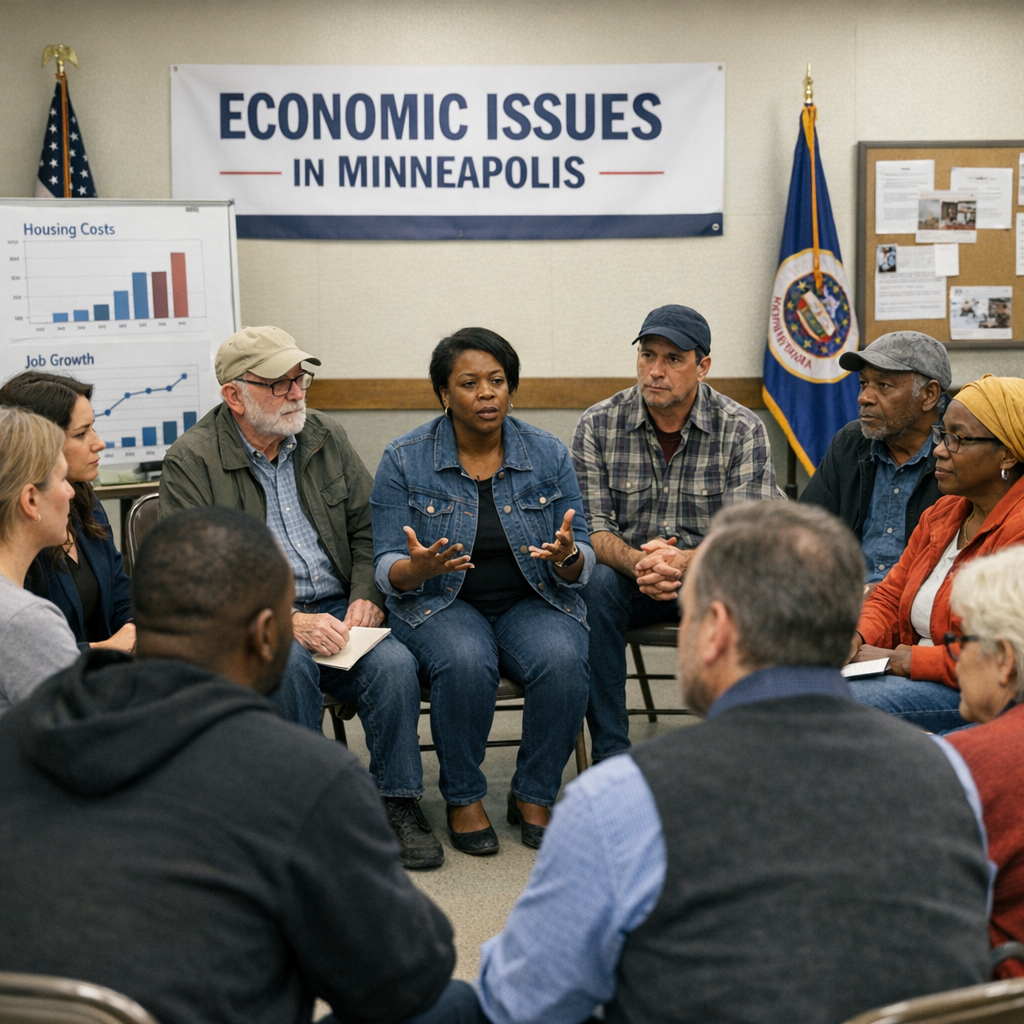
The U.S. economy is experiencing a period of significant change, with recent developments affecting various sectors and communities, including here in Minneapolis.
Inflation and Consumer Sentiment
Recent data indicates a rise in inflation, with the rate reaching 3.8% in April, the highest in three years. This increase has led to growing concerns among consumers, as higher prices impact daily expenses. A CBS News/YouGov poll conducted between May 13-15 found that 70% of Americans feel “angry” or “frustrated” about the current economic situation, with only 11% expressing enthusiasm. This sentiment reflects the challenges many are facing in managing household budgets amid rising costs.
Federal Reserve’s Monetary Policy
In response to these economic pressures, the Federal Reserve has been adjusting its monetary policies. The International Monetary Fund (IMF) has noted that the U.S. economy is poised for accelerated growth, with GDP expected to grow by 2.4% in the fourth quarter of 2026. However, the IMF also warns of risks associated with rising federal budget debts. The Federal Reserve has cut its benchmark interest rate three times in 2025 and is considering further adjustments to support economic stability.
Impact on Minneapolis Residents
For residents of Minneapolis, these national economic trends have tangible effects. Rising inflation can lead to increased costs for goods and services, affecting household budgets. Additionally, changes in Federal Reserve policies may influence interest rates on loans and mortgages, impacting decisions related to housing and investments. Staying informed about these developments is crucial for making sound financial decisions in the current economic climate.
As the economic landscape continues to evolve, it’s important for individuals and communities to remain vigilant and adaptable. By understanding the broader economic trends and their local implications, Minneapolis residents can better navigate the challenges and opportunities that arise.