

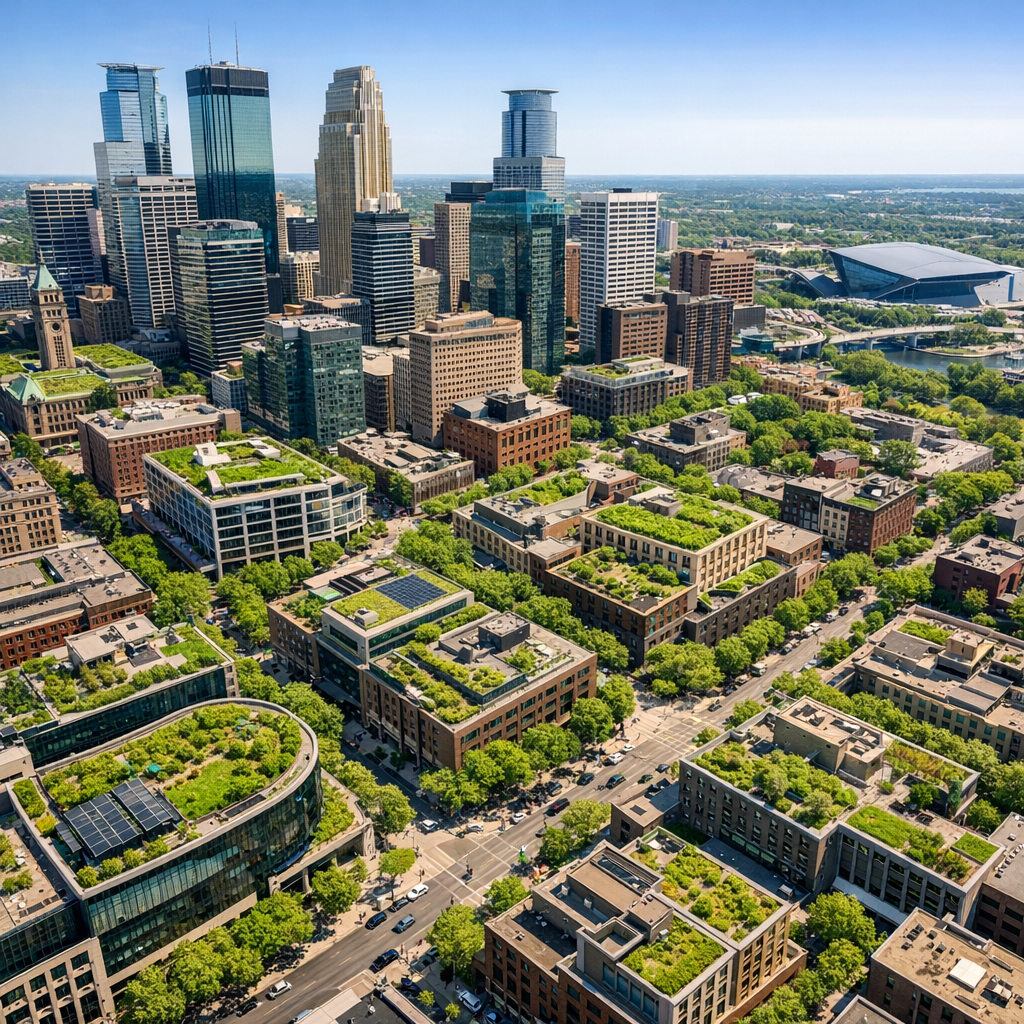
As Minneapolis continues to grow and develop, residents may notice that the city feels warmer than surrounding rural areas. This phenomenon, known as the Urban Heat Island (UHI) effect, occurs when urban environments experience higher temperatures due to human activities and infrastructure.
What Causes the Urban Heat Island Effect?
The UHI effect is primarily caused by the replacement of natural landscapes with materials like asphalt and concrete, which absorb and retain heat more than vegetation. Additionally, buildings and roads can obstruct natural wind flow, reducing the cooling effects of breezes. Waste heat from vehicles, industrial activities, and air conditioning units further contribute to elevated temperatures.
Impacts on Minneapolis
In Minneapolis, the UHI effect can lead to several challenges:
- Increased Energy Consumption: Higher temperatures can result in greater use of air conditioning, leading to higher energy bills and increased greenhouse gas emissions.
- Health Risks: Elevated temperatures can exacerbate heat-related illnesses, particularly among vulnerable populations such as the elderly and those with pre-existing health conditions.
- Environmental Concerns: Warmer urban temperatures can affect local ecosystems, including altering the timing of plant blooming and impacting wildlife habitats.
Mitigation Efforts in Minneapolis
Recognizing the challenges posed by the UHI effect, Minneapolis has undertaken several initiatives to mitigate its impact:
- Urban Greening: The city is increasing green spaces and tree canopy coverage to provide shade and promote evaporative cooling.
- Sustainable Building Practices: Encouraging the use of reflective roofing materials and green roofs to reduce heat absorption.
- Community Engagement: Collaborating with residents and organizations to raise awareness and implement localized solutions.
By understanding the causes and effects of the Urban Heat Island phenomenon, Minneapolis can continue to develop strategies that promote a healthier and more sustainable urban environment for all residents.