

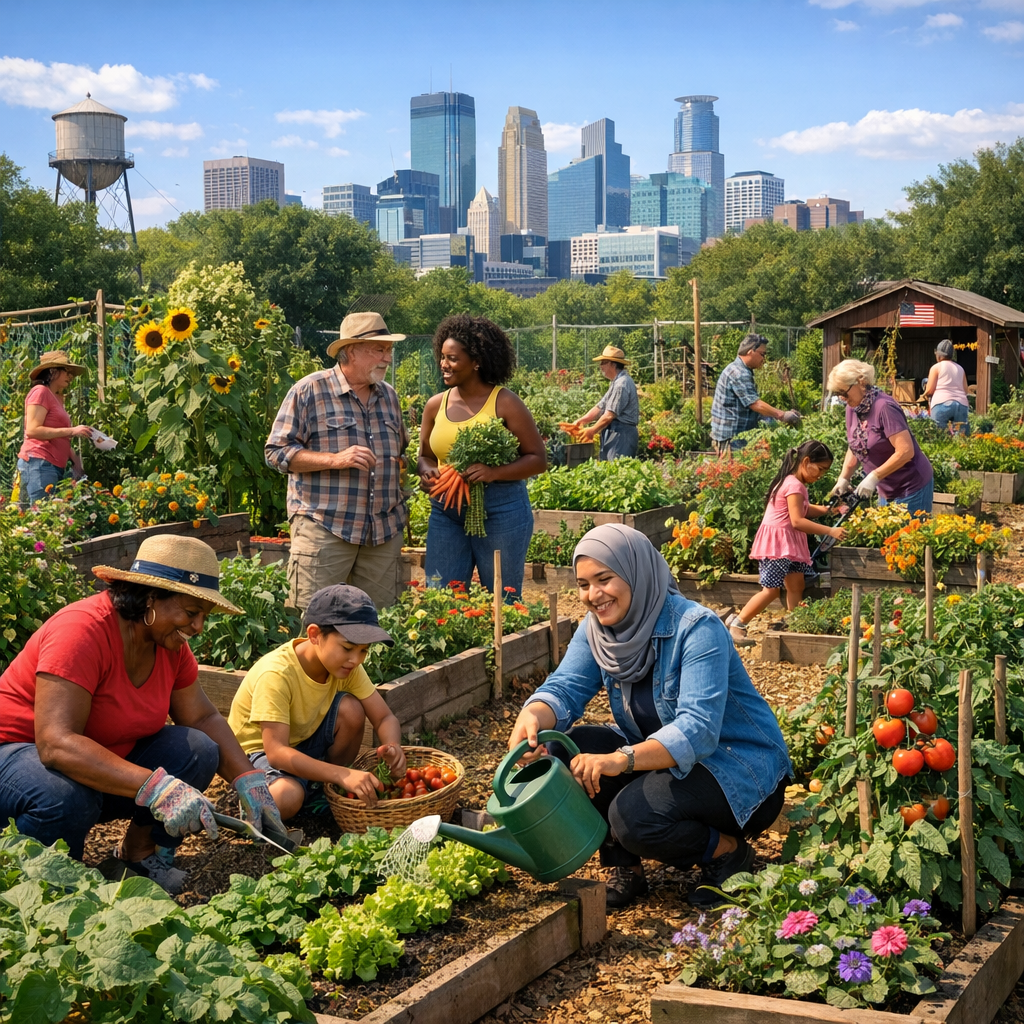
In the heart of Minneapolis, community gardens have blossomed into vital spaces that bring neighbors together, promote sustainable practices, and enhance the urban landscape. These gardens offer residents the opportunity to cultivate their own food, share knowledge, and build lasting relationships.
A Legacy of Growth
One of the city’s most storied gardens is the Dowling Community Garden, established in 1943. Located on the grounds of Dowling Elementary School, it is believed to be one of the last remaining Victory Gardens in use today. Over the decades, it has expanded to over 190 plots, tended by approximately 250 gardeners from diverse backgrounds. The garden’s mission includes providing community garden space, promoting sustainable gardening practices, and offering environmental education.
Green Spaces in Urban Settings
Beyond individual plots, organizations like Hope Community have developed networks of gardens that serve as gathering places for learning and community building. Their urban gardens, such as the Hope Block garden and the Oakland Avenue garden, reflect a collective vision for a strong, healthy community.
Similarly, the Stevens Square Community Organization maintains green spaces like the LaSalle Community Garden, offering residents a place to grow their own food and connect with neighbors. These gardens are integral to preserving and enhancing the unique urban character of Minneapolis.
City Support and Expansion
The Minneapolis Park and Recreation Board (MPRB) has been instrumental in establishing community gardens throughout the city. With more than 200 plots available, residents can apply for a space within designated community gardens managed in coordination with MPRB staff. Locations such as Bridal Veil Gardens and Parque Monarca provide accessible green spaces for urban agriculture.
Additionally, Hennepin County has converted tax-forfeited properties into community garden spaces, further expanding opportunities for residents to engage in gardening and community building.
Benefits Beyond Gardening
Community gardens in Minneapolis do more than provide fresh produce; they foster a sense of belonging, promote environmental stewardship, and contribute to the overall well-being of the community. They serve as educational platforms, teaching sustainable practices and encouraging healthy lifestyles.
As these gardens continue to thrive, they stand as testaments to the power of community collaboration and the enduring value of green spaces in urban environments.