

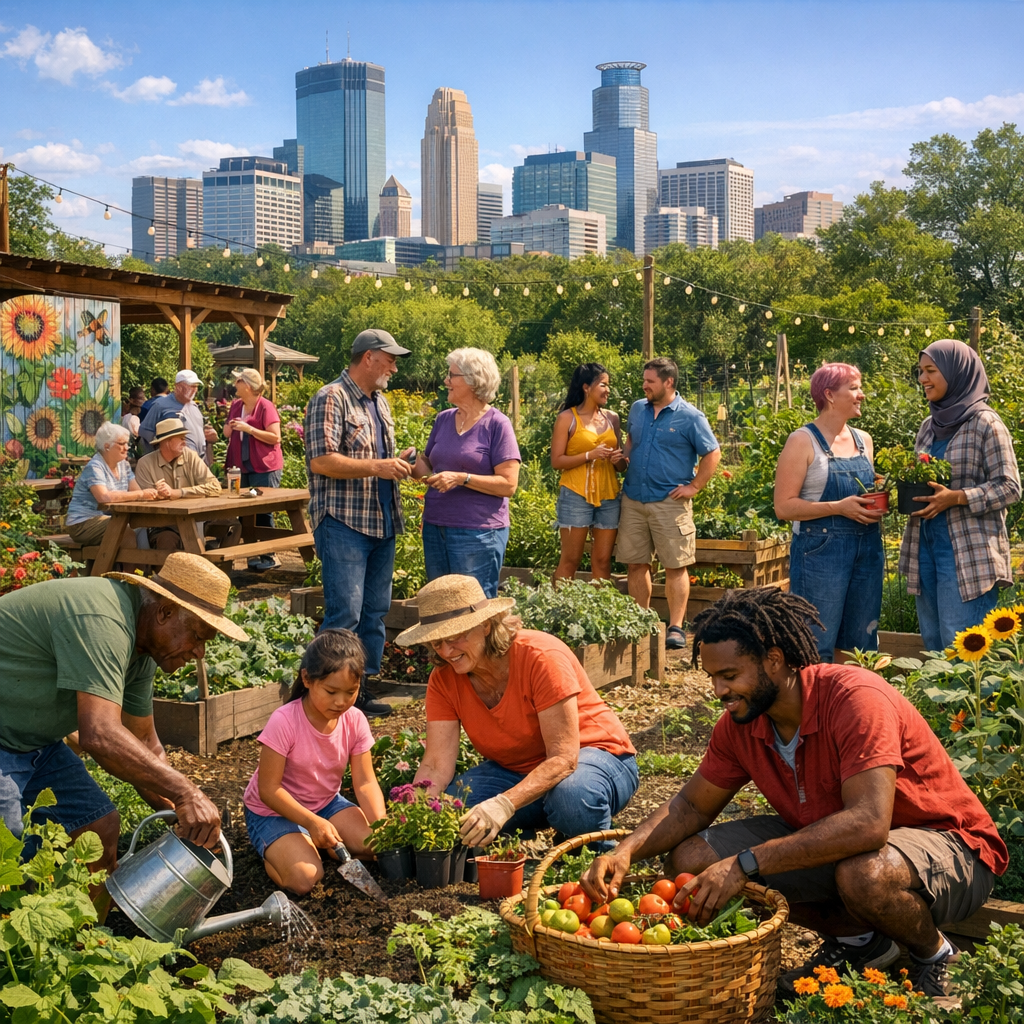
In the heart of Minneapolis, community gardens have become vital spaces where residents come together to cultivate not only plants but also relationships and a shared sense of purpose. These gardens offer more than just fresh produce; they serve as hubs for education, environmental stewardship, and community building.
The Growth of Community Gardens
Over the years, Minneapolis has seen a significant increase in community gardens. Organizations like the Minneapolis Park & Recreation Board (MPRB) have been instrumental in this growth, establishing gardens in parks throughout the city. Residents can apply for plots within these designated community gardens, which are managed collaboratively by community members and MPRB staff. This initiative aligns with the MPRB’s Urban Agriculture Activity Plan, aiming to provide education, access to healthy foods, and support for the local food system.
Notable Community Gardens
Several community gardens stand out for their contributions to the city’s landscape and community spirit:
Dowling Community Garden
Established in 1943, the Dowling Community Garden is one of the last remaining Victory Gardens in use today. Located on the grounds of Dowling Elementary School, it has grown to encompass over 190 plots tended by approximately 250 gardeners. The garden’s mission includes providing community garden space, promoting sustainable gardening practices, and offering environmental education.
Soo Line Community Garden
Founded in 1991, the Soo Line Community Garden transformed a vacant lot into a thriving green space. With 100 garden plots, including those dedicated to children and food shelf donations, the garden emphasizes community, education, and giving back. It also collaborates with Whittier Elementary School to provide educational opportunities for children.
Bridal Veil Gardens
Located at 2905 4th Street SE, Bridal Veil Gardens is a newer addition to Minneapolis’s community garden scene. The park includes a community garden, picnic pavilion, and open green space. The name honors the long-buried Bridal Veil Creek that once flowed through the area, reflecting the site’s ecological history.
Benefits Beyond Gardening
Community gardens in Minneapolis offer numerous benefits beyond the cultivation of plants. They provide educational opportunities, promote environmental sustainability, and foster social connections among diverse groups of people. For instance, the Hope Community’s urban gardens serve as places where people can gather to learn, grow, and build community connections. These spaces break through racial and social barriers, uniting individuals through a shared love of gardening.
Getting Involved
For those interested in joining a community garden, the MPRB offers a plot application process. Additionally, many neighborhood organizations manage their own gardens and welcome new members. Engaging with these gardens not only provides access to fresh produce but also an opportunity to contribute to the community’s well-being and sustainability.
Community gardens are more than plots of land; they are vibrant spaces where Minneapolis residents cultivate not only plants but also a stronger, more connected community.