

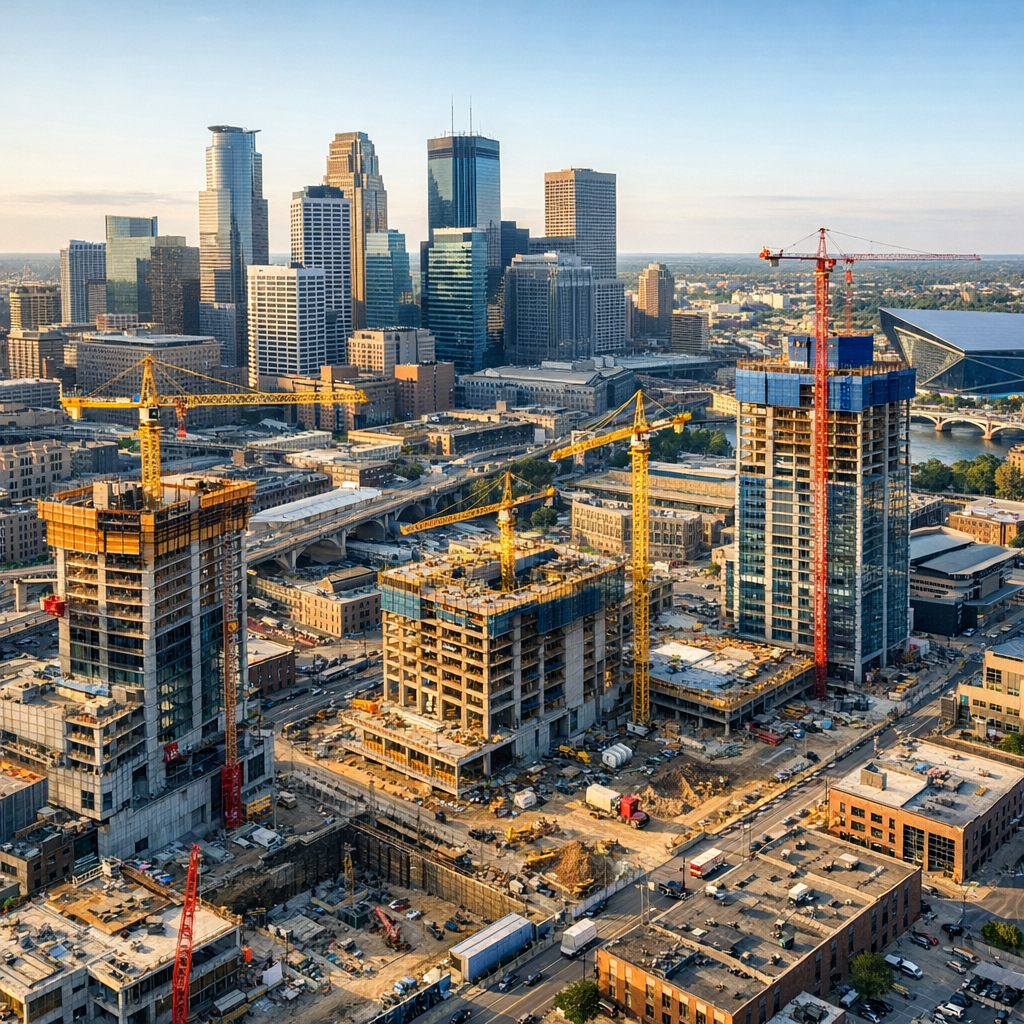
Minneapolis’ real estate market is undergoing significant transformations, influenced by fluctuating property values, ambitious development projects, and concerted efforts to enhance affordable housing.
Market Trends: A Shifting Landscape
Recent data indicates a nuanced market. In March 2026, the median sale price of homes in Minneapolis was $355,000, marking a 6% increase from the previous year. Homes typically sold within 30 days, reflecting a competitive environment. However, the number of homes sold decreased from 362 to 315 compared to the same period last year, suggesting a tightening market. [Source: Redfin]
Contrastingly, other reports highlight a decline in listing prices. In April 2026, the median listing price was $305,225, an 8.9% drop year-over-year, outpacing the national decline of 2.1%. This suggests that while sale prices have risen, listing prices have adjusted downward, possibly due to increased inventory and changing buyer dynamics. [Source: Realtor.com]
Development Projects: Revitalizing the Urban Core
Several development initiatives are reshaping Minneapolis’ urban landscape. The historic Minneapolis Grain Exchange is slated for a $123 million redevelopment by Sherman Associates, aiming to introduce 232 new apartments and mixed-use spaces. This project aligns with the city’s objectives to rejuvenate downtown areas and repurpose historic structures. [Source: Axios]
In Northeast Minneapolis, the Solstice Apartments project by Footprint Development exemplifies sustainable urban living. This development features 23 units designed with low carbon footprints and high energy efficiency, catering to the growing demand for eco-friendly housing options. [Source: Footprint Development]
Affordable Housing Initiatives: Addressing Community Needs
The City of Minneapolis remains committed to expanding affordable housing. In November 2025, the city allocated over $14 million to support 11 affordable rental housing projects, adding nearly 600 affordable homes. Additionally, 126 new shelter beds and 123 units were introduced to assist individuals experiencing homelessness. These efforts underscore the city’s dedication to providing safe and accessible housing for all residents. [Source: City of Minneapolis]
Conclusion
Minneapolis’ real estate market is characterized by dynamic shifts in property values, innovative development projects, and proactive housing policies. For residents and investors alike, staying informed about these trends is essential to navigate the evolving landscape effectively.