

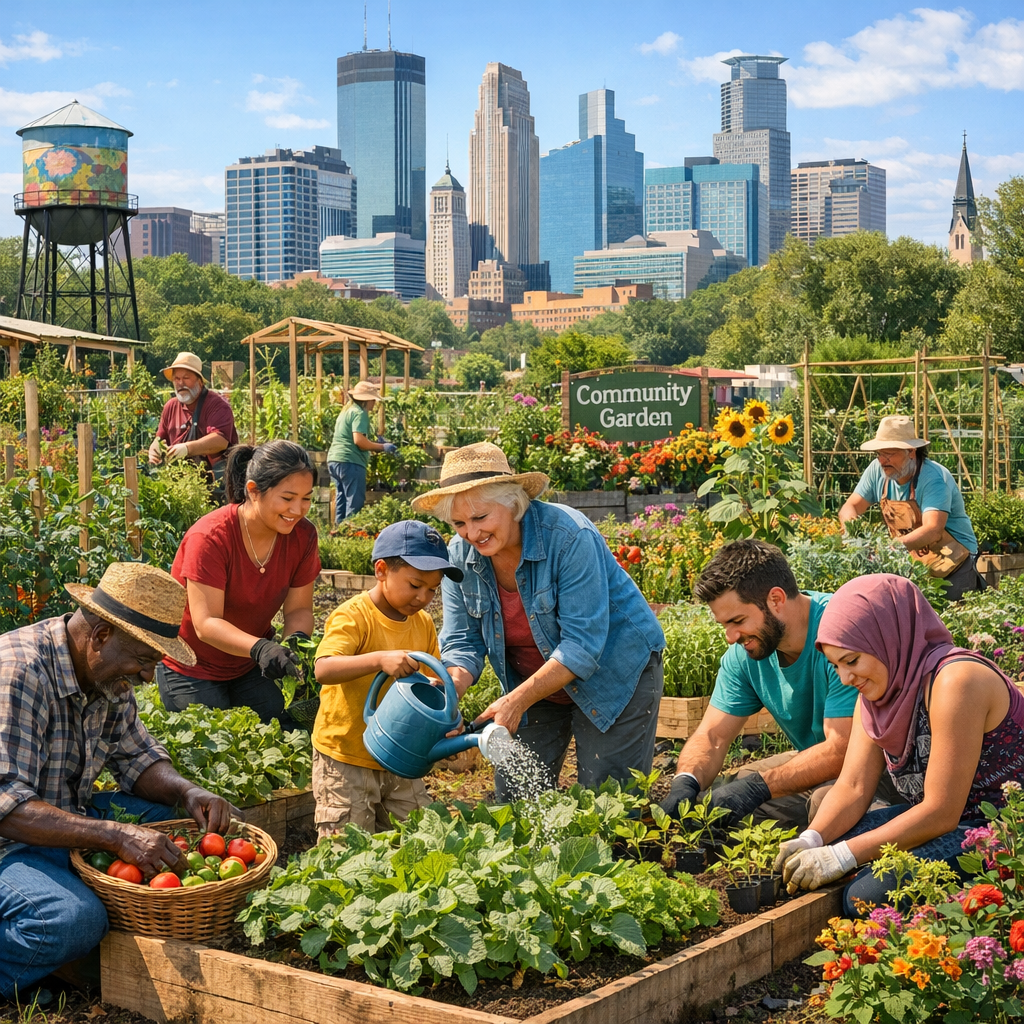
In the heart of Minneapolis, community gardens have blossomed into vital spaces that bring residents together, promote sustainable practices, and enhance the urban landscape. These gardens offer more than just plots of land for cultivation; they serve as hubs for education, environmental stewardship, and community building.
The Growth of Community Gardens
Over the years, Minneapolis has seen a significant increase in community gardens. The Minneapolis Park & Recreation Board (MPRB) has been instrumental in this growth, establishing gardens in parks throughout the city. Residents can apply for plots within these designated community gardens, which are managed collaboratively by community members and MPRB staff. This initiative aligns with the MPRB’s Urban Agriculture Activity Plan, aiming to provide education, access to healthy foods, and support for the local food system.
Notable Community Gardens
Several community gardens stand out for their contributions to the city:
Dowling Community Garden
Established in 1943, the Dowling Community Garden is one of the last remaining Victory Gardens in use today. Located on the grounds of Dowling Environmental School, it has grown to encompass over 190 plots tended by approximately 250 gardeners. The garden’s mission includes providing community garden space, promoting sustainable gardening practices, and offering environmental education.
Soo Line Community Garden
Founded in 1991, the Soo Line Community Garden transformed a vacant lot into a thriving green space. Now an official neighborhood park, it features 100 garden plots for individuals, including areas dedicated to children and food shelf donations. The garden emphasizes community, education, and giving back, coordinating with local schools and offering workshops throughout the season.
Bridal Veil Gardens
Located at 2905 4th Street SE, Bridal Veil Gardens is a newer addition to Minneapolis’s community garden scene. Acquired by the MPRB in 2019, the park includes a community garden, picnic pavilion, and open green space. The name reflects the site’s history, as the long-buried Bridal Veil Creek runs beneath the area. The garden provides residents with space to grow food and fosters community connections.
Benefits to the Community
Community gardens offer numerous benefits to Minneapolis residents:
- Social Connections: Gardens serve as gathering places where neighbors can meet, collaborate, and build relationships, strengthening the social fabric of the community.
- Environmental Impact: By promoting sustainable gardening practices, these spaces contribute to urban greening, improve air quality, and support local biodiversity.
- Educational Opportunities: Many gardens offer workshops and programs that teach residents about horticulture, nutrition, and environmental stewardship.
- Food Security: Access to garden plots allows individuals and families to grow their own fresh produce, contributing to food security and promoting healthy eating habits.
Getting Involved
For those interested in joining a community garden, the MPRB provides information on available plots and the application process. Additionally, local organizations like Hope Community and the Stevens Square Community Organization offer opportunities to participate in urban gardening initiatives. Engaging with these gardens not only provides access to fresh produce but also fosters a sense of belonging and contributes to the overall well-being of the Minneapolis community.