

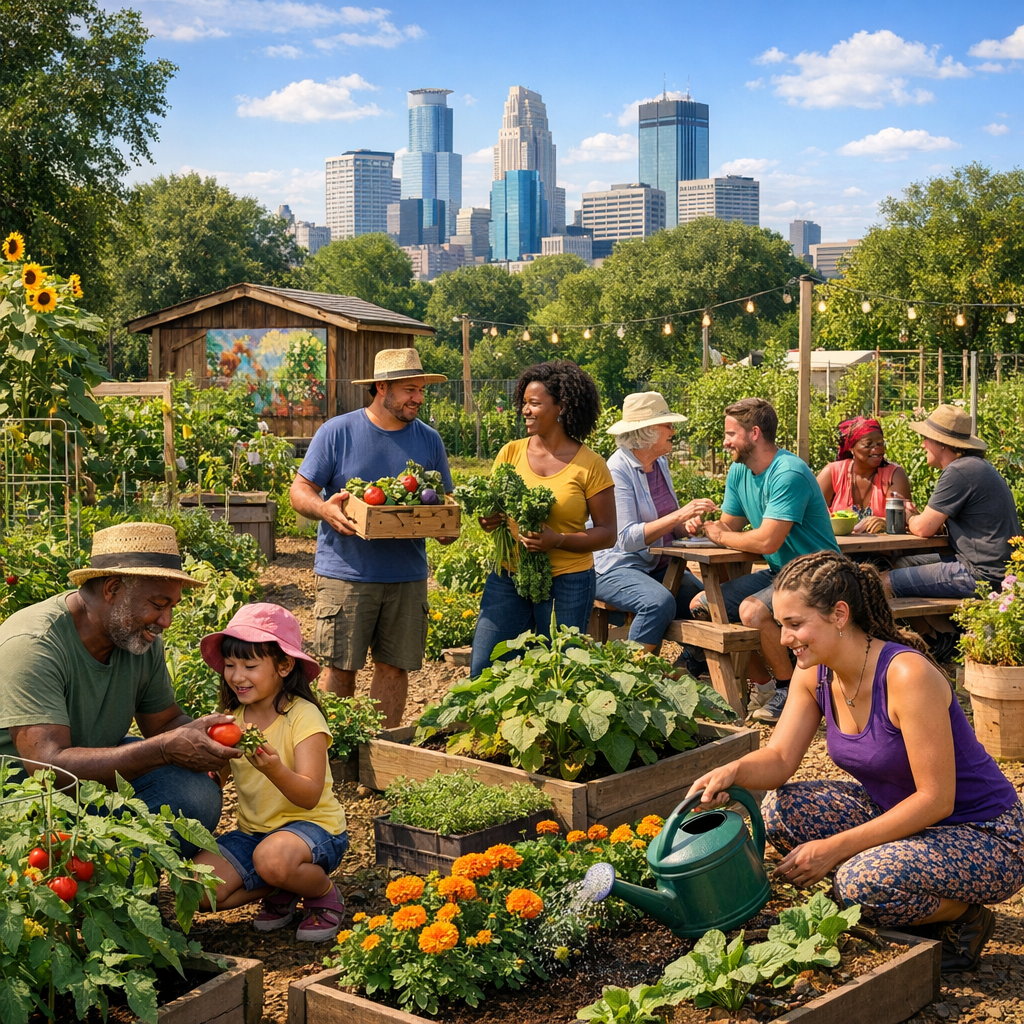
In the heart of Minneapolis, community gardens have blossomed into vital spaces that bring residents together, promote sustainable practices, and enhance the urban landscape. These gardens serve as more than just plots of land for cultivation; they are hubs of community engagement and environmental stewardship.
Historical Roots and Growth
One of the city’s most storied gardens is the Dowling Community Garden, established in 1943. It stands as one of the last remaining Victory Gardens from World War II, symbolizing resilience and community spirit. Today, it encompasses over 190 plots tended by approximately 250 gardeners, reflecting the city’s enduring commitment to communal green spaces.
Diverse Spaces for All
Minneapolis boasts a variety of community gardens, each with its unique character and mission. The Gethsemane Community Garden, located downtown, offers 22 private plots alongside a communal “Giving Garden” and a landscaped area with a pergola and picnic tables, fostering a sense of community among urban dwellers.
In the Whittier neighborhood, the Soo Line Community Garden provides 100 plots for individuals and families, including spaces dedicated to children and local food shelves. This garden emphasizes education and connectivity, collaborating with local schools and offering workshops to the public.
Policy and Support
The Minneapolis Park & Recreation Board (MPRB) plays a pivotal role in supporting these green spaces. Through its Community Garden Policy, the MPRB designates areas within neighborhood parks for community gardening, ensuring residents have access to plots free of charge. This initiative aligns with the Urban Agriculture Activity Plan, aiming to provide education, access to healthy foods, and support for the local food system.
Community Impact
Beyond providing fresh produce, these gardens serve as platforms for cultural exchange and community building. Hope Community’s urban gardens, for instance, are envisioned as places where people can gather to learn, grow, and build connections. As one garden leader noted, “Being in the garden breaks through race issues—it’s a common thing we all have in our spirits and our souls.”
Getting Involved
For those interested in joining a community garden, the MPRB offers a plot application process, with gardens located throughout the city, including Bridal Veil Gardens, Parque Monarca, and Powderhorn Park. Additionally, organizations like the Stevens Square Community Organization manage gardens such as the LaSalle Community Garden, providing opportunities for residents to cultivate their own plots.
Community gardens in Minneapolis are more than just spaces for planting; they are vibrant centers of community life, promoting sustainability, education, and social cohesion. As these gardens continue to flourish, they remind us of the power of collective effort and the importance of nurturing both the land and our communities.