

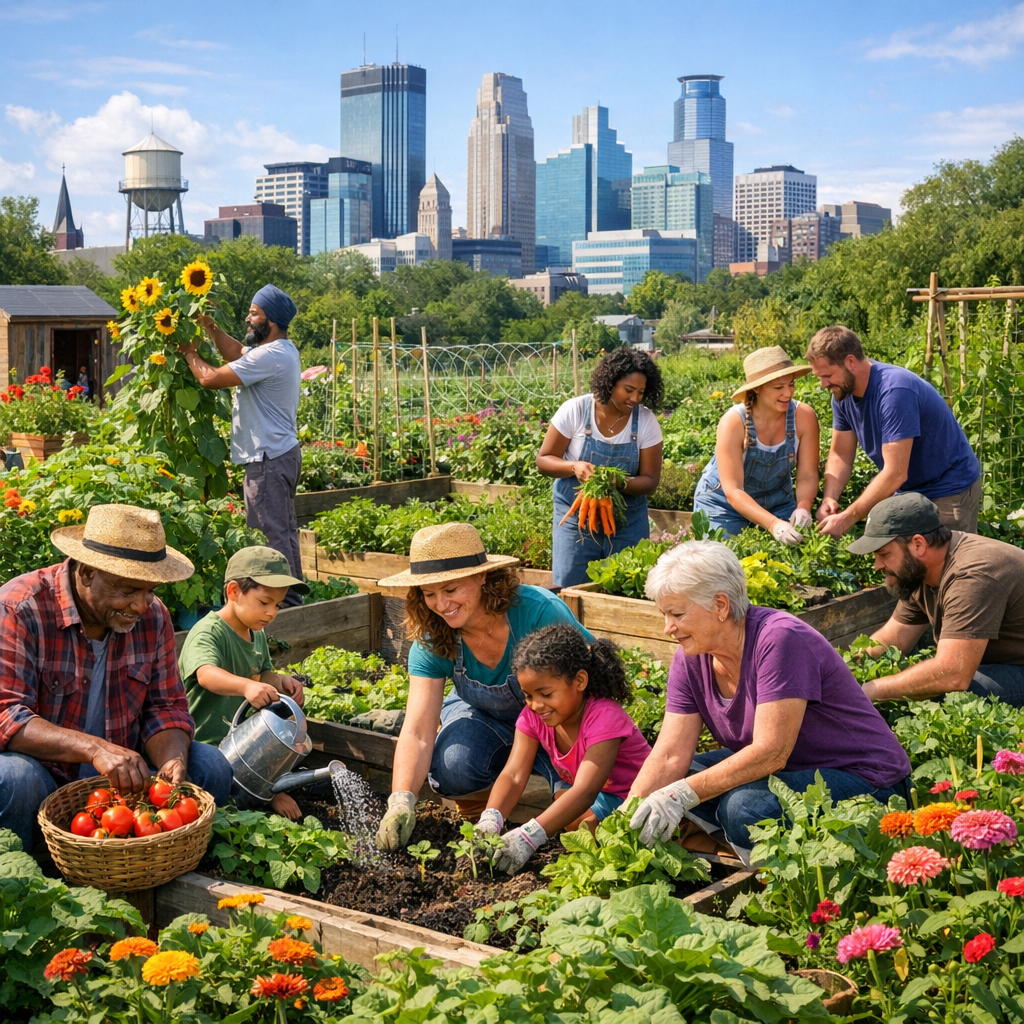
In the heart of Minneapolis, community gardens have blossomed into vital spaces that bring residents together, promote sustainable practices, and enhance the urban landscape. These gardens serve as more than just plots of land for cultivation; they are hubs of community engagement and environmental stewardship.
Historical Roots and Modern Growth
One of the city’s most storied gardens is the Dowling Community Garden, established in 1943 as a Victory Garden during World War II. Located on the grounds of Dowling Environmental School, it is believed to be one of the last remaining Victory Gardens still in use today. Over the decades, it has expanded to over 190 plots tended by approximately 250 gardeners, reflecting the enduring appeal of communal gardening.
Diverse Spaces for Diverse Communities
Minneapolis boasts a variety of community gardens, each with its unique character and mission. The Soo Line Community Garden, for instance, started in 1991 when neighbors transformed a vacant, littered lot into a thriving green space. Today, it includes 100 plots and collaborates with local schools to provide educational opportunities for children.
Similarly, Hope Community’s urban gardens, such as the Hope Block garden and the Oakland Avenue garden, serve as gathering places where people can learn, grow, and build connections. These spaces reflect a collective vision for a strong, healthy community.
Policy and Support
The Minneapolis Park & Recreation Board (MPRB) has been instrumental in supporting community gardens. Their Community Garden Policy aims to provide residents with free access to garden plots within designated urban agriculture areas in neighborhood parks. This initiative underscores the city’s commitment to fostering community engagement and promoting access to healthy foods.
Environmental and Social Impact
Community gardens contribute significantly to the urban environment by promoting biodiversity, supporting pollinators, and providing fresh produce to local residents. They also serve as educational platforms, teaching sustainable gardening practices and encouraging environmental responsibility.
Moreover, these gardens strengthen social ties by bringing together individuals from diverse backgrounds to work towards common goals. They offer spaces for cultural exchange, mutual support, and collective celebration, thereby enhancing the social fabric of Minneapolis neighborhoods.
Getting Involved
For those interested in joining a community garden, the MPRB provides information on available plots and the application process. Additionally, local organizations like the Stevens Square Community Organization offer opportunities to participate in green spaces such as the LaSalle Community Garden.
Community gardens in Minneapolis are more than just places to grow food; they are vibrant centers of community life that nurture connections, promote sustainability, and enrich the urban experience. Whether you’re a seasoned gardener or a curious newcomer, these spaces welcome all who wish to cultivate both plants and community.