

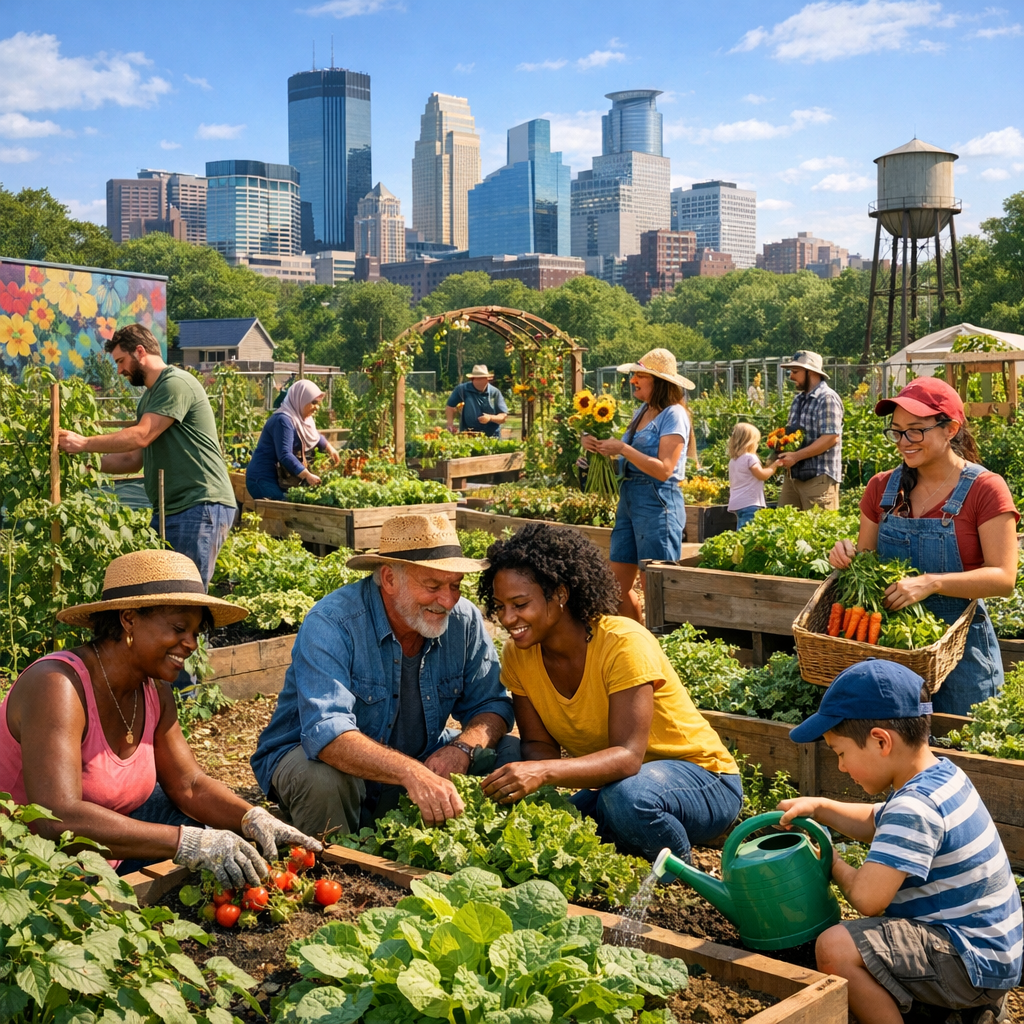
In the heart of Minneapolis, community gardens have blossomed into vital spaces that bring residents together, promote sustainable practices, and enhance the urban landscape. These gardens offer more than just plots of land for cultivation; they serve as hubs for education, environmental stewardship, and community building.
Historical Roots and Growth
One of the city’s most storied gardens is the Dowling Community Garden, established in 1943 as a Victory Garden during World War II. Today, it stands as one of the last remaining Victory Gardens in the nation, encompassing over 190 plots tended by approximately 250 gardeners. This garden not only provides fresh produce but also fosters a sense of community among its diverse participants.
Urban Agriculture and Policy Support
The Minneapolis Park & Recreation Board (MPRB) has been instrumental in supporting urban agriculture. Their Community Garden Policy aims to integrate gardens within neighborhood parks, offering residents free access to plots through a structured application process. This initiative underscores the city’s commitment to providing spaces where individuals can grow healthy food and engage with their neighbors.
Diverse Garden Spaces Across the City
Several community gardens have become integral parts of Minneapolis neighborhoods:
- Gethsemane Community Garden: Located downtown, this garden features 22 private plots, a communal “Giving Garden,” and a landscaped area with a pergola and picnic tables, creating a green oasis amidst the urban environment.
- Soo Line Community Garden: Situated in the Whittier neighborhood, this garden offers 100 plots and collaborates with local schools to provide educational opportunities for children, emphasizing community engagement and environmental education.
- Hope Community Gardens: Comprising multiple sites, including the Hope Block garden and the Oakland Avenue garden, these spaces are designed for collective management and serve as gathering places for learning and community connection.
Environmental and Social Impact
Community gardens contribute significantly to environmental sustainability by promoting organic gardening practices, supporting pollinators, and utilizing stormwater management systems. Socially, they provide inclusive spaces where residents from diverse backgrounds can collaborate, share knowledge, and build lasting relationships.
Getting Involved
For those interested in joining a community garden, the MPRB offers resources and information on available plots and the application process. Engaging with local gardens not only provides access to fresh produce but also an opportunity to be part of a vibrant community dedicated to sustainability and mutual support.
Community gardens in Minneapolis exemplify the power of collective effort in transforming urban spaces into thriving centers of growth, learning, and connection. They remind us that even in a bustling city, there is room to cultivate both plants and community spirit.