

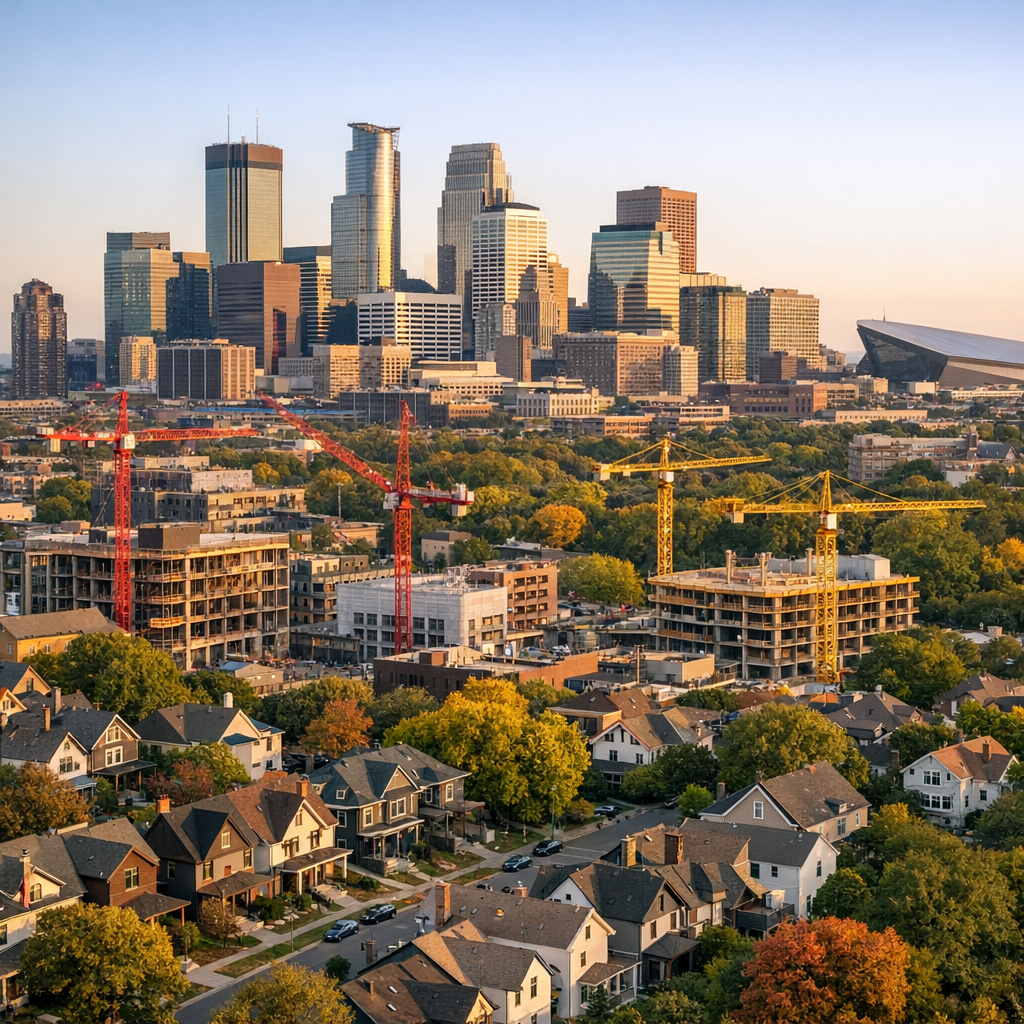
Minneapolis’ real estate market is experiencing notable shifts, with changes in home prices, inventory levels, and significant development projects reshaping the city’s housing landscape.
Current Market Trends
As of March 2026, the median sale price for homes in Minneapolis reached $355,000, marking a 6.0% increase from the previous year. Homes are selling faster, averaging 30 days on the market compared to 32 days last year. However, the number of homes sold decreased to 315 in March, down from 362 the previous year. This suggests a competitive market with rising prices and quicker sales, yet a decline in overall transactions.
Inventory and Listings
April 2026 saw a significant rise in active listings, totaling 855 homes—an 18.8% increase year-over-year. New listings also surged, with 688 homes entering the market. Despite this influx, the median list price dipped to $309,950, a 3.9% decrease from the previous year. This indicates that while more homes are available, sellers are adjusting prices to attract buyers in a competitive environment.
Development Projects
Several development projects are contributing to the city’s evolving real estate landscape. The historic Minneapolis Grain Exchange is set for a substantial redevelopment, with plans to transform the site into a mixed-use development featuring 232 new apartments. This $123 million project aligns with city leaders’ goals of revitalizing the downtown area.
In North Minneapolis, the Allura development is blending 14 affordable and 24 luxury units to create an inclusive community. Amenities include a tech-enabled laundromat, a chef-led ghost kitchen, and a rooftop garden, aiming to provide essential services and foster local entrepreneurship.
Additionally, Footprint Development is focusing on carbon-smart, climate-resilient multifamily housing in walkable, transit-rich neighborhoods. Their Solstice Apartments project in Northeast Minneapolis features 23 units designed with low embodied carbon and ultra-energy efficiency, reflecting a commitment to sustainable urban living.
Conclusion
Minneapolis’ real estate market is characterized by rising home prices, increased inventory, and dynamic development projects. Prospective buyers and investors should stay informed about these trends to make strategic decisions in this evolving landscape.