

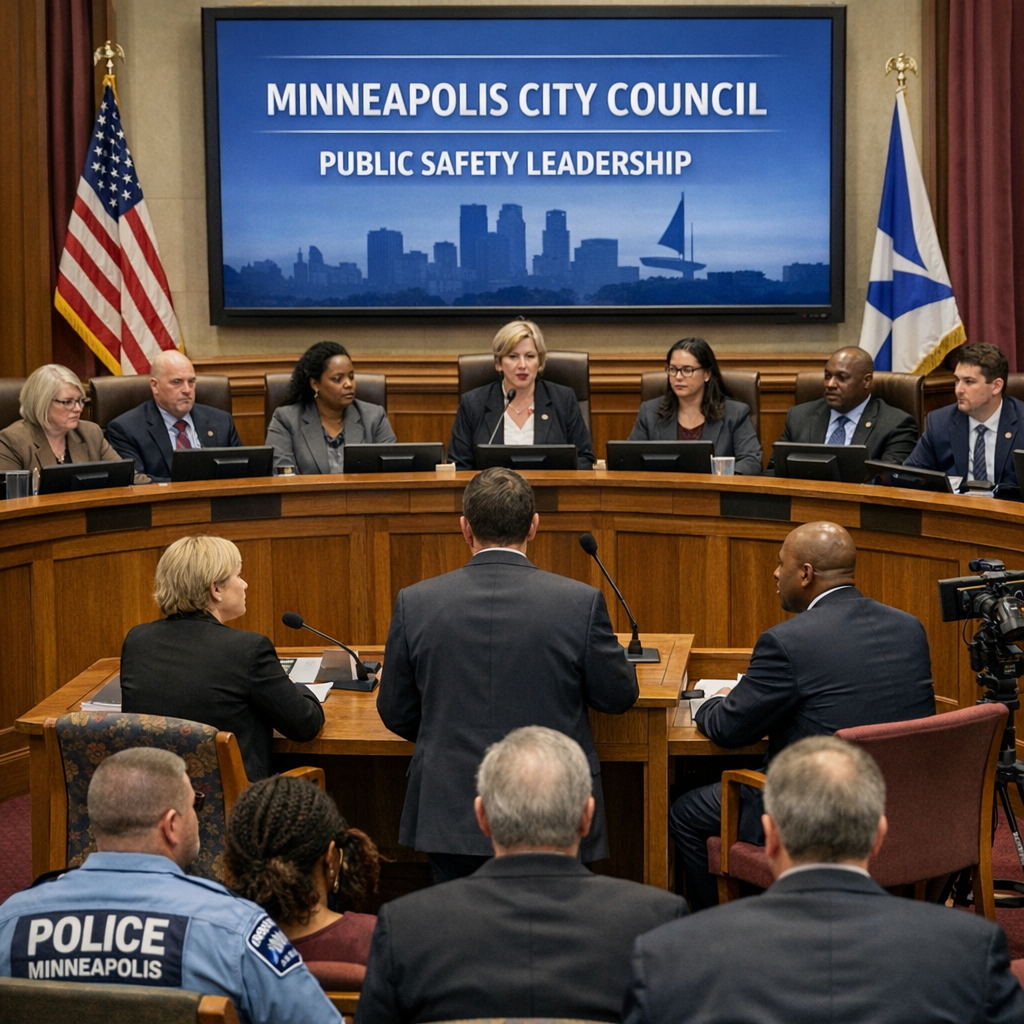
Minneapolis is currently navigating significant challenges in its public safety leadership, a situation that has profound implications for community trust and the effectiveness of safety initiatives.
Leadership Turmoil in Public Safety
In April 2026, the Minneapolis City Council narrowly voted 7-6 to reject Todd Barnette for a second term as the city’s top public safety official. This decision may lead to the city seeking its third community safety commissioner within just four years of establishing the role, which oversees all emergency response, including both the police department and non-police alternatives. The rejection raises uncertainty about Police Chief Brian O’Hara, who reports to Barnette and requires council approval to remain past August. Mayor Jacob Frey strongly criticized the decision, suggesting it was driven by political maneuvering and pledged to veto the council’s vote. Some council members argued Barnette was disengaged and failed to control department budgets or implement safety initiatives. However, others, like Council Member Jamison Whiting, noted wider frustrations with the role rather than with Barnette himself. Despite the vote, Barnette expressed a desire to continue serving in the position, citing his commitment to the city.
Community Impact and Response
The leadership instability has raised concerns among residents and community organizations. Effective public safety leadership is crucial for implementing reforms and maintaining trust between law enforcement and the communities they serve. The uncertainty surrounding the commissioner’s position may hinder progress on ongoing initiatives aimed at improving public safety and community relations.
Community leaders emphasize the need for transparent and inclusive processes in selecting public safety officials. They advocate for candidates who demonstrate a commitment to equity, accountability, and collaboration with diverse community stakeholders.
Looking Ahead
As Minneapolis continues to address these leadership challenges, it is imperative for city officials to engage with the community, prioritize transparency, and work collaboratively to build a public safety framework that reflects the needs and values of all residents.