

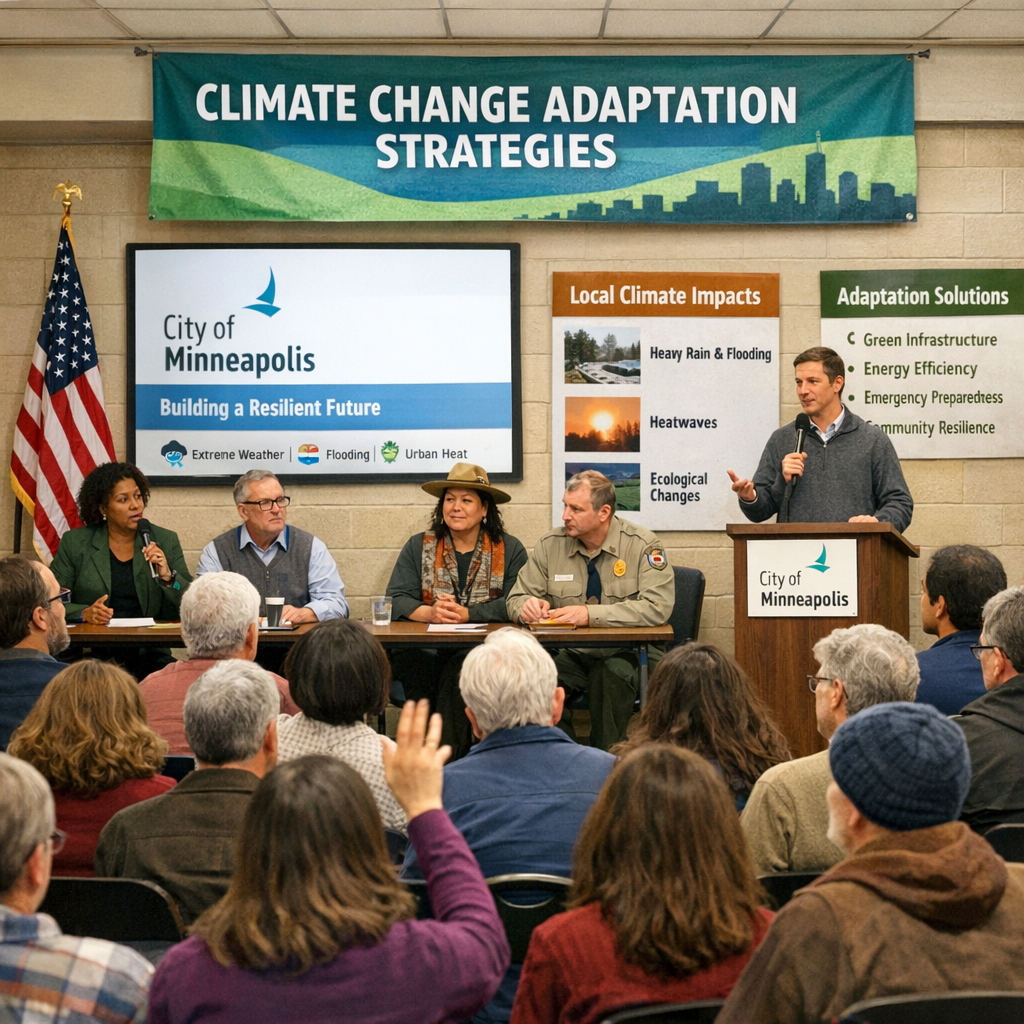
Minneapolis is experiencing the tangible effects of climate change, including increased temperatures, heavier rainfall, and more frequent extreme weather events. These changes pose challenges to our infrastructure, natural ecosystems, and public health.
Understanding the Local Impact
Our city has seen a significant uptick in devastating rainstorms since 2000, leading to overwhelmed rivers, roads, and budgets. Warmer winters threaten recreation and tourism, while older residents face increased danger from extreme heat. Additionally, communities of color disproportionately bear the heat risks due to historical housing discrimination.
City Initiatives and Community Engagement
In response, Minneapolis has implemented several initiatives:
- Climate Equity Plan: Adopted in 2023, this plan aims to significantly reduce climate pollution by 2030 and achieve carbon neutrality by 2050. It emphasizes reducing utility bills, increasing green jobs, and creating a healthier future for all residents.
- Climate Legacy Initiative: Launched in 2024, this initiative allocates resources toward projects in communities most affected by climate change, focusing on equitable solutions.
- Transportation Action Plan: This plan seeks to reshape the transportation system to address climate change by reducing greenhouse gas emissions through technology, design, and mobility options.
How Residents Can Contribute
Community involvement is crucial. Residents can participate by:
- Engaging in city planning processes to ensure diverse voices are heard.
- Adopting sustainable practices, such as using public transportation, biking, or walking.
- Supporting local initiatives aimed at increasing green spaces and tree planting.
By working together, we can build a more resilient Minneapolis that not only addresses the challenges of climate change but also fosters a healthier and more equitable community for all.