

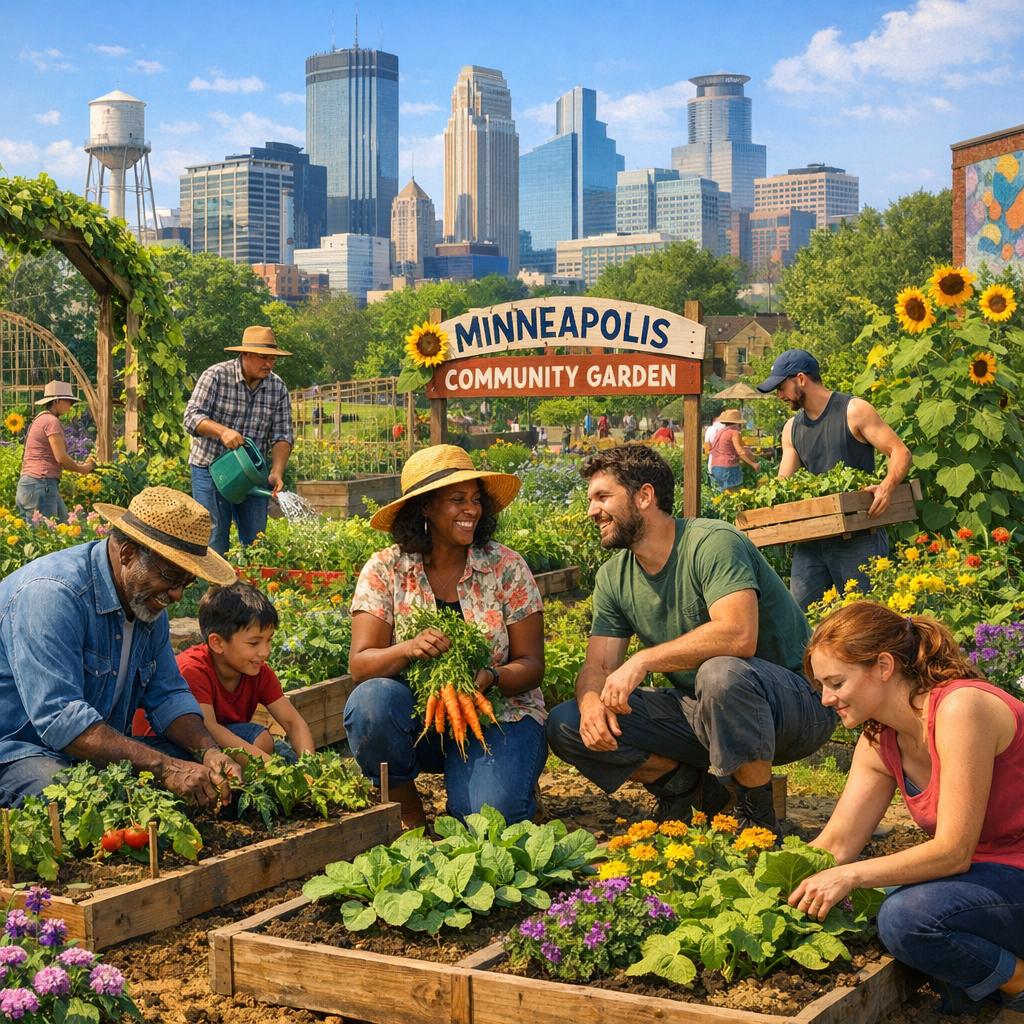
In the heart of Minneapolis, community gardens have blossomed into vital spaces that bring residents together, promote sustainable practices, and enhance the urban landscape. These gardens offer more than just a place to grow vegetables and flowers; they serve as hubs of community engagement, education, and environmental stewardship.
The Roots of Community Gardening in Minneapolis
Minneapolis boasts a rich history of community gardening. The Dowling Community Garden, established in 1943, is one of the last remaining Victory Gardens from World War II. Located on the grounds of Dowling Environmental School, it has grown to encompass over 190 plots tended by approximately 250 gardeners. The garden’s mission includes providing space for gardening, building community, promoting sustainable practices, sharing produce with local organizations, creating a place of beauty, and offering environmental education.
Modern-Day Green Spaces
Today, numerous community gardens thrive across the city. The Soo Line Community Garden, founded in 1991, transformed a vacant lot into a vibrant green space. With 100 plots, including those dedicated to children and food shelf donations, the garden emphasizes community, education, and giving back. It collaborates with Whittier Elementary School and offers workshops led by master gardeners.
Another notable example is the Gethsemane Community Garden, a green oasis in downtown Minneapolis. It features 22 private plots, a community garden known as “The Giving Garden,” and a landscaped area with a pergola and picnic tables. The garden is recognized for its commitment to pollinator-friendly practices and community engagement.
City Support and Expansion
The Minneapolis Park & Recreation Board (MPRB) actively supports community gardening by establishing gardens in parks throughout the city. Residents can apply for plots in designated community gardens managed in coordination with MPRB staff. Current locations include Bridal Veil Gardens, Parque Monarca, and Powderhorn Park, among others. Future sites are planned in parks like Bryant Square and Central Gym.
Additionally, Hennepin County has converted tax-forfeited properties into community garden spaces, offering residents opportunities to cultivate gardens in various neighborhoods. These initiatives reflect a commitment to repurposing land for community benefit and environmental sustainability.
Benefits Beyond Gardening
Community gardens in Minneapolis offer numerous benefits. They provide access to fresh produce, promote healthy lifestyles, and serve as educational platforms for sustainable practices. Gardens like the LaSalle Community Garden and the HPDL Triangle Community Garden foster a sense of community by bringing together neighbors from diverse backgrounds to share in the joys of gardening.
Moreover, these green spaces contribute to urban beautification, support pollinators, and offer residents a respite from the concrete jungle. They embody the city’s dedication to environmental stewardship and community well-being.
Getting Involved
For those interested in joining a community garden, the MPRB provides information on available plots and application processes. Engaging with local community organizations, such as the Stevens Square Community Organization, can also lead to opportunities in neighborhood gardens. Whether you’re a seasoned gardener or a novice eager to learn, Minneapolis’s community gardens welcome all who wish to cultivate connections and contribute to the city’s green spaces.
In conclusion, community gardens in Minneapolis are more than plots of land; they are vibrant centers of community life, education, and environmental care. They reflect the city’s commitment to fostering connections, promoting sustainability, and enhancing the quality of urban living.