

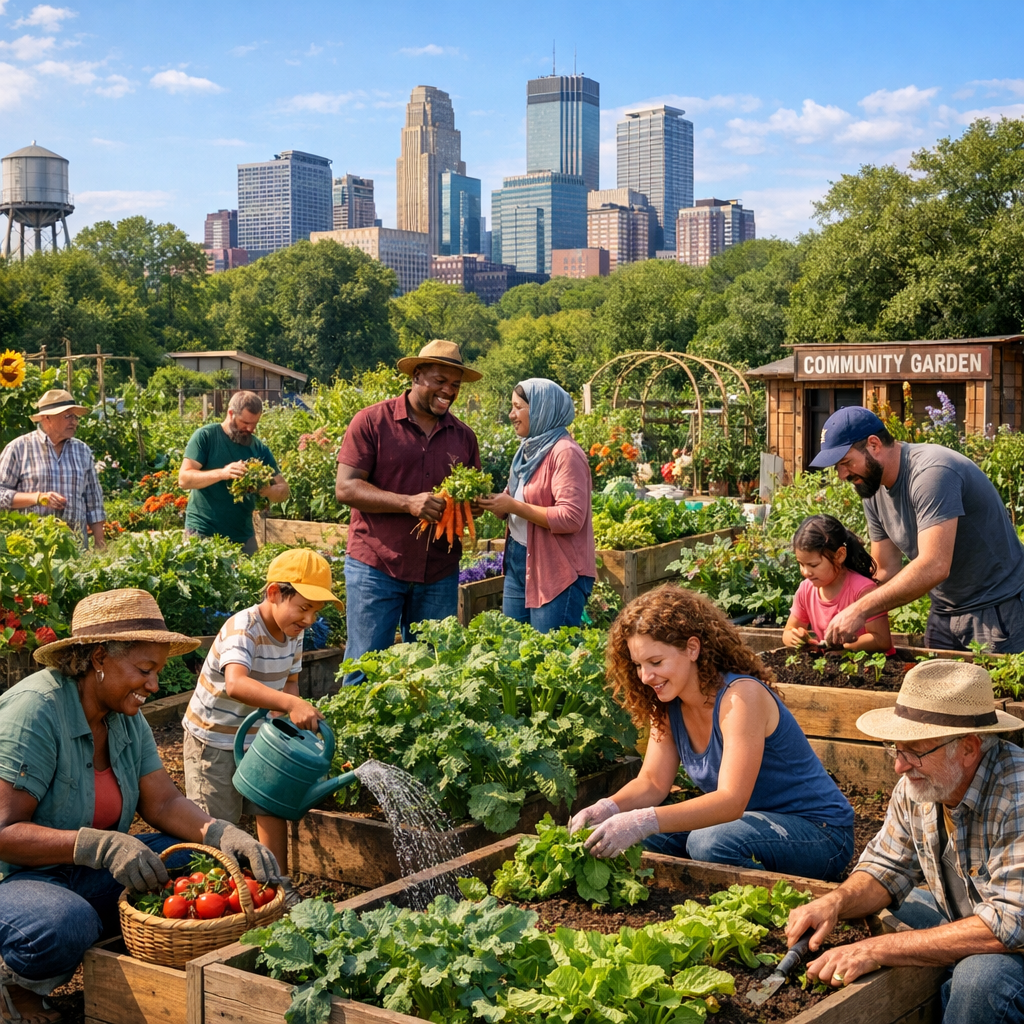
In the heart of Minneapolis, amidst bustling streets and towering buildings, community gardens serve as verdant sanctuaries where residents come together to cultivate not just plants, but also relationships and a shared sense of purpose. These gardens are more than plots of land; they are vibrant hubs of community engagement, environmental stewardship, and cultural expression.
The Roots of Community Gardening in Minneapolis
Community gardening in Minneapolis has a rich history, with some gardens tracing their origins back to the Victory Gardens of World War II. The Dowling Community Garden, for instance, established in 1943, is believed to be one of the last remaining Victory Gardens still in use today. Over the decades, it has grown to encompass over 190 plots tended by a diverse group of gardeners, reflecting the city’s commitment to preserving green spaces and fostering community ties.
A Tapestry of Green Spaces
The city boasts a variety of community gardens, each with its unique character and mission. The Gethsemane Community Garden, nestled in downtown Minneapolis, offers 22 private plots alongside a communal “Giving Garden” dedicated to producing food for donation. This garden not only provides residents with space to grow their own produce but also emphasizes the importance of giving back to the community.
Similarly, the Soo Line Community Garden in the Whittier neighborhood has transformed a once-vacant lot into a thriving green space. Established in 1991, it now includes 100 garden plots and serves as a community hub, offering educational programs in collaboration with local schools and hosting workshops led by master gardeners.
Fostering Community and Sustainability
Beyond providing fresh produce, these gardens play a crucial role in building community connections. The Hope Community gardens, for example, are designed as spaces where people can gather to learn, grow, and build relationships. As one garden leader noted, “Being in the garden breaks through race issues—it’s a common thing we all have in our spirits and our souls.”
Moreover, community gardens contribute to environmental sustainability by promoting organic gardening practices, supporting pollinator habitats, and utilizing vacant urban spaces productively. The Minneapolis Park & Recreation Board has been instrumental in establishing and managing community gardens across the city, ensuring that residents have access to these vital green spaces.
Getting Involved
For those interested in joining a community garden, the Minneapolis Park & Recreation Board provides information on available plots and the application process. Additionally, many neighborhood organizations, such as the Stevens Square Community Organization, offer opportunities to get involved in local green spaces.
Community gardens in Minneapolis are more than just places to grow food; they are spaces where individuals come together to cultivate a sense of belonging, promote environmental stewardship, and enhance the quality of urban life. Whether you’re an experienced gardener or a novice with a green thumb, these gardens offer a welcoming environment to connect with nature and your neighbors.