

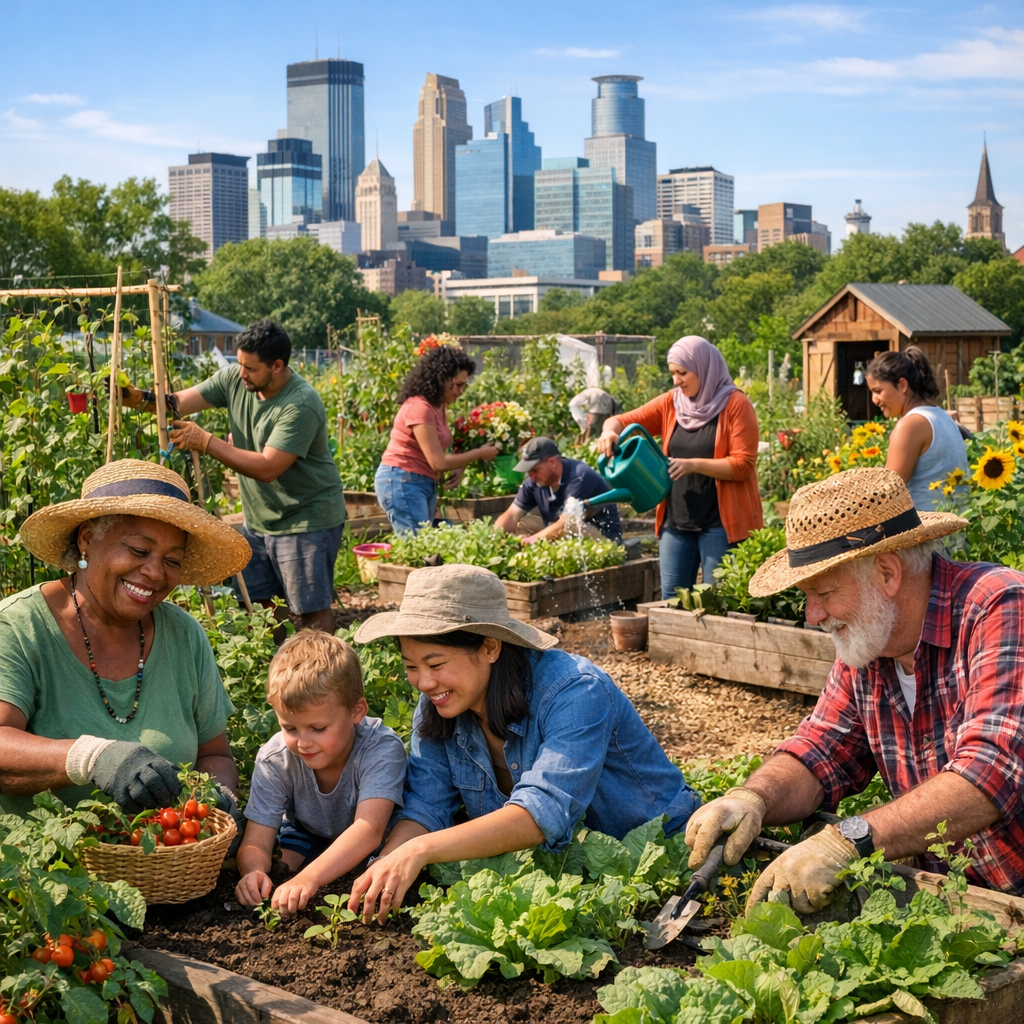
In the heart of Minneapolis, community gardens have blossomed into vital spaces that bring residents together, promote sustainable practices, and enhance the urban landscape. These gardens offer more than just plots of land for cultivation; they serve as hubs for education, environmental stewardship, and community building.
The Roots of Community Gardening in Minneapolis
Minneapolis boasts a rich history of community gardening. The Dowling Community Garden, established in 1943, is one of the last remaining Victory Gardens from World War II. Today, it encompasses over 190 plots tended by approximately 250 gardeners, reflecting the city’s enduring commitment to communal green spaces.
Diverse Gardens, Unified Goals
Across the city, various community gardens cater to diverse populations and needs. The Gethsemane Community Garden in downtown Minneapolis offers 22 private plots alongside a communal “Giving Garden,” providing a green oasis amidst the urban environment. Similarly, the Soo Line Community Garden in the Whittier neighborhood has grown from a small group of volunteers to over 200 participants, including plots dedicated to children and local food shelves.
Institutional Support and Expansion
The Minneapolis Park and Recreation Board (MPRB) has been instrumental in supporting and expanding community gardens. As of 2024, MPRB manages 11 community gardens, including Bridal Veil Gardens, Franklin Steele Square, and Powderhorn Park. These gardens are designed to provide residents without yard space the opportunity to grow their own food and plants, fostering a sense of ownership and community engagement.
Educational and Environmental Impact
Beyond providing space for cultivation, community gardens in Minneapolis serve as educational platforms. Organizations like Hope Community have developed a network of gardens that function as places for learning and community connection. These gardens offer workshops, youth programs, and initiatives that promote sustainable gardening practices and environmental awareness.
Building Community Through Gardening
Community gardens are more than just spaces for growing produce; they are catalysts for building relationships and strengthening neighborhoods. They provide a common ground where individuals from diverse backgrounds can collaborate, share knowledge, and support one another. As Omari Chatman, a garden leader at Hope Community, aptly stated, “Being in the garden breaks through race issues—it’s a common thing we all have in our spirits and our souls.”
In conclusion, community gardens in Minneapolis play a pivotal role in fostering connections, promoting sustainability, and enhancing the quality of urban life. They stand as testament to the city’s commitment to green spaces and the power of community-driven initiatives.