

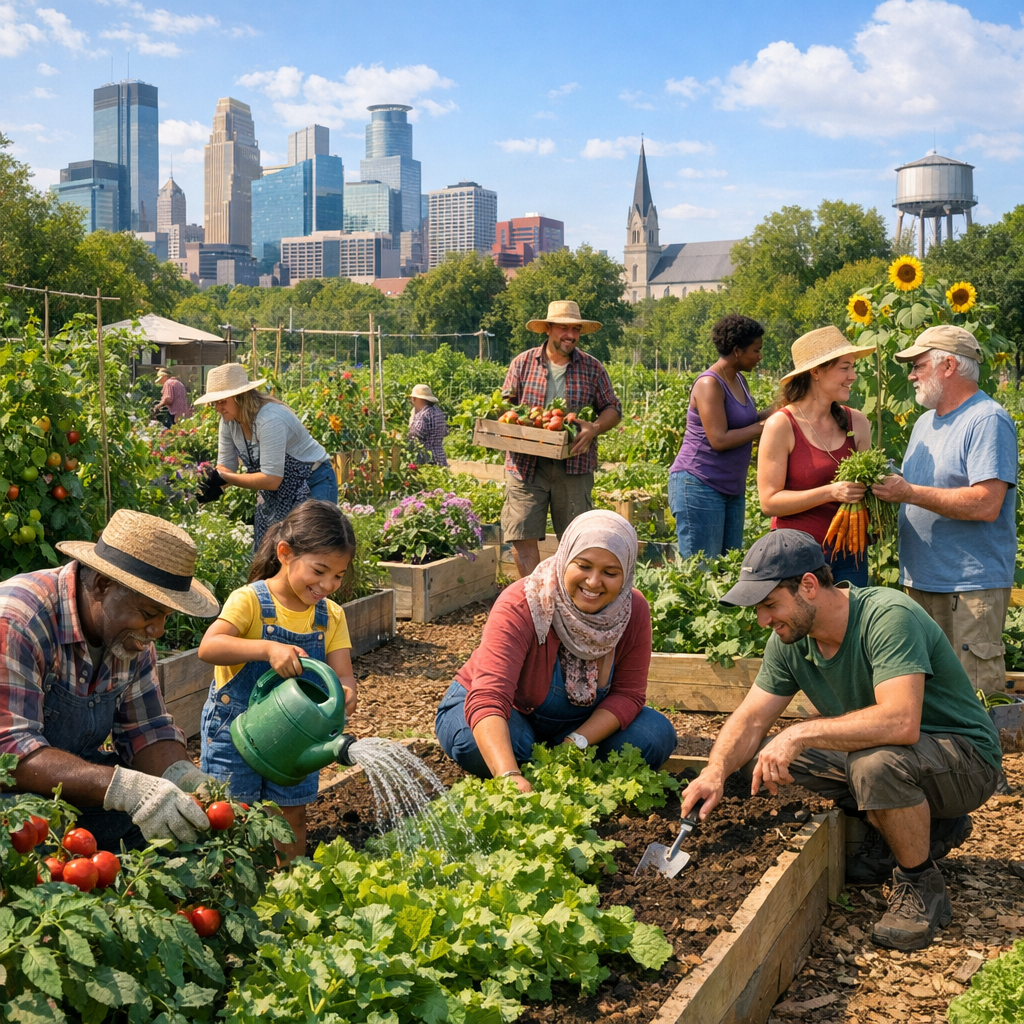
In the heart of Minneapolis, community gardens have blossomed into vital spaces that bring neighbors together, promote sustainable practices, and enhance the urban landscape. These gardens offer residents the opportunity to cultivate their own food, share knowledge, and build lasting relationships.
Historical Roots and Modern Growth
One of the city’s most storied gardens is the Dowling Community Garden, established in 1943 as a Victory Garden during World War II. Today, it stands as one of the last remaining Victory Gardens in the nation, encompassing over 190 plots tended by approximately 250 gardeners. This garden not only provides fresh produce but also serves as a living testament to the resilience and dedication of the community.
Diverse Spaces for Diverse Communities
Minneapolis boasts a variety of community gardens, each with its unique character and mission. The Gethsemane Community Garden, located downtown, offers 22 private plots alongside a communal “Giving Garden” that donates produce to local food shelves. Similarly, the Soo Line Community Garden in the Whittier neighborhood features 100 plots and collaborates with local schools to provide educational opportunities for children.
City Support and Policy
Recognizing the value of these green spaces, the Minneapolis Park & Recreation Board (MPRB) has implemented policies to support and expand community gardens. The MPRB’s Community Garden Policy aims to provide residents with free access to garden plots within designated urban agriculture areas in neighborhood parks. This initiative underscores the city’s commitment to fostering community engagement and promoting healthy lifestyles.
Environmental and Social Benefits
Beyond providing fresh produce, community gardens contribute to environmental sustainability by promoting organic gardening practices and supporting pollinator habitats. Gardens like the Hope Community’s urban gardens serve as gathering places where people can learn, grow, and build community connections. These spaces break down social barriers, allowing individuals from diverse backgrounds to connect over a shared love of gardening.
Getting Involved
For those interested in joining a community garden, the MPRB offers a Community Garden Plot Application process. Additionally, organizations like the Stevens Square Community Organization manage gardens such as the LaSalle Community Garden, providing residents with opportunities to rent plots and participate in communal gardening activities.
Community gardens in Minneapolis are more than just plots of land; they are vibrant hubs of activity that nourish both the body and the spirit. By participating in these gardens, residents can cultivate not only plants but also a stronger, more connected community.