

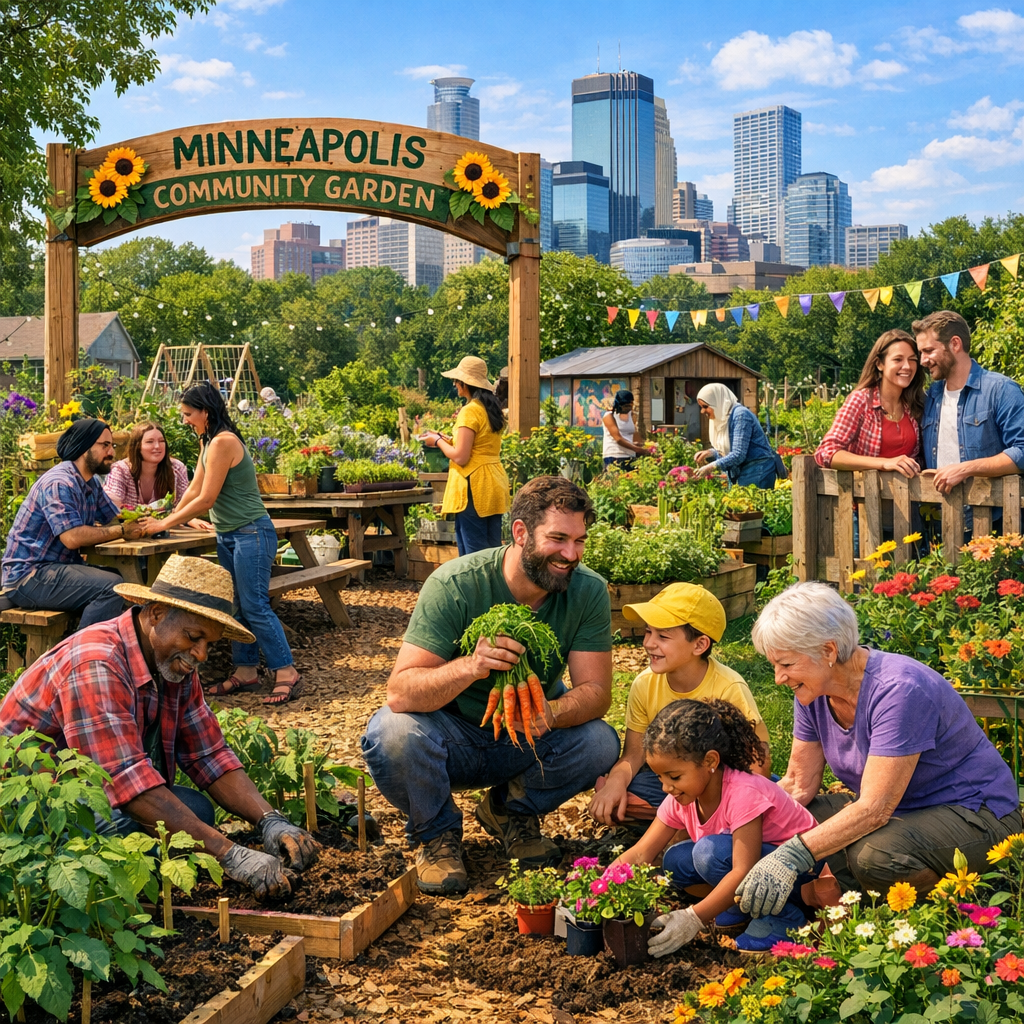
In the heart of Minneapolis, community gardens have blossomed into vital spaces that bring residents together, promote sustainable practices, and enhance the urban landscape. These gardens offer more than just plots of land for cultivation; they serve as hubs for education, environmental stewardship, and community building.
Historical Roots and Modern Growth
One of the city’s most storied gardens is the Dowling Community Garden, established in 1943 as a Victory Garden during World War II. Today, it stands as one of the last remaining Victory Gardens in the nation, encompassing over 190 plots tended by approximately 250 gardeners. This garden not only provides space for individual cultivation but also fosters a sense of community among its diverse members.
Diverse Spaces for Diverse Communities
Minneapolis boasts a variety of community gardens, each with its unique character and mission. The Gethsemane Community Garden, located downtown, offers 22 private plots alongside a communal “Giving Garden” and a landscaped area complete with a pergola and picnic tables. This urban oasis provides a green retreat amidst the city’s hustle and bustle.
In the Whittier neighborhood, the Soo Line Community Garden has transformed a once-vacant lot into a thriving space with 100 plots. The garden emphasizes community engagement, environmental education, and connectivity, collaborating with local schools and offering workshops to the public.
Institutional Support and Policy
The Minneapolis Park & Recreation Board (MPRB) plays a significant role in supporting community gardens. Their Community Garden Policy aims to establish gardens within designated urban agriculture areas in neighborhood parks, making them accessible to residents free of charge. The primary goal is to provide spaces for people to grow healthy food for themselves and their families.
Current MPRB-managed community garden locations include Bridal Veil Gardens, Parque Monarca, and Powderhorn Park, among others. These gardens are managed by community members in coordination with MPRB staff, ensuring that they meet the needs of the neighborhoods they serve.
Environmental and Social Impact
Community gardens contribute significantly to environmental sustainability by promoting local food production, reducing food miles, and encouraging organic gardening practices. They also serve as educational platforms, teaching residents about horticulture, nutrition, and environmental stewardship.
Socially, these gardens foster a sense of belonging and cooperation among participants. They provide opportunities for intergenerational and cross-cultural interactions, strengthening the fabric of the community. Events, workshops, and communal workdays further enhance these connections, making the gardens vibrant centers of community life.
Getting Involved
For those interested in joining a community garden, the MPRB offers a plot application process. Additionally, many neighborhood organizations manage their own gardens and welcome new members. Engaging with these spaces not only provides access to fresh produce but also offers a chance to connect with neighbors and contribute to the community’s well-being.
Community gardens in Minneapolis exemplify the power of collective effort in transforming urban spaces into thriving, green sanctuaries. They stand as testaments to the city’s commitment to sustainability, education, and community engagement.