

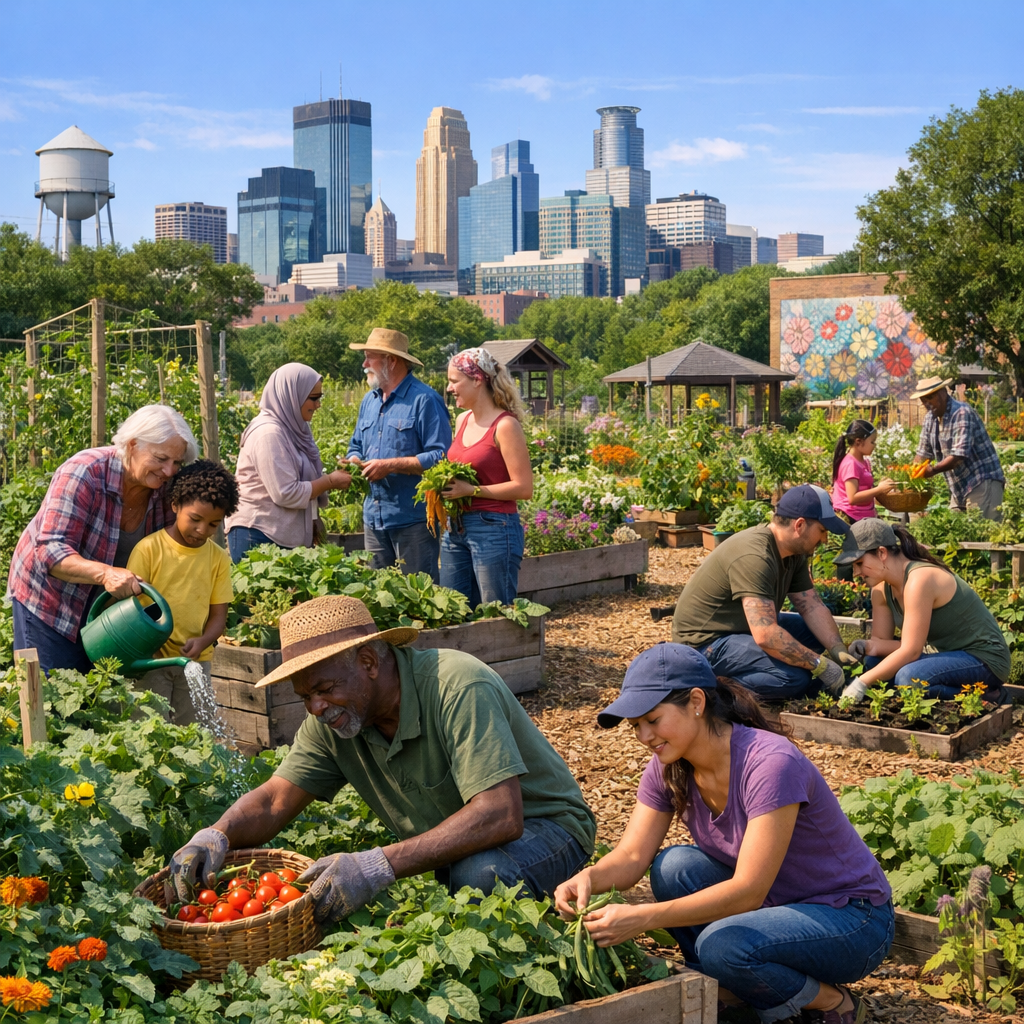
In the heart of Minneapolis, community gardens have blossomed into vital spaces that bring neighbors together, promote sustainable practices, and enhance the urban landscape. These gardens offer residents the opportunity to cultivate their own food, share knowledge, and build lasting relationships.
Historical Roots and Growth
One of the city’s most storied gardens is the Dowling Community Garden, established in 1943 as a Victory Garden during World War II. Located on the grounds of Dowling Environmental School, it is among the last remaining Victory Gardens still in use today. Over the decades, it has expanded to over 190 plots tended by approximately 250 gardeners, reflecting the enduring appeal of communal gardening.
Diverse Spaces for All
Minneapolis boasts a variety of community gardens, each with its unique character and mission. The Soo Line Community Garden in the Whittier neighborhood, for instance, serves as a hub for a multiracial, multigenerational group of neighbors who come together to care for the land and support one another. Established in 1991, it has grown to include 100 plots and collaborates with local schools to provide educational opportunities for children.
Similarly, Hope Community’s network of gardens offers spaces where people can gather to learn, grow, and build community connections. These gardens are designed to be inclusive, reflecting the organization’s commitment to creating a strong, healthy community.
City Support and Policies
The Minneapolis Park & Recreation Board (MPRB) has been instrumental in supporting community gardens. Their Community Garden Policy aims to provide space for residents to grow healthy food, promote education, and support the local food system. Gardens are established within designated urban agriculture areas in neighborhood parks and are made available to residents free of charge through a garden plot application process.
Current MPRB-managed community garden locations include Bridal Veil Gardens, Parque Monarca, and Powderhorn Park, among others. These spaces are managed by community members in coordination with MPRB staff, ensuring that the gardens meet the needs of the neighborhoods they serve.
Benefits Beyond Gardening
Community gardens in Minneapolis offer more than just a place to grow plants. They serve as platforms for education, environmental stewardship, and social interaction. For example, the Soo Line Community Garden coordinates with Whittier Elementary School to provide nature education to children, while also donating produce to local food shelves.
Moreover, these gardens contribute to the beautification of urban spaces, transforming vacant lots into vibrant green areas that attract pollinators and provide habitats for wildlife. They also offer residents a sense of ownership and pride in their neighborhoods, fostering a stronger sense of community.
Getting Involved
For those interested in joining a community garden, the MPRB provides information on available plots and the application process. Additionally, many neighborhood organizations, such as the Stevens Square Community Organization, offer opportunities to get involved in local green spaces.
Community gardens are more than just plots of land; they are the seeds of community, growth, and sustainability. As Minneapolis continues to evolve, these gardens remain essential in cultivating connections and enriching urban life.