

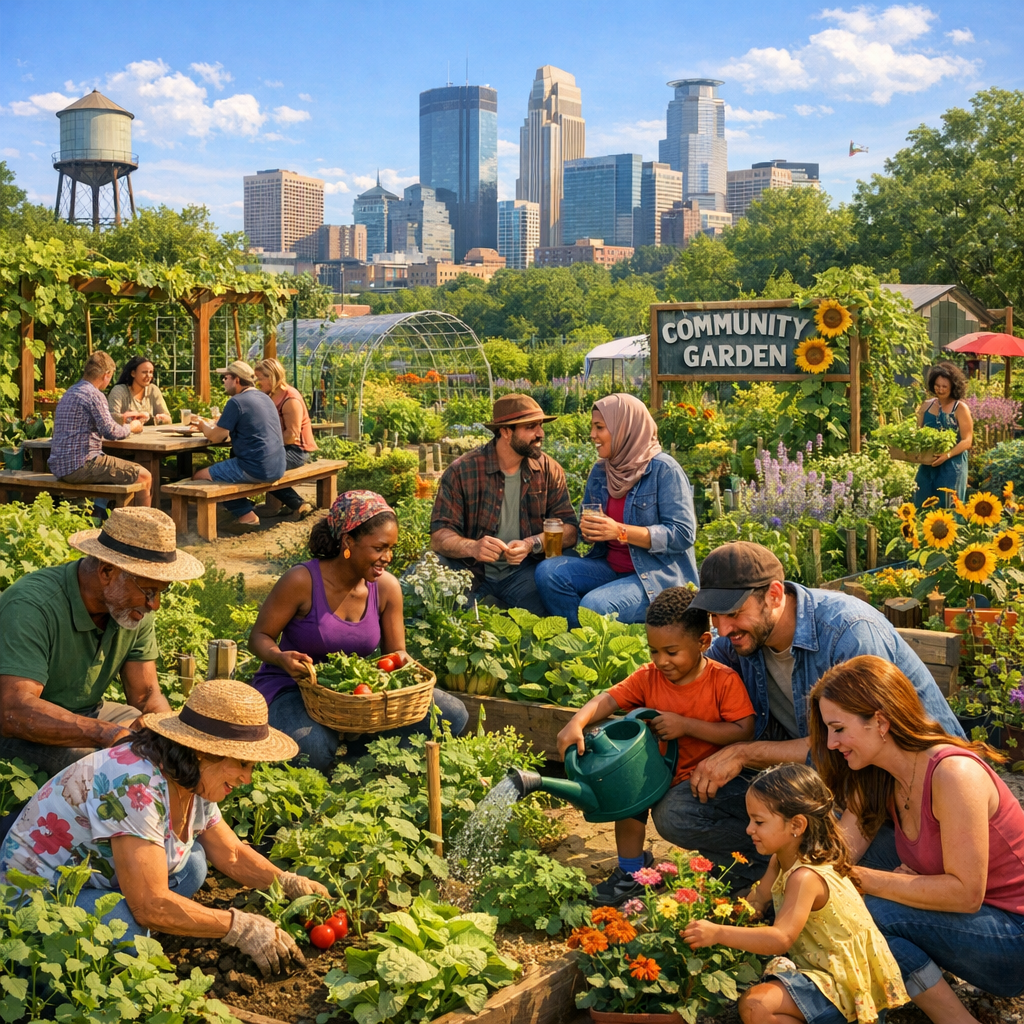
In the heart of Minneapolis, community gardens have blossomed into vital spaces that bring residents together, promote sustainable practices, and enhance the urban landscape. These gardens serve as more than just plots of land for cultivation; they are hubs of community engagement and environmental stewardship.
Historical Roots and Modern Growth
One of the city’s most storied gardens is the Dowling Community Garden, established in 1943. Believed to be one of the last remaining Victory Gardens from World War II, Dowling has grown to encompass over 190 plots tended by approximately 250 gardeners. This garden not only provides space for individuals to grow their own produce but also fosters a sense of community among its diverse members.
Urban Oases and Community Hubs
In downtown Minneapolis, the Gethsemane Community Garden offers a green sanctuary amidst the urban environment. With 22 private plots and a communal “Giving Garden,” it provides a space for residents to connect with nature and each other. The garden’s landscaped community area, complete with a pergola and picnic tables, invites passersby to pause and enjoy the surroundings.
Similarly, the Soo Line Community Garden in the Whittier neighborhood has transformed a once-vacant lot into a thriving community space. Established in 1991, it now includes 100 garden plots and serves as a place for recreation, education, and youth programming. The garden’s commitment to inclusivity is evident in its outreach programs, which have welcomed numerous families from underserved communities.
Fostering Education and Sustainability
Community gardens in Minneapolis also play a crucial role in education and promoting sustainable practices. Hope Community’s network of urban gardens, including the Hope Block garden and the Oakland Avenue garden, are designed as places where people can gather to learn and build connections. These gardens reflect a collective vision for a strong, healthy community.
The Minneapolis Park and Recreation Board (MPRB) supports several community gardens across the city, such as the Bridal Veil Gardens and the LaSalle Community Garden. These spaces not only provide residents with the opportunity to cultivate their own food but also serve as platforms for environmental education and community building.
Looking Ahead
As Minneapolis continues to grow and evolve, community gardens remain essential in fostering connections among residents, promoting sustainable living, and enhancing the urban environment. They stand as testaments to the power of collective effort and the enduring value of green spaces in our communities.