

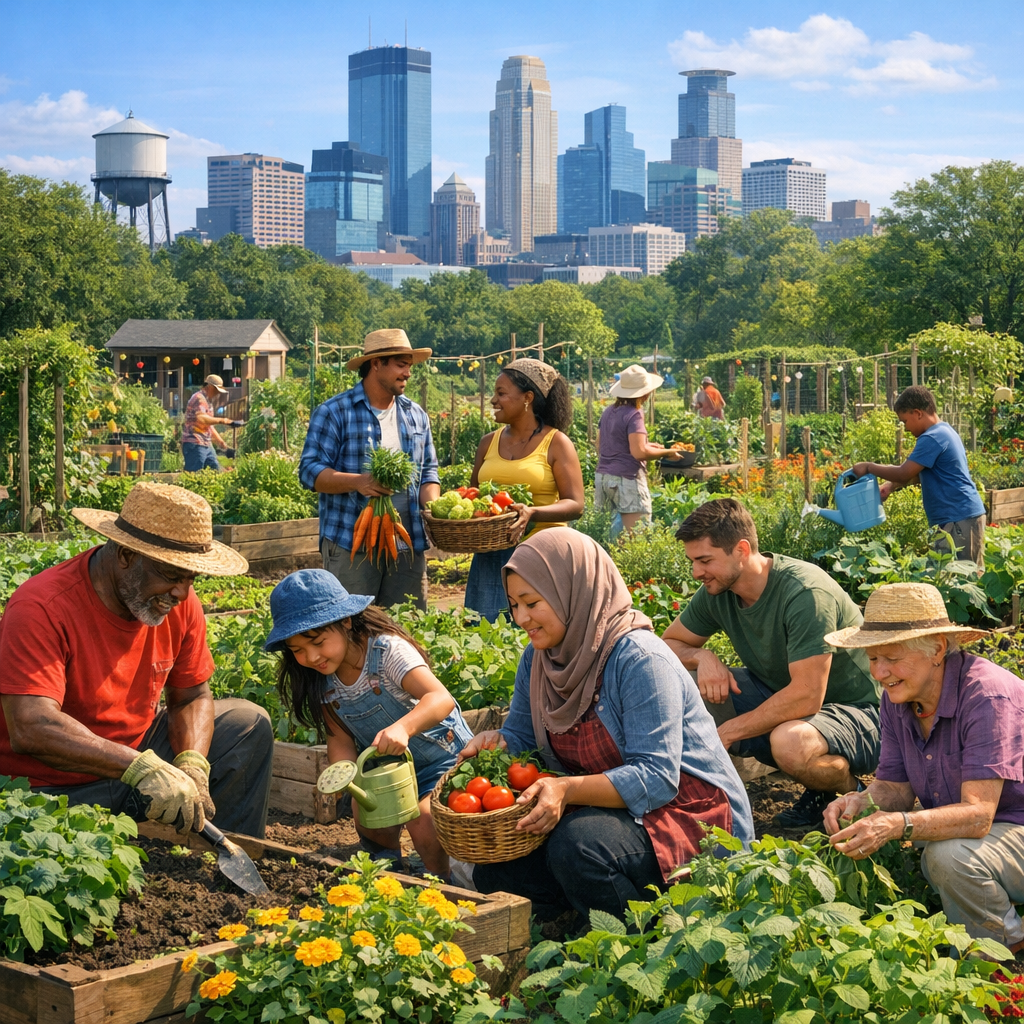
In the heart of Minneapolis, community gardens have blossomed into vital spaces that bring residents together, promote sustainable practices, and enhance the urban landscape. These green sanctuaries offer more than just fresh produce; they cultivate a sense of belonging and shared purpose among diverse groups of people.
Historical Roots and Modern Growth
Community gardening in Minneapolis has deep historical roots. The Dowling Community Garden, established in 1943, is one of the last remaining Victory Gardens from World War II. Today, it boasts over 190 plots tended by approximately 250 gardeners, reflecting the enduring appeal of communal cultivation. Similarly, the Gethsemane Community Garden provides a green oasis in downtown Minneapolis, featuring private plots, a communal “Giving Garden,” and a landscaped area for public enjoyment.
Fostering Community and Sustainability
These gardens serve as more than just places to grow food. They are hubs for community engagement and education. Hope Community’s urban gardens, for instance, are designed as spaces where people can gather to learn, grow, and build connections. The gardens include individual plots, collectively managed areas, and teaching gardens that offer environmental education and outreach.
Moreover, the City of Minneapolis supports these initiatives by offering no-cost and low-cost compost to community gardens, promoting sustainable gardening practices and improving soil quality. This program underscores the city’s commitment to environmental stewardship and community well-being.
Accessible Green Spaces
The Minneapolis Park & Recreation Board has been instrumental in establishing community gardens across the city. Parks like Bridal Veil Gardens and others provide residents with accessible green spaces to engage in gardening activities. These gardens are managed by community members in coordination with park staff, ensuring that they meet the needs and interests of local residents.
Conclusion
Community gardens in Minneapolis are more than plots of land; they are vibrant spaces that nurture relationships, promote sustainability, and enhance the quality of urban life. As these gardens continue to flourish, they remind us of the power of community and the importance of green spaces in our cities.