

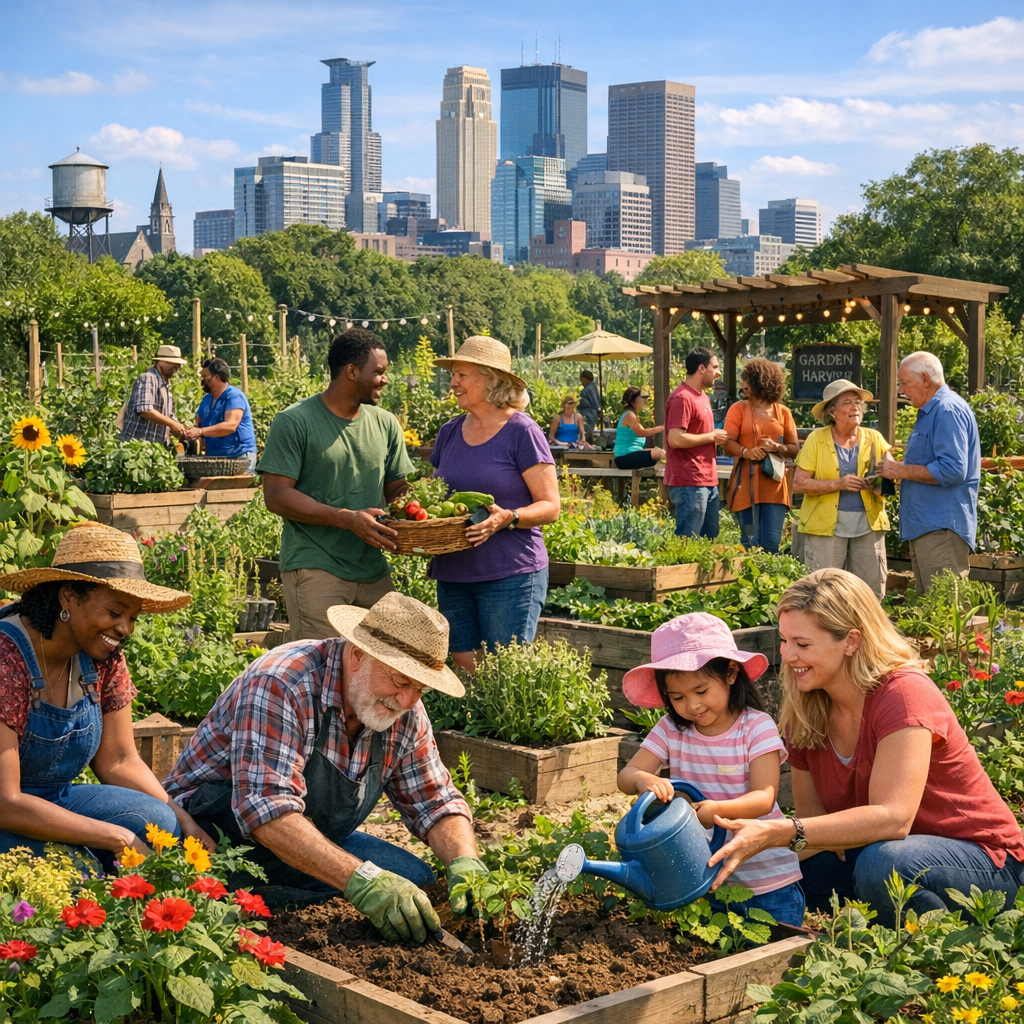
In the heart of Minneapolis, community gardens have become vital spaces where residents come together to cultivate not only plants but also relationships and a shared sense of purpose. These green spaces offer more than just fresh produce; they serve as hubs for education, environmental stewardship, and community building.
Historical Roots and Modern Growth
One of the city’s most storied gardens is the Dowling Community Garden, established in 1943 as a Victory Garden during World War II. Today, it stands as one of the last remaining Victory Gardens in the nation, encompassing over 190 plots tended by approximately 250 gardeners. This garden exemplifies the enduring spirit of community collaboration and sustainable practices.
Diverse Spaces for Diverse Communities
Minneapolis boasts a variety of community gardens, each reflecting the unique character of its neighborhood. The Gethsemane Community Garden, located downtown, offers 22 private plots alongside a communal “Giving Garden” dedicated to growing produce for local food shelves. Similarly, Hope Community’s network of urban gardens provides spaces where residents can gather, learn, and strengthen community ties.
Support and Sustainability
The Minneapolis Park and Recreation Board (MPRB) actively supports these initiatives by establishing community gardens in parks throughout the city. Residents can apply for plots in designated gardens managed collaboratively by community members and MPRB staff. Additionally, the City of Minneapolis offers compost to community gardens, enhancing soil quality and promoting sustainable gardening practices.
Beyond Gardening: Education and Engagement
Community gardens also serve as educational platforms. For instance, the Dowling Community Garden collaborates with the adjacent Dowling Environmental School, where students and teachers maintain plots, integrating hands-on learning with environmental education. These gardens become living classrooms, fostering a deeper connection between residents and their environment.
Looking Ahead
As urban development continues, the preservation and expansion of community gardens remain crucial. They not only provide access to fresh produce but also promote mental well-being, environmental sustainability, and social cohesion. By supporting and participating in these green spaces, Minneapolis residents contribute to a healthier, more connected community.
Whether you’re an experienced gardener or a curious newcomer, consider exploring a local community garden. It’s an opportunity to grow food, friendships, and a stronger neighborhood.