

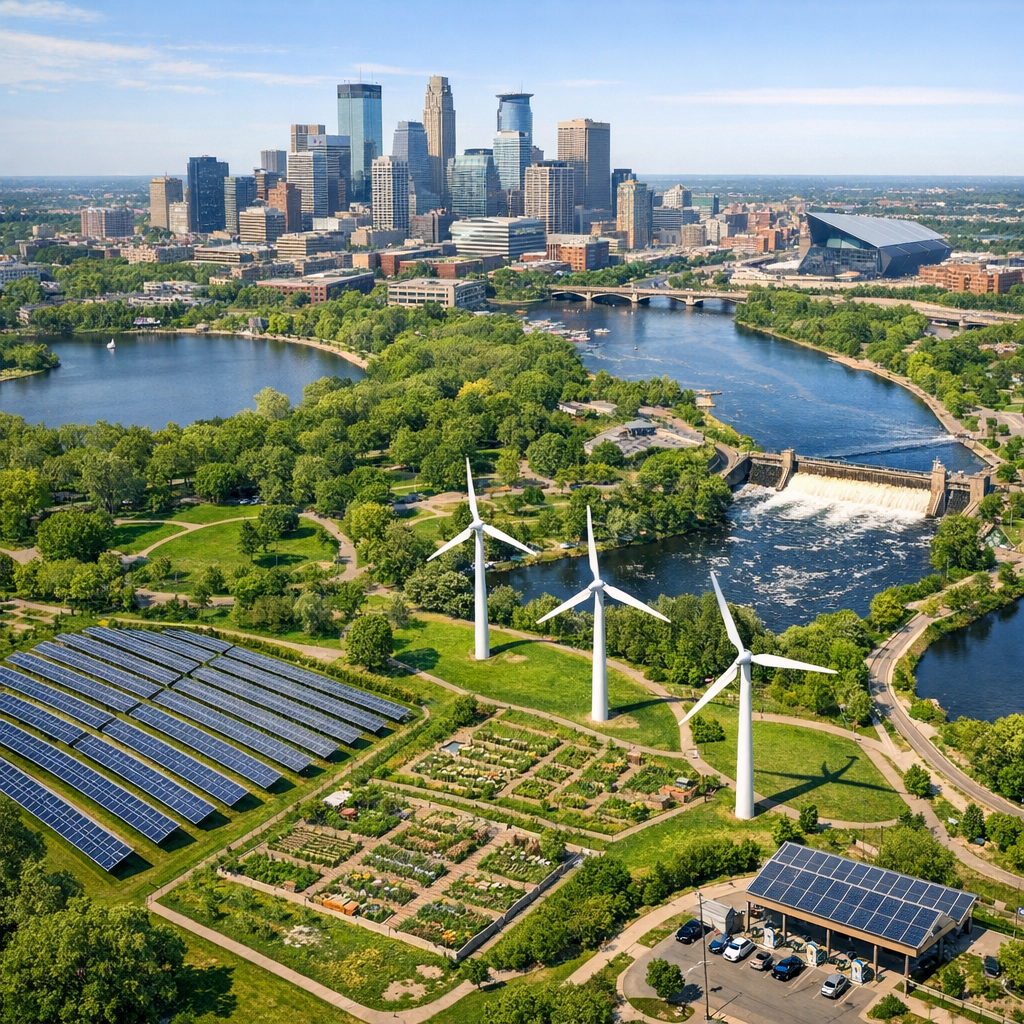
Minneapolis has long been recognized for its proactive stance on environmental sustainability. The city’s comprehensive approach encompasses various programs and initiatives aimed at reducing its carbon footprint and fostering a greener future.
Climate Equity Plan
Central to Minneapolis’ environmental strategy is the Climate Equity Plan, which sets ambitious goals to significantly reduce climate pollution by 2030 and achieve carbon neutrality by 2050. This plan emphasizes not only environmental benefits but also social equity, aiming to reduce utility bills, increase green jobs, and create a healthier future for all residents.
Zero Waste Initiative
The city’s Zero Waste Plan outlines a roadmap to minimize waste sent to landfills and waste-to-energy facilities. With targets of achieving 50% recycling and organics recycling by 2020 and 80% by 2030, Minneapolis is committed to educating residents and businesses about waste reduction and recycling opportunities.
Renewable Energy and Green Infrastructure
Minneapolis has made significant strides in renewable energy adoption. The city has met its goal of using 100% renewable energy for city-owned buildings and plans to expand this to all city buildings by 2030. Additionally, initiatives like the Green Cost Share program support property upgrades that improve environmental performance, further promoting sustainable practices among residents and businesses.
Community Engagement and Education
Recognizing the importance of community involvement, Minneapolis offers programs such as the Green Careers Exploration to prepare youth for careers in the green and clean energy sectors. The city also provides resources like the Climate Legacy Initiative, which offers funding for projects that contribute to climate goals, including home weatherization and tree planting.
Through these concerted efforts, Minneapolis continues to lead by example, demonstrating that environmental sustainability and community well-being go hand in hand.