

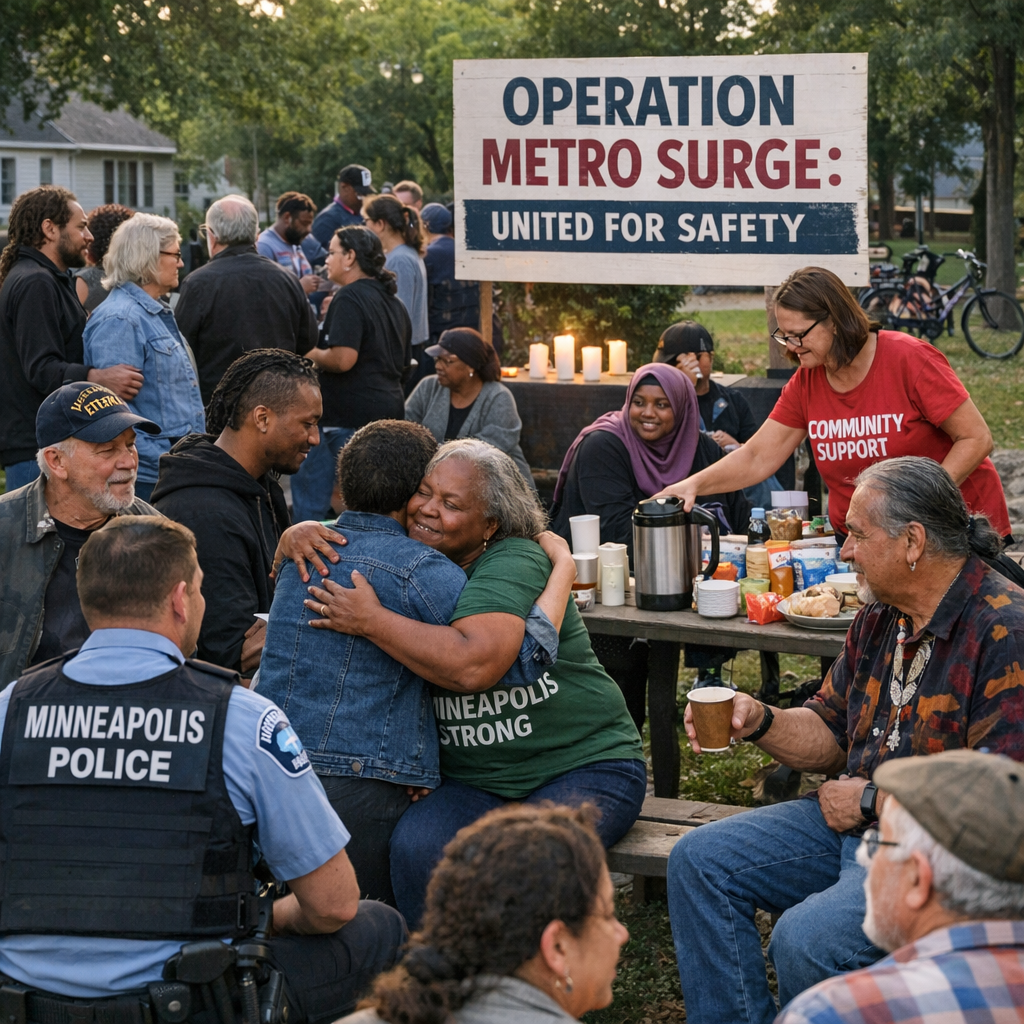
Operation Metro Surge, a federal immigration enforcement initiative, has had profound effects on Minneapolis residents and the local economy. City officials estimate the operation resulted in at least $203.1 million in economic impact, affecting businesses, workers, and community services.
Economic Impact
Local businesses and restaurants reported losses totaling $81 million, while workers, fearing for their safety, lost $47 million in wages due to missed work. Hotels experienced $4.7 million in revenue losses from cancellations extending into the summer months.
Community Disruptions
The operation also led to significant community disruptions. Approximately 76,200 residents faced food insecurity linked to the surge, with an estimated $2.4 million per week needed to meet citywide food assistance demand. Additionally, 8,713 school-age children required mental health services, and there was a 50% reduction in client contact reported by mental health service providers as families avoided public systems.
City Response
In response to these challenges, city leaders are seeking federal aid to address the urgent humanitarian needs arising from the operation. Mayor Jacob Frey emphasized the city’s commitment to supporting impacted families and businesses, upholding its separation ordinance, maintaining transparency, and advancing recovery efforts across priority sectors.
Community Resilience
Despite the hardships, the Minneapolis community has demonstrated resilience. Local organizations and residents have mobilized to provide support, document government abuses, and advocate for the rights of their neighbors. This collective effort underscores the community’s determination to rebuild and support one another during challenging times.