

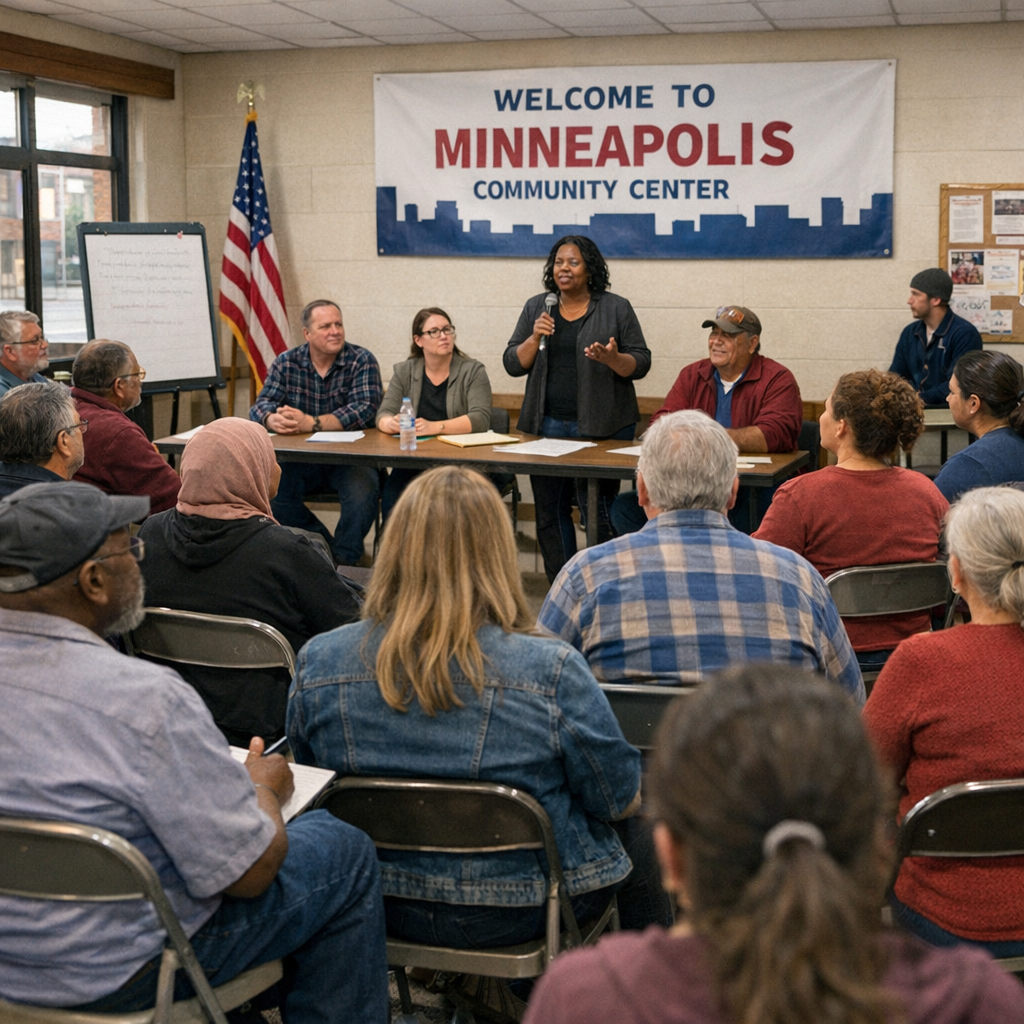
In the wake of Operation Metro Surge, Minneapolis is confronting significant challenges stemming from the federal immigration enforcement initiative. The operation, which deployed thousands of federal agents to the Twin Cities, has left a profound imprint on the city’s economy and social fabric.
Economic Impact
City officials estimate that the operation resulted in at least $203.1 million in economic losses. This figure encompasses $81 million in revenue declines for local businesses and restaurants, $47 million in lost wages as residents avoided work due to safety concerns, and $4.7 million in hotel cancellations extending into the summer months. Additionally, approximately 76,200 residents experienced food insecurity linked to the operation, with an estimated $2.4 million per week needed to meet the increased demand for food assistance. The surge also led to a 50% reduction in client contact reported by mental health service providers, as families avoided public systems.
Community Response
The operation has had a particularly severe impact on immigrant communities and people of color. City emergency operations director Rachel Sayre noted that nearly 20% of Minneapolis residents are in urgent need of relief assistance. Community leaders have mobilized to support affected individuals, providing resources and advocating for policy changes to prevent future disruptions of this magnitude.
Moving Forward
As Minneapolis works to recover, city leaders are seeking federal aid to address the economic and social fallout. Mayor Jacob Frey emphasized the city’s commitment to supporting impacted families and businesses, upholding its separation ordinance, maintaining transparency, and advancing recovery efforts across priority sectors. The city is also focusing on rebuilding trust within affected communities and ensuring that all residents feel safe and supported.