

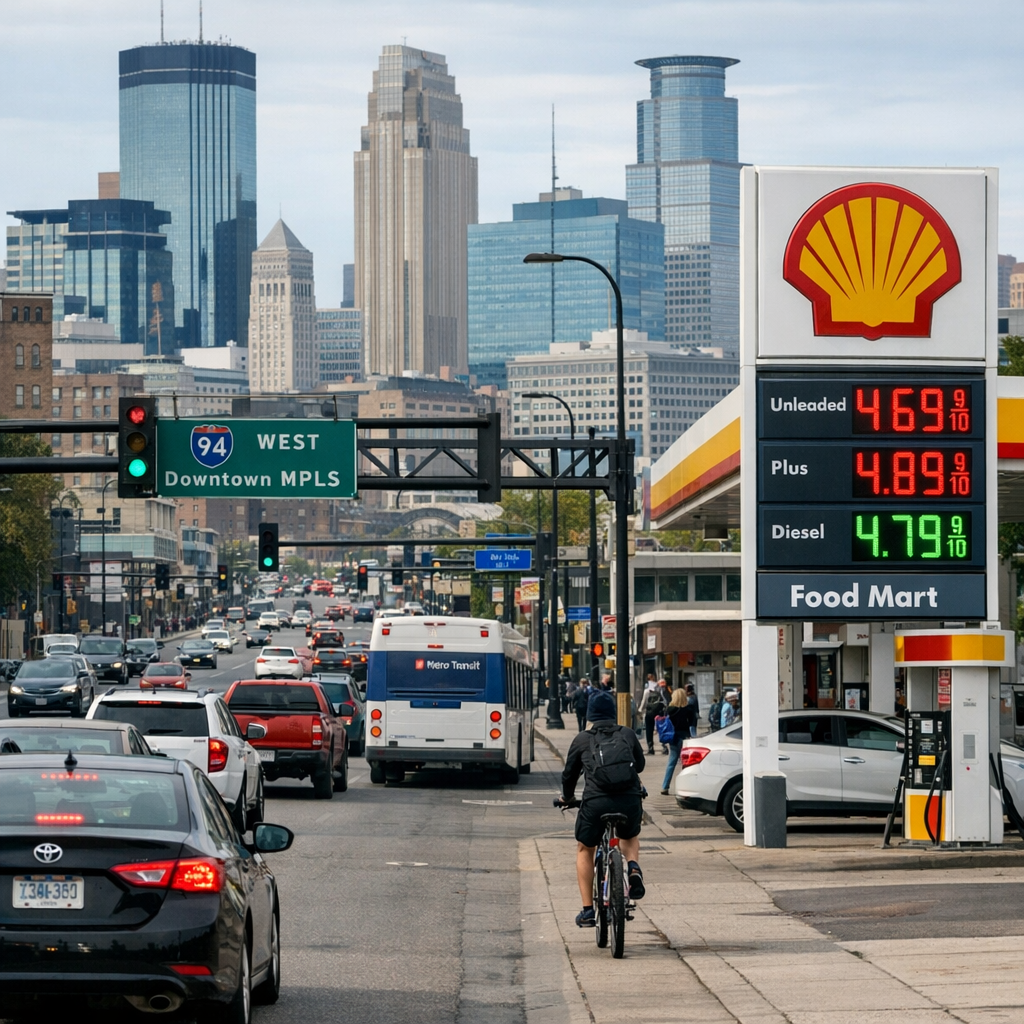
As the United States grapples with rising inflation and global conflicts, the economic landscape presents challenges that resonate from national policies down to local communities like Minneapolis.
Inflation and Economic Indicators
Recent reports indicate a surge in inflation, with the consumer price index increasing by 3.8% in April. This uptick is largely attributed to the ongoing conflict in the Middle East, which has disrupted energy markets and trade routes, leading to higher gas prices exceeding $4.50 per gallon. Consequently, wage growth has not kept pace with inflation, diminishing real purchasing power for many Americans. Additionally, consumer sentiment has plummeted to record lows, reflecting widespread economic anxiety. Source
Global Conflicts and Domestic Impact
The Middle East conflict has significantly influenced the global economy, with the International Monetary Fund projecting a slowdown in global growth to 3.1% in 2026. Emerging markets and developing economies, particularly those reliant on commodity imports, are expected to bear the brunt of these shocks. Source
Local Implications for Minneapolis
For residents of Minneapolis, these national and global economic trends have tangible effects. The rise in gas prices increases commuting costs, while inflation affects the affordability of goods and services. Local businesses may experience shifts in consumer spending patterns, and the housing market could face challenges due to fluctuating interest rates and economic uncertainty.
Looking Ahead
As the nation navigates these economic challenges, it is crucial for policymakers to address the underlying causes of inflation and work towards stabilizing the economy. For communities like Minneapolis, staying informed and adaptable will be key to weathering the impacts of these broader economic trends.