

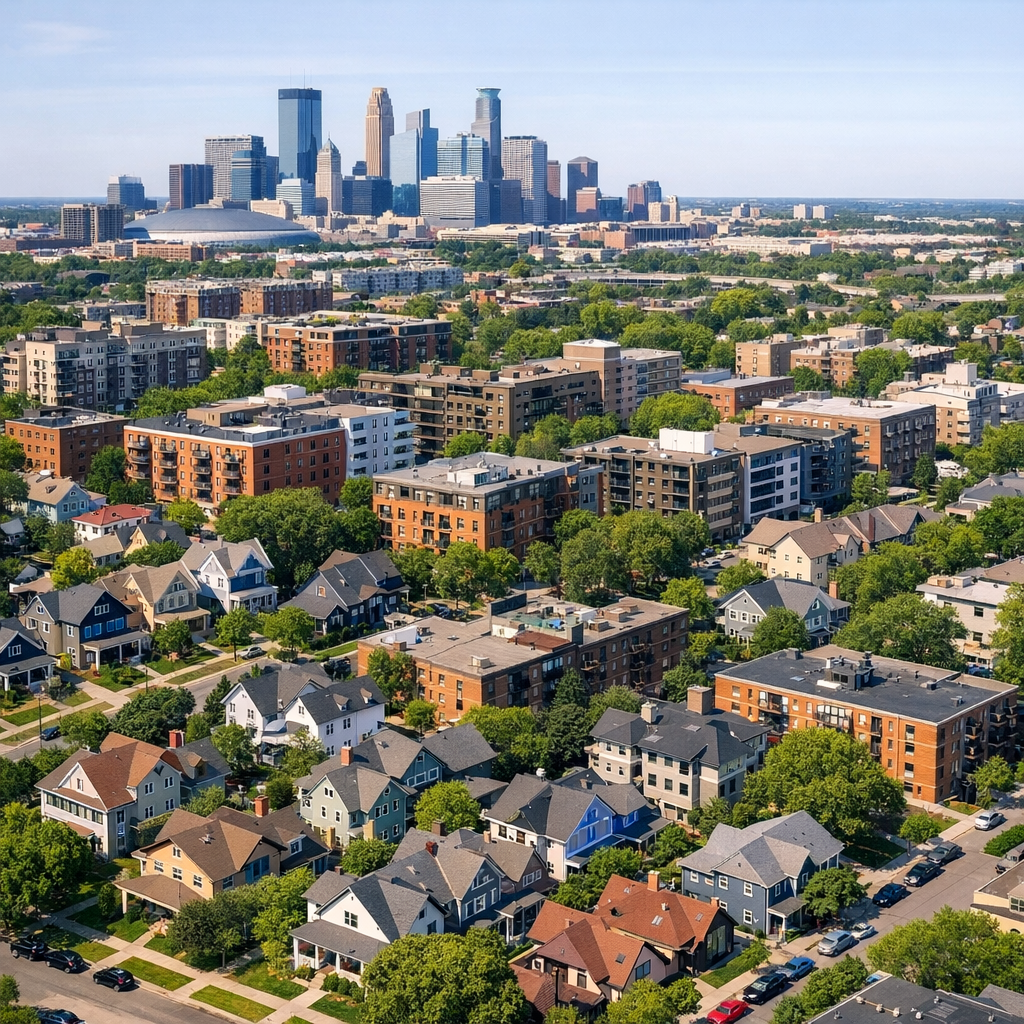
Minneapolis’ housing landscape is undergoing significant changes, impacting both prospective homebuyers and renters. Understanding these shifts is crucial for making informed decisions in today’s market.
Home Prices and Market Dynamics
Recent data indicates a nuanced picture for home prices in Minneapolis. According to Zillow, the average home value stands at $334,719, reflecting a 1.4% increase over the past year. Homes typically go pending in around 19 days, suggesting a competitive market. However, Realtor.com reports a 9% year-over-year decline in median listing prices as of March 2026, with active listings rising by 9.3% to 706 homes. This increase in inventory provides buyers with more options and potential leverage in negotiations.
Rental Market Trends
The rental market in Minneapolis has experienced modest fluctuations. As of May 2026, the average rent is $1,600 per month, which is 16% lower than the national average of $1,910. This represents a 2.2% decrease month-over-month and a 3.2% increase year-over-year. The availability of rental units has also seen changes, with 1,798 listings currently on the market. These trends suggest a relatively stable rental environment, though affordability remains a concern for many residents.
Development Challenges and Housing Shortages
A report from the Minneapolis Federal Reserve Bank highlights a growing housing shortage in the Twin Cities. In 2025, only 12,161 housing units were constructed, a significant drop from the over 18,000 units built annually between 2019 and 2022. This decline in new housing development is contributing to rising rents and home prices, potentially eroding the region’s reputation for housing affordability. Developers cite high construction costs, rising interest rates, and limited rent growth as factors hindering new apartment developments, while single-family home production has remained relatively stable.
Implications for Residents
The evolving housing market presents both challenges and opportunities. For buyers, the increase in inventory and potential price adjustments may offer more favorable conditions. Renters might find some relief in the relatively stable rental rates, though the overall shortage of affordable housing remains a pressing issue. Staying informed about these trends is essential for navigating Minneapolis’ dynamic housing landscape.