

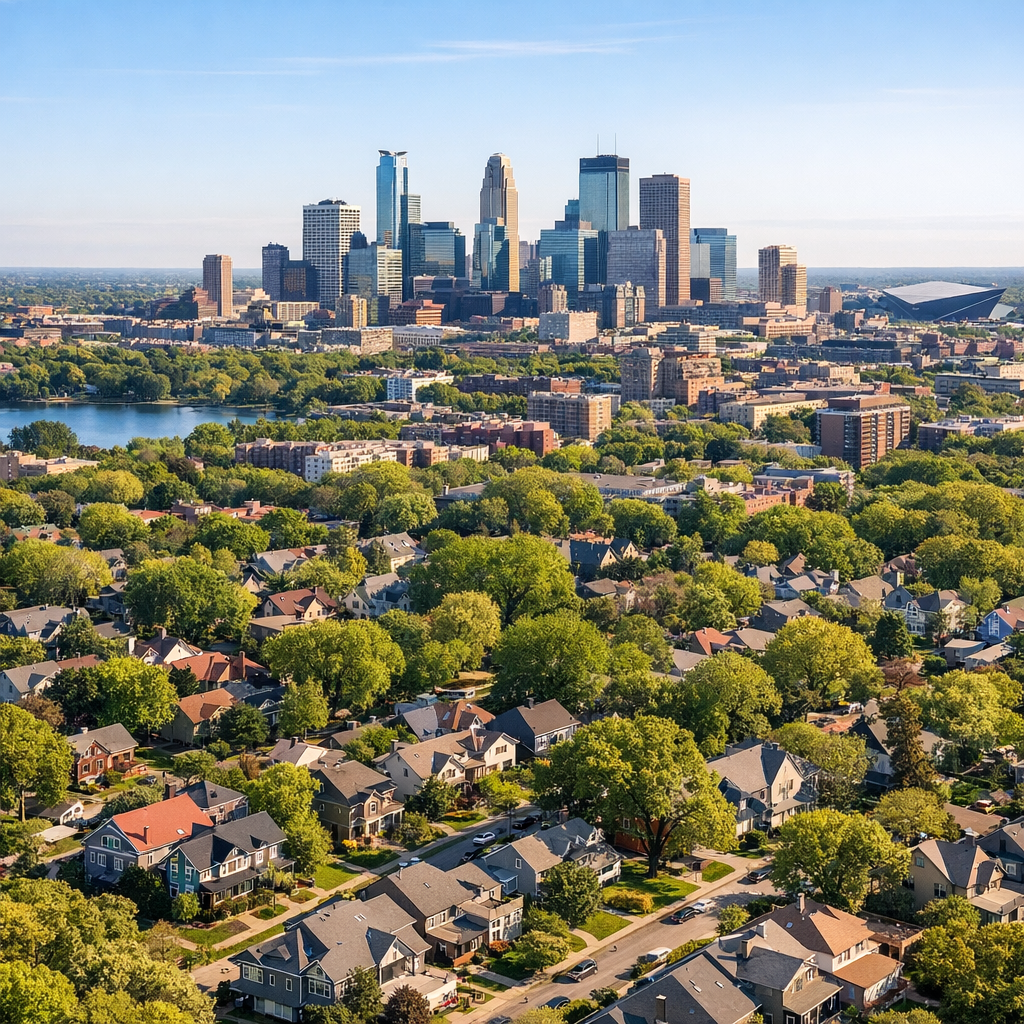
Minneapolis’ real estate market is experiencing notable shifts, with changes in home prices, inventory levels, and significant development projects shaping the city’s housing landscape.
Home Prices and Market Trends
As of recent data, the median sale price for homes in Minneapolis stands at approximately $355,000, reflecting a 6% increase compared to the previous year. Homes are selling faster, with an average of 30 days on the market, indicating sustained buyer interest. However, the number of homes sold has decreased, with 315 homes sold in March, down from 362 the previous year. This suggests a tightening market where demand continues to outpace supply.
Inventory and Listings
The housing inventory in Minneapolis has seen a significant uptick. Active listings have risen to 855 homes, marking an 18.8% increase year-over-year. New listings have also surged, with 688 homes entering the market recently. This increase in inventory provides buyers with more options, though the market remains competitive.
Notable Developments
Several development projects are contributing to the city’s evolving housing landscape. The historic Minneapolis Grain Exchange is slated for a major overhaul, with plans to transform the site into a mixed-use development featuring 232 new apartments. This $123 million project aims to revitalize the downtown area and provide additional housing options.
In the Seward neighborhood, Wadaag Commons has recently been completed, offering 39 affordable three- and four-bedroom units. Designed with sustainability in mind, the development includes features like a brick exterior and rooftop solar readiness, reflecting a commitment to quality construction and community investment.
Additionally, the departure of Graco from its Northeast Minneapolis campus opens up 40 acres of valuable Mississippi Riverfront land for potential redevelopment. This site presents a prime opportunity for new housing projects, further contributing to the city’s growth and transformation.
Conclusion
Minneapolis’ real estate market is characterized by rising home prices, increased inventory, and significant development projects that promise to reshape the city’s housing landscape. For prospective buyers and investors, staying informed about these trends is essential for making strategic decisions in this dynamic market.