

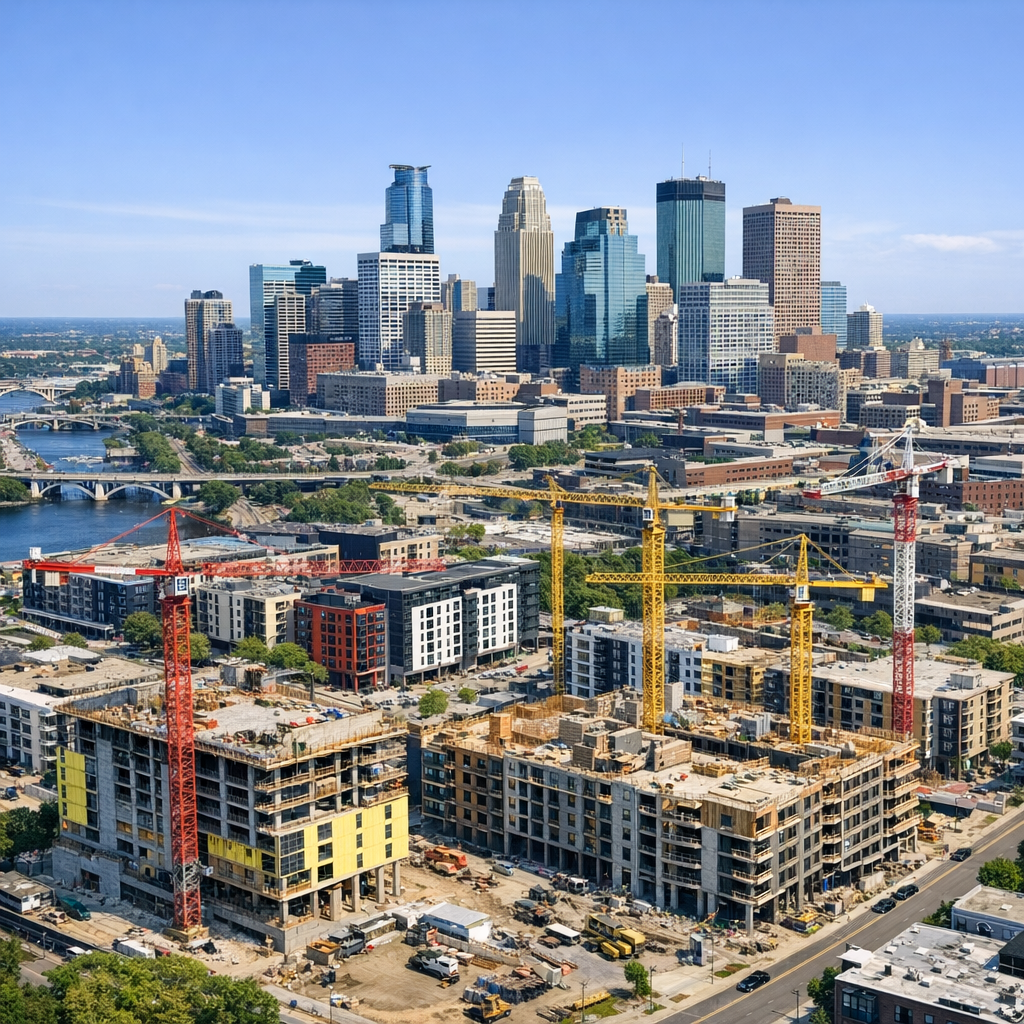
Minneapolis’ real estate market is experiencing notable shifts, presenting both challenges and opportunities for buyers, sellers, and investors. Understanding these trends is crucial for making informed decisions in this dynamic environment.
Market Trends: Prices and Inventory
Recent data indicates a decline in median listing prices. In March, the median listing price was $305,225, marking an 8.9% decrease from the previous year. This trend suggests a market that is becoming more favorable to buyers, with increased inventory providing more options. Active listings rose by 9.3% year-over-year, outpacing the national average. However, sellers are advised to price properties competitively to attract interest in this evolving landscape.
Development Projects: Revitalizing the Urban Core
Several significant development projects are underway, aiming to rejuvenate Minneapolis’ urban areas. The historic Minneapolis Grain Exchange is set for a major overhaul, with plans to transform the site into a mixed-use development featuring 232 new apartments. This $123 million project aligns with city leaders’ goals to revitalize downtown and enhance urban living options.
Additionally, the relocation of Graco’s Northeast Minneapolis campus opens up 40 acres of prime Mississippi Riverfront land for potential redevelopment. This site presents a unique opportunity for transformative projects that could reshape the city’s riverfront landscape.
Shifts in Commercial Real Estate
The commercial real estate sector is also undergoing changes. Downtown office values have seen a significant decline, with Minneapolis experiencing a 13.7% drop in commercial real estate value. This trend has implications for the city’s tax base and may influence future development strategies.
Conclusion
Minneapolis’ real estate market is in a state of flux, characterized by declining home prices, increased inventory, and ambitious development projects. Stakeholders should stay informed and adaptable to navigate this evolving landscape effectively.