

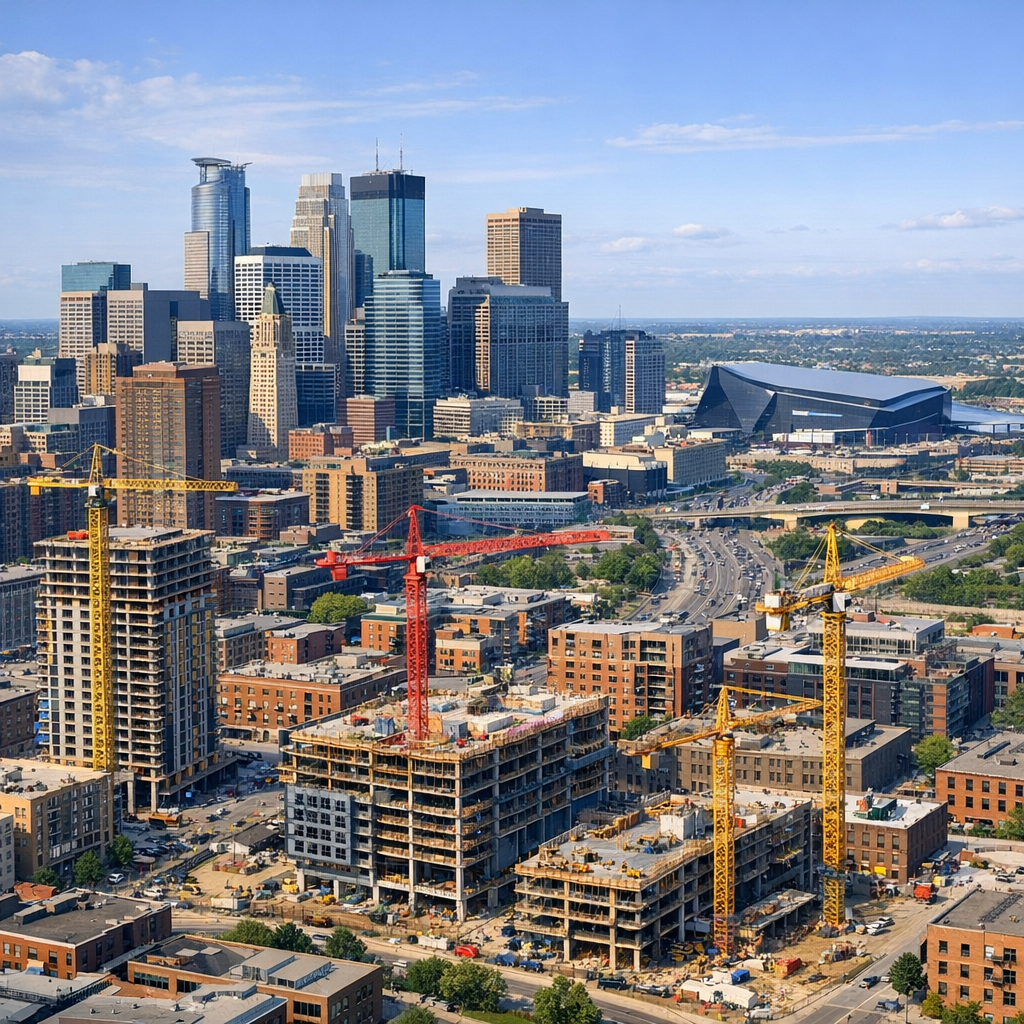
Minneapolis’ real estate market is experiencing notable shifts, with changes in housing prices, inventory levels, and significant development projects reshaping the city’s landscape.
Housing Market Trends
Recent data indicates a dynamic housing market in Minneapolis. The median sale price of homes has seen a modest increase, reaching $355,000, marking a 6.0% rise compared to the previous year. Homes are selling faster, with an average of 30 days on the market, down from 32 days last year. However, the number of homes sold has decreased, with 315 homes sold in March, down from 362 the previous year. This suggests a competitive market with limited inventory.
Development Projects
Several development projects are contributing to the city’s growth and revitalization efforts. The historic Minneapolis Grain Exchange is set for a substantial redevelopment led by local developer Sherman Associates. The proposed $123 million project plans to transform the site into a mixed-use development that includes 232 new apartments. This renovation aligns with city leaders’ goals of revitalizing the downtown area.
Additionally, Graco, a manufacturer of fluid and materials handling equipment, is closing its Northeast Minneapolis campus and relocating hundreds of employees to a new headquarters in either Rogers or Dayton over the next two years. This move frees up 40 acres of highly valuable Mississippi Riverfront land, positioning it as a prime redevelopment opportunity in the Twin Cities.
Office Space Dynamics
The commercial real estate sector is facing challenges, particularly in the office space market. Office tower values in downtown Minneapolis and St. Paul continued to decline in 2025, with no recovery in sight, significantly affecting the tax burden distribution. Minneapolis saw a 13.7% decrease in commercial real estate value, while St. Paul’s top office buildings experienced an average 16.5% drop. This trend reflects broader economic shifts, including the impact of remote work on office space demand.
As Minneapolis continues to evolve, staying informed about these trends is essential for residents, investors, and stakeholders navigating the city’s real estate landscape.