

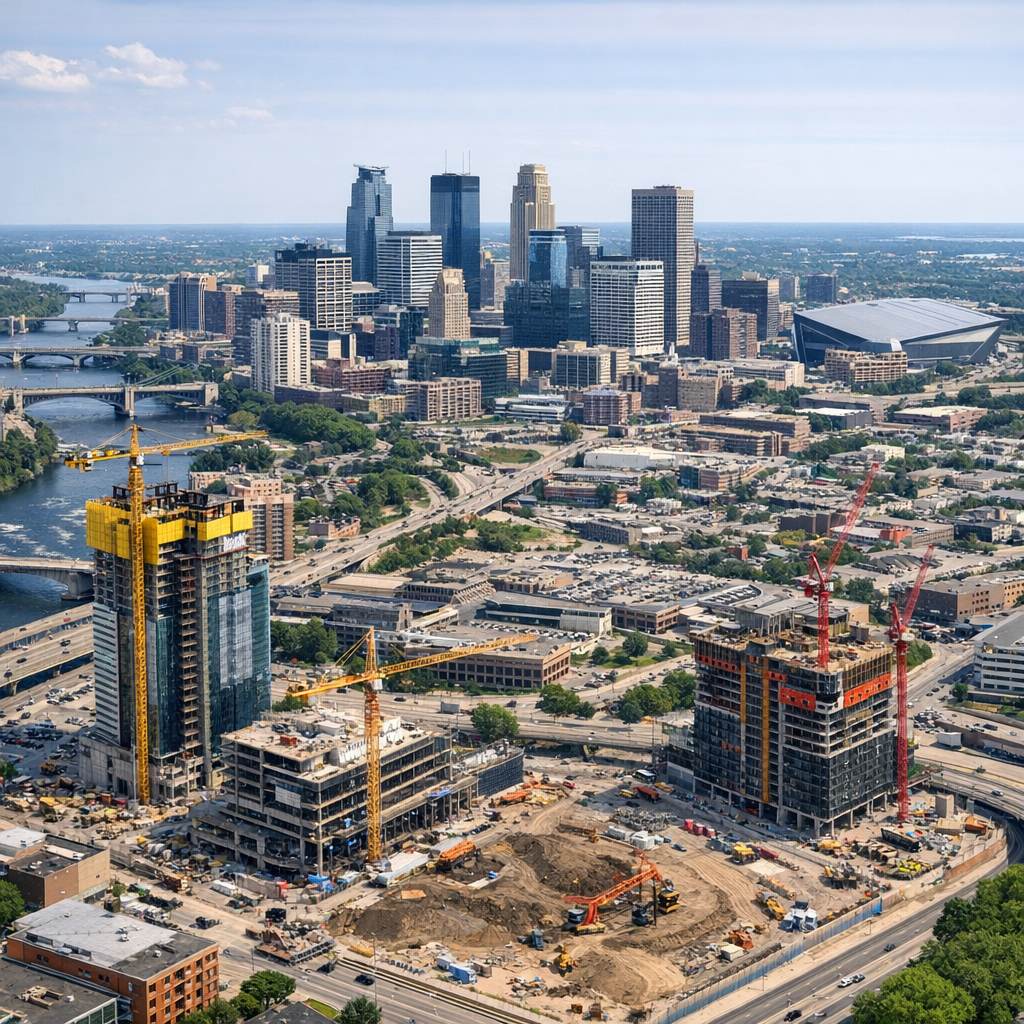
Minneapolis’ real estate market is experiencing notable shifts, presenting both challenges and opportunities for residents and investors. Understanding these trends is essential for making informed decisions.
Market Trends
Recent data indicates a dynamic housing market in Minneapolis. In March 2026, the median sale price of homes was $355,000, marking a 6.0% increase from the previous year. Homes are selling faster, with an average of 30 days on the market, down from 32 days last year. However, the number of homes sold decreased to 315 in March, compared to 362 the previous year. Source
Development Projects
Several significant development projects are underway, contributing to the city’s evolving landscape:
Minneapolis Grain Exchange Redevelopment
The historic Minneapolis Grain Exchange is set for a substantial redevelopment led by local developer Sherman Associates. The proposed $123 million project plans to transform the site into a mixed-use development that includes 232 new apartments. This renovation aligns with city leaders’ goals of revitalizing the downtown area. The Grain Exchange complex, consisting of three buildings near City Hall, dates back to 1903 and holds the distinction of being among the first steel structures in the city. As part of the redevelopment process, the city council is considering a $2.7 million grant from the Metropolitan Council to address asbestos and lead paint abatement. Further details are expected once Sherman Associates submits a formal application to the planning commission. Source
Graco Site Redevelopment
Graco, a manufacturer of fluid and materials handling equipment, is closing its Northeast Minneapolis campus and relocating hundreds of employees to a new headquarters in either Rogers or Dayton over the next two years. This move frees up 40 acres of highly valuable Mississippi Riverfront land, positioning it as a prime redevelopment opportunity in the Twin Cities. Minneapolis Council Member Michael Rainville underscored the site’s potential by comparing it favorably to the notable Highland Bridge development in St. Paul. Although housing developments in Minneapolis have recently slowed due to rising interest rates, construction costs, and overbuilding, the site’s value has been enhanced by the recent opening of Graco Park on its southern end—a collaboration between Graco and the Minneapolis Park Board. Developers have previously shown interest in buying the land, especially as surrounding areas like Marshall Street have seen significant apartment growth. The level of environmental cleanup required will be a crucial factor in future redevelopment plans. Source
Office Space Dynamics
The commercial real estate sector is also undergoing changes. Office tower values in downtown Minneapolis and St. Paul continued to decline in 2025, with no recovery in sight, significantly affecting the tax burden distribution. Minneapolis saw a 13.7% decrease in commercial real estate value, while St. Paul’s top office buildings experienced an average 16.5% drop. Since commercial properties are taxed at twice the rate of residential ones, this decline means homeowners are shouldering more of the city’s tax load, now covering 55.6% of property taxes compared to 47.4% in 2020. The market downturn is evident in dramatic cases, such as the Lumber Exchange Building, which sold for just $1 despite a $7.6 million assessed value and a $24.3 million sale price in 2019. However, exceptions remain, like Sleep Number’s headquarters, which sold for $235 million following a data center expansion, contrary to its $46 million assessment. Officials warn that the assessed values reported through October 2025 may underestimate the full scope of the decline, and residents can expect to see this reflected in upcoming property tax assessments scheduled for release in November 2026. Source
Conclusion
Minneapolis’ real estate market is in a state of flux, influenced by rising home prices, significant development projects, and shifts in the commercial sector. Staying informed about these trends is crucial for anyone looking to navigate the city’s evolving real estate landscape.