

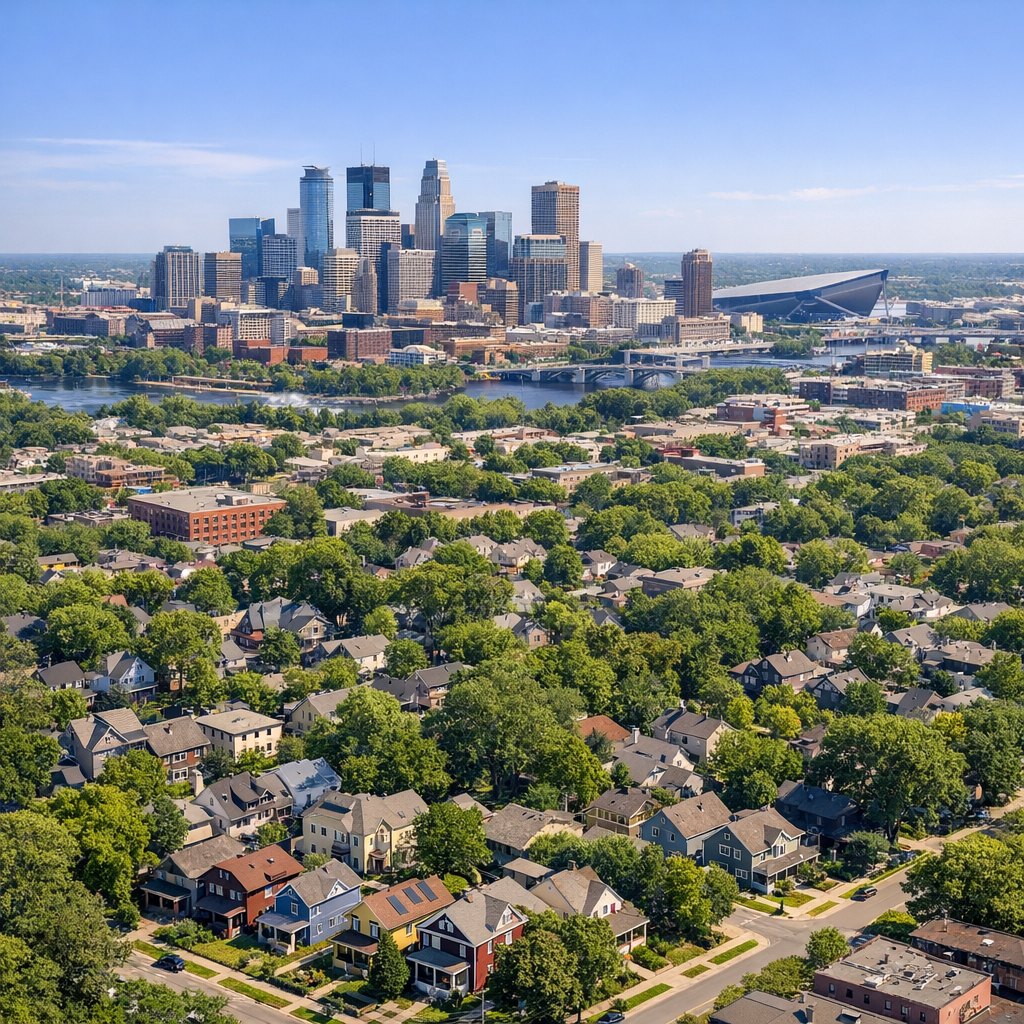
Minneapolis’ real estate market is experiencing notable shifts, presenting both challenges and opportunities for buyers, sellers, and investors. Understanding these trends is essential for making informed decisions.
Market Trends
Recent data indicates a dynamic market. In March 2026, the median sale price for homes in Minneapolis was $355,000, marking a 6% increase from the previous year. Homes are selling faster, with an average of 30 days on the market, down from 32 days last year. However, the number of homes sold decreased to 315 in March, compared to 362 the previous year. This suggests a competitive market with rising prices and quicker sales, but a slight decline in overall transactions.
Rental Market
The rental sector remains robust. As of March 2026, the average rent in Minneapolis was $1,650, reflecting a 4.7% year-over-year increase. This is below the national average rent of $1,910, indicating that Minneapolis continues to offer relatively affordable rental options compared to other major cities.
Local Developments
Several significant developments are shaping the city’s landscape. The historic Minneapolis Grain Exchange is undergoing a $123 million transformation into a mixed-use development featuring 232 new apartments. This project aims to revitalize the downtown area and provide additional housing options. Additionally, Graco’s decision to relocate its Northeast Minneapolis campus opens up 40 acres of prime Mississippi Riverfront land for potential redevelopment, presenting a unique opportunity for urban expansion and community enhancement.
Conclusion
Minneapolis’ real estate market is characterized by rising home prices, a competitive rental market, and transformative local developments. Staying informed about these trends is crucial for navigating the evolving landscape and making strategic decisions in the housing market.