

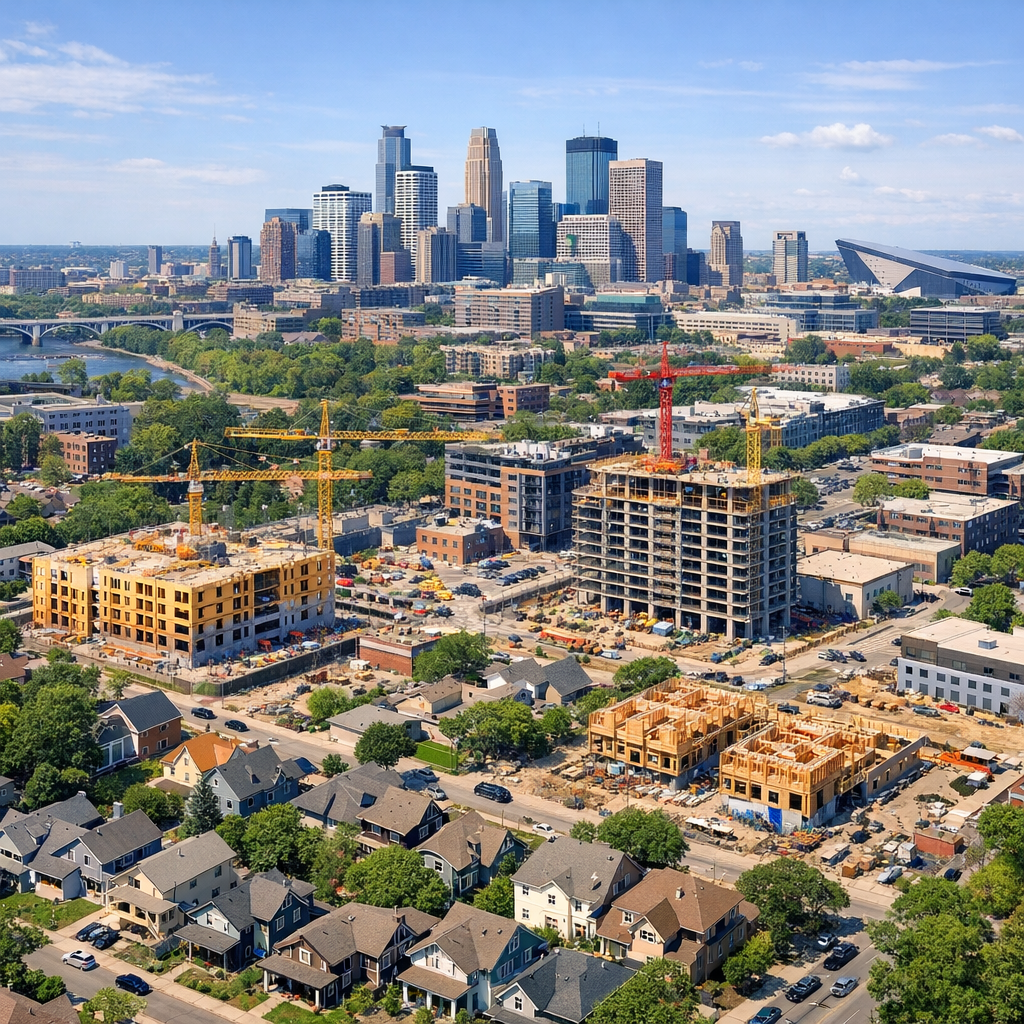
Minneapolis’ real estate market is experiencing notable shifts, with changes in home prices, inventory levels, and significant development projects reshaping the city’s housing landscape.
Current Market Trends
Recent data indicates a dynamic housing market in Minneapolis. According to Zillow, the average home value in the city is $334,719, reflecting a 1.4% increase over the past year. Homes typically go pending in around 19 days, suggesting a competitive market. Additionally, the median sale price stands at $315,500, with 37.8% of sales closing above the list price, highlighting strong demand among buyers.
Inventory and Sales Dynamics
The market has seen a significant rise in inventory. Active listings reached 855 homes in April, marking an 18.8% year-over-year increase, nearly four times the national growth rate. This surge provides buyers with more options, though sellers may face increased competition. Despite the higher inventory, homes continue to sell relatively quickly, with the median time on the market being 37 days, indicating sustained buyer interest.
Notable Development Projects
Several development initiatives are contributing to the city’s evolving real estate landscape. The historic Minneapolis Grain Exchange is set for a substantial redevelopment led by Sherman Associates. The proposed $123 million project aims to transform the site into a mixed-use development, including 232 new apartments, aligning with city leaders’ goals of revitalizing the downtown area.
In North Minneapolis, the Allura development is blending affordable and luxury units to create an inclusive community. This modern mixed-use project offers 38 quality homes, a smart laundromat, and a commercial kitchen, addressing daily needs and fostering local ownership.
Additionally, Footprint Development is focusing on climate-resilient, carbon-smart multifamily housing in walkable, transit-rich neighborhoods. Their Solstice Apartments in Northeast Minneapolis exemplify this approach, featuring 23 Passive House certified units designed for energy efficiency and reduced carbon footprint.
Conclusion
Minneapolis’ real estate market is characterized by rising home values, increased inventory, and innovative development projects. These factors contribute to a dynamic environment for both buyers and sellers, reflecting the city’s ongoing growth and commitment to sustainable, inclusive housing solutions.