

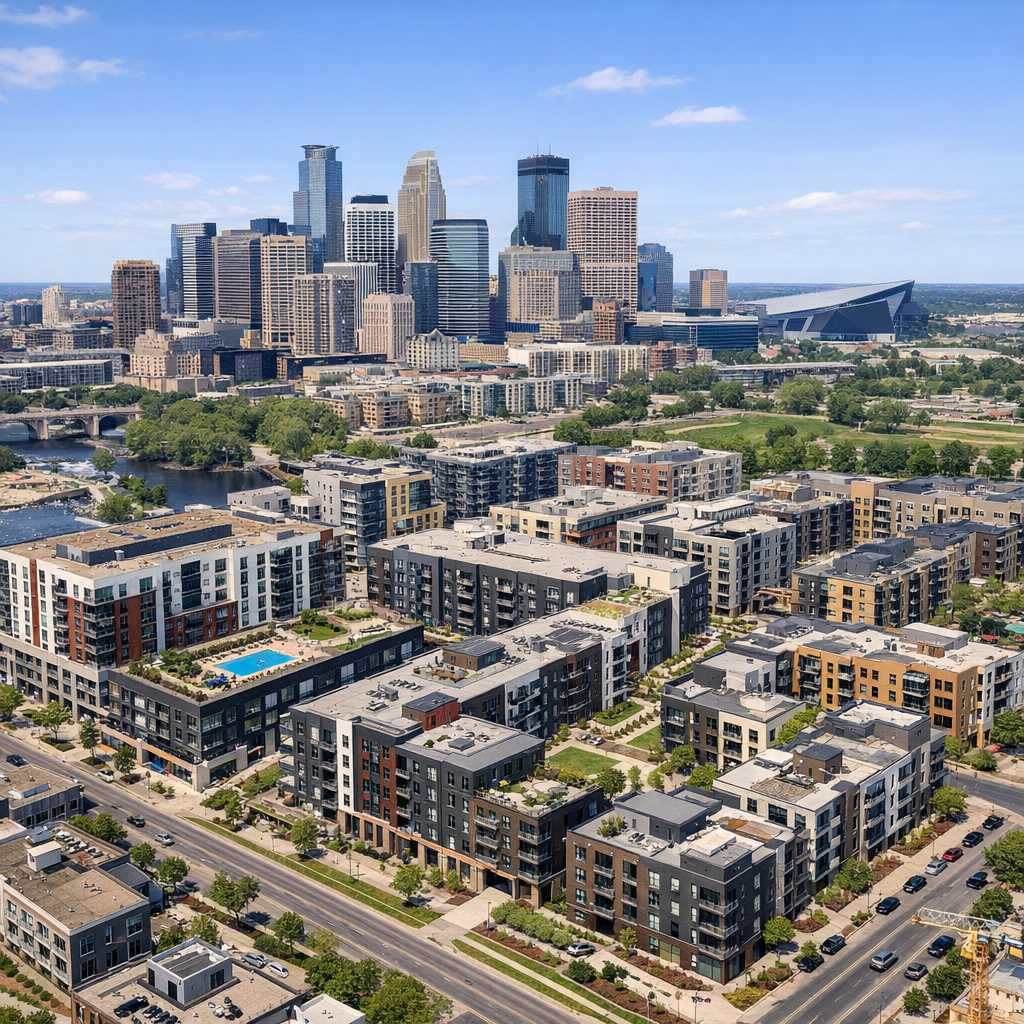
Minneapolis’ real estate market is experiencing notable shifts, with changes in home prices, inventory levels, and significant development projects reshaping the city’s housing landscape.
Current Market Trends
Recent data indicates a modest increase in home values. As of April 2026, the average home value in Minneapolis reached $334,719, marking a 1.4% rise over the past year. Homes are going pending in approximately 19 days, reflecting a competitive market. Additionally, the median sale price stood at $315,500, with 37.8% of sales closing above the list price, underscoring strong demand.
Inventory and Sales Dynamics
The housing inventory has seen a significant uptick. In April 2026, there were 1,164 homes listed for sale, providing buyers with more options. This increase in inventory offers a more balanced market, benefiting both buyers and sellers.
Notable Development Projects
Several development initiatives are contributing to the city’s evolving real estate landscape:
Solstice Apartments
Located in Northeast Minneapolis, Solstice Apartments is a 23-unit complex designed with sustainability in mind. The project boasts a 30% reduction in construction emissions and a 70% decrease in operating emissions, aligning with the city’s environmental goals.
Allura Development
In North Minneapolis, the Allura development offers a mixed-use community featuring 38 housing units, including both affordable and luxury options. The project integrates essential services like a tech-enabled laundromat and a chef-led ghost kitchen, aiming to foster a vibrant community atmosphere.
Minneapolis Grain Exchange Redevelopment
The historic Minneapolis Grain Exchange is set for a substantial transformation. Plans include converting the site into a mixed-use development with 232 new apartments, contributing to the revitalization of the downtown area.
Conclusion
Minneapolis’ real estate market is characterized by rising home values, increased inventory, and dynamic development projects. These factors collectively contribute to a vibrant and evolving housing landscape, offering opportunities for both buyers and sellers in the city.