

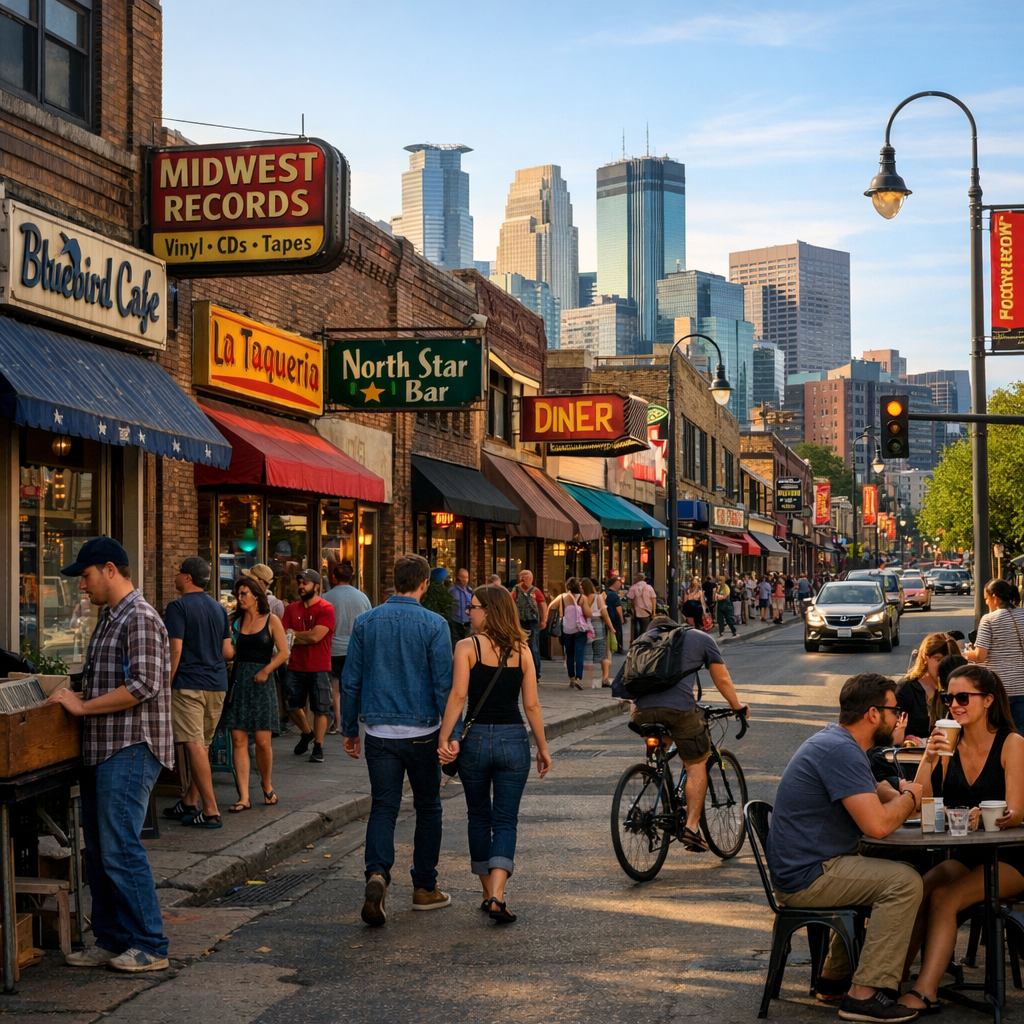
Minneapolis has long been a hub for entrepreneurial spirit, with small businesses forming the backbone of the city’s economy. However, recent economic fluctuations have presented challenges that require adaptability and resilience from local entrepreneurs.
Current Economic Climate
According to a survey by the Federal Reserve Bank of Minneapolis, nearly half of businesses reported declines in revenues, and over half saw profits shrink in the last quarter of 2025. Many cited challenges such as declining customer demand and rising operational costs. Despite these hurdles, a notable portion of businesses expressed intentions to increase staff levels in the coming months, indicating cautious optimism.
City Initiatives to Support Small Businesses
In response to these challenges, the City of Minneapolis has launched several initiatives aimed at bolstering small businesses. The $7 million Small Business Resiliency Fund is designed to help businesses stabilize and reduce financial strain. This fund offers license fee relief for food and beverage businesses, free event permits, consulting services, marketing support, and grants for cultural mall operators.
Additionally, the Business Technical Assistance Program (BTAP) connects small businesses to free training and consulting services, assisting with business planning, marketing strategies, and financial management.
Emerging Trends in the Business Landscape
The Minneapolis skyway system, traditionally dominated by national chains, is witnessing a surge of independent retailers filling vacant spaces. Entrepreneurs like Keiona Cook have realized dreams of opening shops in prime locations, contributing to a more locally driven downtown economy.
Furthermore, the concept of food halls is evolving. Newer establishments are focusing on smaller, suburban markets, reflecting changing consumer behaviors influenced by remote work. Venues like Eden Prairie’s Asia Mall and Rosedale Mall’s Potluck are attracting diverse crowds, indicating a shift in dining and shopping patterns.
Resources for Entrepreneurs
For those looking to start or grow their businesses, organizations like Impact Hub Minneapolis offer resources, knowledge, and community support. They provide shared workspaces, training opportunities, one-on-one coaching, and curated events to foster entrepreneurial growth.
Additionally, programs like the Co-operative Technical Assistance Program (C-TAP) support the development of new cooperatives in Minneapolis, offering feasibility training and technical assistance to promote economic development and diversity in ownership.
Conclusion
While the economic landscape presents challenges, Minneapolis’s small business community continues to demonstrate resilience and adaptability. With the support of city initiatives and community resources, local entrepreneurs are well-positioned to navigate these changes and contribute to the city’s vibrant economy.